
How to Build an Email List
10 Steps That Actually Work
Starting from zero? Discover 10 simple ways to attract your first subscribers, build trust, and turn casual visitors into a loyal audience—without complicated technology or expensive marketing tools.

INTRODUCTION
WHY BUILDING AN EMAIL LIST MATTERS
I wish someone had explained the importance of building an email list when I first explored internet marketing.
Back then, I thought getting visitors to my website was the most important thing.
More visitors meant more opportunities. Simple enough, wasn't it?
Unfortunately, there was a problem.
People visited, read something, and disappeared.
Some never returned.
All that effort attracting visitors, and I had no easy way to stay connected.
That's when I began to understand why learning how to build an email list matters.
If you're still wondering why email deserves attention, my guide to the purpose of email marketing explains the bigger picture.
An email list allows you to communicate directly with people interested in what you have to say.
Instead of hoping someone remembers your website, you can send useful information straight to their inbox.
Better still, you can build relationships over time.
For anyone starting an online business, especially during retirement, this can make a real difference.
You don't need thousands of subscribers or expensive software.
In fact, you can start with no subscribers, a simple plan, and a willingness to learn.
Email list building for beginners doesn't have to be complicated.
You simply need to understand your audience, offer something helpful, and invite people to stay in touch.
Throughout this guide, I'll explain how to build an email list using ten practical steps.
We'll explore lead magnet ideas, sign-up forms, email automation, and ways to attract your first subscribers.
You'll also discover how to welcome new readers, keep them interested, and measure your progress.
And don't worry if your current subscriber count is zero.
Every successful email list started with subscriber number one.
Even if that first subscriber was someone's mother!
1. HOW TO BUILD AN EMAIL LIST
WITH A CLEAR PURPOSE
Before collecting email addresses, decide why you want an email list.
This sounds obvious.
However, many beginners skip this important step.
They begin collecting subscribers without knowing what information to send.
Eventually, their email list becomes like that drawer full of mysterious cables.
Everything is there, but nobody knows what it's for!
Start by answering three questions.
- Who do I want to help?
- What problems can I help them solve?
- What useful information will subscribers receive?
For example, suppose your audience includes people approaching retirement.
They may want to earn extra income online without risking their savings.
Your newsletter could provide:
- Simple internet marketing lessons.
- Beginner-friendly affiliate marketing advice.
- Helpful information about AI tools.
- Practical online business tips.
- Honest advice about common mistakes.
At Internet Profit Success, the focus is helping beginners understand online marketing without unnecessary confusion.
This gives the email list a clear purpose.
If you're unsure whom to help, start by understanding your target audience before deciding what to send.
Create a Simple Subscriber Promise
Your subscribers should know what they'll receive.
For example:
"Join my weekly newsletter for practical online marketing tips, useful tools, and beginner-friendly lessons."
That's much clearer than simply saying, "Subscribe to my newsletter."
Also, decide how frequently you'll send emails.
Once a week is a reasonable starting point.
However, consistency matters more than frequency.
You want readers looking forward to your messages, not wondering why you've disappeared.

KEY TAKEAWAY:
A successful email list starts with a clear audience, a useful purpose, and a promise you can keep.
2. CHOOSE THE RIGHT EMAIL MARKETING TOOL
Once you know your purpose, you'll need somewhere to manage your subscribers.
Fortunately, you don't need expensive software.
Several email marketing platforms provide beginner-friendly tools.
Popular examples include:
- Mailchimp.
- MailerLite.
- Brevo.
- Kit.
- GetResponse.
These services offer different features, pricing plans, and subscriber limits.
Some provide free entry-level options, although terms can change.
Choose Simplicity Over Fancy Features
When comparing platforms, look for:
- Easy-to-create sign-up forms.
- Subscriber management.
- Automated welcome emails.
- Newsletter templates.
- Email performance reports.
- Consent and unsubscribe management.
- Integration with your website.
Also, check whether the platform suits your budget.
You don't need every advanced feature immediately.
After all, buying expensive software before gaining subscribers is rather like purchasing a double-decker bus for your first driving lesson.
A bicycle would probably do!
Set Up the Basics
Once you've chosen a service:
- Create your account.
- Add your business details.
- Configure your sender email address.
- Complete the recommended sender verification.
- Create your first subscriber list or audience.
- Check the privacy and consent settings.
Using an email address connected to your website can also create a more professional impression.
For example, an address associated with Internet Profit Success looks more businesslike than an unrelated personal address.
Most importantly, follow your platform's instructions for verifying your sending domain.
This helps email providers recognise legitimate messages.
KEY TAKEAWAY:
Choose an affordable, beginner-friendly email platform that makes collecting subscribers and sending emails simple.
3. HOW TO BUILD AN EMAIL LIST
WITH A COMPELLING LEAD MAGNET
Here's a question worth considering.
Why should someone give you their email address?
Most inboxes are already overflowing.
People receive advertisements, newsletters, bills, and messages announcing they've won mysterious fortunes.
The last thing they need is another unwanted email.
That's where a lead magnet comes in.
A lead magnet is something useful offered in exchange for an email address.
It gives visitors a reason to take the next step.
Five Lead Magnet Ideas for Beginners
Consider offering:
- A checklist: Seven Steps to Starting an Online Business.
- A short guide: Ten Affiliate Marketing Mistakes to Avoid.
- A template: Your Simple Weekly Content Planner.
- A cheat sheet: Fifteen AI Prompts for Beginner Marketers.
- A video series: Five Free Lessons to Get Started Online.

Each resource solves a specific problem.
For more inspiration, explore these lead magnet ideas for beginners and choose just one to create first.
More importantly, it provides a clear benefit.
How to Create Your First Lead Magnet
Start with one problem your audience faces.
For example, suppose readers struggle to publish their first blog post.
Create a two-page checklist explaining how to plan, write, and publish an article.
Keep the instructions simple and practical.
Use a document editor, then export the finished resource as a PDF.
Finally, give it a clear, benefit-focused title.
You don't need to produce a 100-page ebook.
Sometimes, a useful checklist is exactly what people need.
The Simple Lead Magnet Formula:
Audience problem
↓
Helpful free resource
↓
Quick, practical result
↓
Greater confidence
↓
Stronger trust
KEY TAKEAWAY:
The best lead magnet ideas solve one clear problem and give readers something genuinely useful.
4. HOW TO BUILD AN EMAIL LIST
WITH SIGN-UP FORMS AND LANDING PAGES
Once you've created your lead magnet, visitors need a way to request it.
That's where sign-up forms come in.
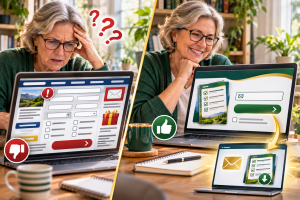
A good form makes subscribing straightforward.
It shouldn't resemble an application for a mortgage!
Create Your First Sign-Up Form:
Here's a practical example.
Headline:
Get Your FREE Online Marketing Starter Checklist
Description:
Discover seven simple steps to help you begin your online marketing journey with confidence.
Form fields:
First name: Optional
Email address: Required
Separate optional marketing consent checkbox, left unticked:
Yes, I'd like to receive weekly online marketing tips, useful resources, and occasional promotional recommendations from Internet Profit Success.
I can unsubscribe at any time.
Button:
SEND ME MY FREE CHECKLIST
Privacy message:
We'll use your email address to deliver your checklist.
We'll only send marketing emails if you choose to subscribe.
Our privacy notice explains how your information is used.
If someone requests the checklist without agreeing to marketing, deliver it without adding them to promotional emails.
Create a Simple Landing Page
A landing page is a webpage designed around one main action.
For your free checklist, include:
- A clear headline.
- A short explanation of the benefits.
- Three things readers will learn.
- A preview of the resource.
- Your sign-up form.
- Appropriate privacy information.
Keep unnecessary distractions to a minimum.
If your sign-up button still feels vague, these call to action best practices can make the next step clearer.
Also, make sure everything works on mobile phones.
Test Before Publishing
Complete the form yourself.
Check that the resource arrives and the consent choices work correctly.
Then test the unsubscribe process.
KEY TAKEAWAY:
Simple forms and focused landing pages make subscribing easier while respecting visitors' choices.
5. HOW TO GROW YOUR EMAIL LIST
THROUGH BLOG CONTENT AND SOCIAL MEDIA
Creating a sign-up form is an important step.
However, people still need to discover it.
Fortunately, you don't need a huge advertising budget.
Your existing content can become a powerful way to attract subscribers.
Use Helpful Blog Articles
Write articles answering questions your audience is already asking.
For example:
- How to Start Affiliate Marketing.
- How to Use AI for Content Creation.
- How to Build an Email List.
- How to Attract Visitors to a New Website.
Then offer a relevant free resource.
An article about AI writing tools could offer a free collection of useful prompts.
Meanwhile, an affiliate marketing tutorial could include a beginner's checklist.
This is often called a content upgrade.
These content repurposing strategies also show how one article can become emails, social posts, and free resources.
Place Sign-Up Invitations Naturally
Useful locations include:
- After the article introduction.
- Alongside a relevant example.
- Near the conclusion.
Avoid interrupting readers every few seconds.
Nobody enjoys wrestling with pop-ups while trying to read!
Promote Your Email List on Social Media
Facebook and LinkedIn can help interested people discover your resources.
Share practical advice before introducing your free offer.
For better conversations, explore these ways to increase Facebook engagement before inviting people to subscribe.
For example:
"Thinking about starting affiliate marketing but don't know where to begin?
I've put together a simple checklist covering seven important beginner steps.
No complicated jargon. Just practical guidance to help you get moving."
Then direct interested readers to your sign-up page.
Other Promotion Ideas
- Add the resource to your social profiles.
- Mention it in your email signature.
- Share helpful advice in relevant groups.
- Collaborate with other content creators.
- Invite subscribers to recommend your newsletter.
Always respect community rules and people's privacy.
KEY TAKEAWAY:
Useful content attracts visitors.
Relevant free resources encourage interested readers to become subscribers.
6. HOW TO BUILD AN EMAIL LIST
WITH A FIVE-EMAIL WELCOME SERIES
Getting someone to subscribe is only the beginning.
What happens next can determine whether they become a loyal reader.
That's why a welcome email sequence matters.
It introduces your business, delivers useful information, and begins building trust.
Here's a practical five-email example for subscribers who have agreed to receive your marketing emails.
If five feels ambitious, try this simple three-email welcome sequence and expand it later.

EMAIL 1: WELCOME AND DELIVER
Send: Immediately after confirmed subscription.
Subject: Welcome! Here's Your Free Checklist
"Thanks for joining me!
Here's the free checklist I promised.
Start with the first step and take your time.
I'd also love to know what you're hoping to achieve online."
EMAIL 2: INTRODUCE YOURSELF
Send: Two days later.
Subject: Why I Believe Beginners Can Succeed Online
Share a short personal story.
Explain your interest in internet marketing and what readers can expect.
Keep things friendly and genuine.
EMAIL 3: SHARE A QUICK WIN
Send: Four days later.
Subject: One Simple Marketing Task You Can Do Today
Provide one small, practical action.
For example, explain how to identify a useful blog topic.
EMAIL 4: HELP READERS AVOID A MISTAKE
Send: Six days later.
Subject: The Beginner Mistake That's Easy to Avoid
Explain one common mistake and how to prevent it.
EMAIL 5: SUGGEST THE NEXT STEP
Send: Eight days later.
Subject: Ready to Take Your Next Step?
Summarise what readers have learned.
Then recommend a suitable learning resource.
Keep recommendations honest, relevant, and clearly identified when promotional.
KEY TAKEAWAY:
A welcome sequence introduces your business while giving subscribers useful reasons to stay connected.
7. KEEP YOUR EMAIL SUBSCRIBERS
INTERESTED AND ENGAGED
Once people join your list, the next challenge is keeping them interested.
After all, subscribers have invited you into their inboxes.
That's a privilege worth respecting.
Unfortunately, some marketers treat every email as another opportunity to sell something.
It's rather like inviting someone round for tea and immediately trying to sell them a vacuum cleaner.
A better approach is to provide value regularly.
For extra ideas, discover how to build trust with your audience before making recommendations.
What Should You Send?
Consider mixing:
- Short how-to lessons.
- Answers to common questions.
- Helpful online marketing tips.
- Personal experiences.
- Useful tool recommendations.
- Updates about new blog articles.
- Occasional promotional offers.
For example, one newsletter could explain how to write a better headline.
Another might introduce a simple AI tool.
Meanwhile, a third could share a lesson learned from a marketing mistake.
Personal stories make your emails more relatable.
Encourage Subscriber Interaction
Ask readers what they're struggling with.
For example:
"What's your biggest challenge with internet marketing right now?"
Or:
"Would you prefer my next article to cover affiliate marketing or AI tools?"
Invite subscribers to reply.
Their answers can reveal valuable content ideas.
Use Feedback to Improve
Suppose several readers mention difficulties writing blog posts.
You could create:
- A beginner's writing tutorial.
- A blog planning checklist.
- A collection of AI writing prompts.
Your subscribers have effectively told you what they need.
That's better than guessing!
KEY TAKEAWAY:
Keep subscribers interested by sharing useful information, asking questions, and listening to their feedback.
8. HOW TO BUILD AN EMAIL LIST
WITH SMART SEGMENTATION AND AUTOMATION
As your list grows, you'll discover that subscribers have different interests.
Some enjoy learning about affiliate marketing.
Others prefer AI tools, blogging, or website traffic strategies.
Sending everyone identical information isn't always ideal.
That's where segmentation helps.
What Is Email Segmentation?
Segmentation means organising subscribers into groups based on their interests.
For example:
Group A: Affiliate marketing beginners.
Group B: People interested in AI.
Group C: Readers learning email marketing.
You can then send more relevant information to each group.
Start with two or three groups.
There's no need to create twenty categories before gaining your first subscriber.
Use Automation to Save Time
Automation allows your email platform to complete routine tasks.
For example, someone subscribes to your newsletter.
Your system confirms their subscription and begins the welcome sequence.
Meanwhile, you can concentrate on creating useful content.
My guide to the email autoresponder explains how these automatic follow-ups work.
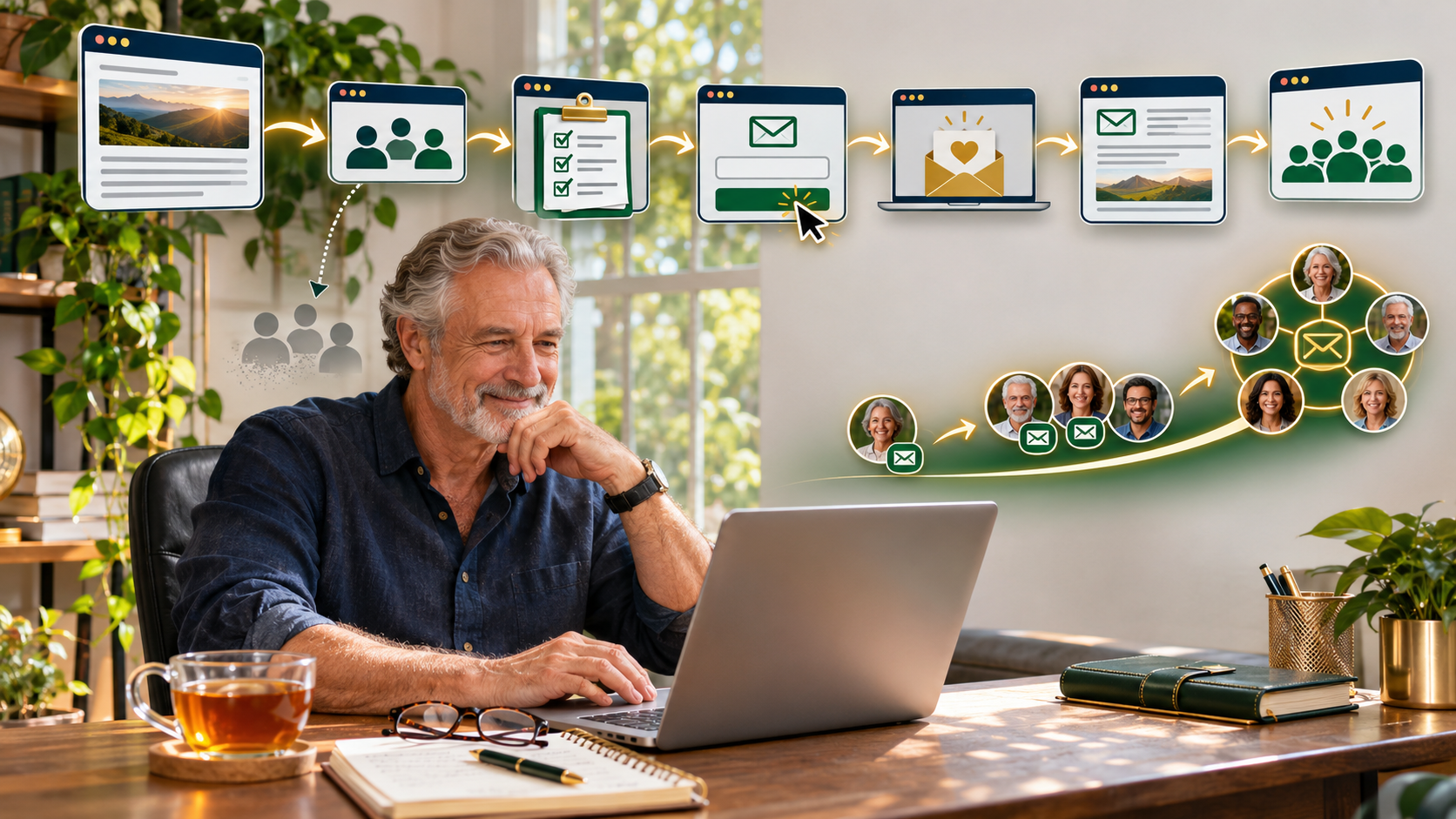
A Simple Automated Email System
Helpful blog article
↓
Relevant lead magnet
↓
Sign-up form
↓
Subscription confirmation
↓
Welcome email series
↓
Helpful regular newsletters
↓
Relevant recommendations
↓
Review and improvement
This creates a repeatable system.
What Should You Automate First?
Start with:
- Subscription confirmation, where appropriate.
- Delivery of the promised free resource.
- Your five-email welcome sequence.
Later, explore more advanced options.
However, always test your automated messages.
Ensure people who withdraw consent or unsubscribe stop receiving marketing emails.
KEY TAKEAWAY:
Simple segmentation and automation help deliver relevant information without creating unnecessary work.
9. BUILD TRUST
BY FOLLOWING EMAIL MARKETING RULES
An email list isn't simply a collection of addresses.
Each address belongs to a real person.
Therefore, protecting subscriber information is essential.
In the UK, email marketing activities must follow applicable data protection law and the Privacy and Electronic Communications Regulations, known as PECR.
For unsolicited marketing emails to individuals, consent is generally required unless a specific exception applies.
A limited soft opt-in may apply to certain existing customer relationships.
However, downloading a free guide doesn't automatically give you permission to send promotional messages.
Your Email Marketing Compliance Checklist
- Explain who is collecting personal information.
- Tell subscribers what emails they'll receive.
- Obtain clear consent where required.
- Avoid pre-ticked consent boxes.
- Keep appropriate consent records.
- Provide an easy unsubscribe method.
- Honour unsubscribe requests promptly.
- Explain how personal information is used.
- Store subscriber information securely.
- Avoid buying email lists.
What Is Double Opt-In?
Double opt-in involves sending a confirmation email after someone subscribes.
The person confirms that they want to join.
This helps reduce incorrect or unwanted sign-ups.
Although generally not compulsory under UK law, it can be a useful practice.
Remember International Subscribers
If your audience includes people outside the UK, other regulations may apply.
For example, the United States has CAN-SPAM requirements.
Also, clearly disclose relevant affiliate relationships when recommending products.
The rules can vary, so check the requirements that apply to your business.
KEY TAKEAWAY:
Respecting consent, privacy, and unsubscribe requests builds trust while helping protect your business.
10. HOW TO BUILD AN EMAIL LIST
MEASURE RESULTS, AND KEEP IMPROVING
Once your email list is working, you need to understand what's happening.
However, don't become obsessed with subscriber numbers.
Checking your statistics every five minutes won't make your list grow faster!
Track These Five Useful Metrics
- Subscriber growth: How many people join?
- Sign-up conversion rate: What percentage of visitors subscribe?
- Click-through rate: How often do readers click your links?
- Unsubscribe rate: How many people leave?
- Subscriber engagement: Are readers replying or taking useful actions?
For example, suppose 200 people visit your landing page.
If ten subscribe, your conversion rate is 5%.
That's useful information.
For a wider view, explore these marketing metrics for beginners and track only the numbers that help you improve.
Open rates can also provide clues, although some email privacy features make them unreliable.
Avoid Common Beginner Mistakes
Watch out for:
- Buying email lists.
- Offering weak lead magnets.
- Sending too many promotions.
- Forgetting welcome emails.
- Using complicated systems too early.
- Expecting overnight success.
Your Seven-Day Email List Building Checklist
Day 1: Choose your audience and define your newsletter promise.
Day 2: Select an email marketing platform and configure your account.
Day 3: Create one useful lead magnet.
Day 4: Build your sign-up form and landing page.
Day 5: Write your welcome email sequence.
Day 6: Test everything, including consent and unsubscribe settings.
Day 7: Publish your offer and invite interested readers to subscribe.
Then review your results each month.
When you're ready to grow, these tips on how to build an email list faster from zero offer practical next steps.
Improve one element at a time.
Perhaps you'll change a headline, simplify a form, or create a better free resource.
Small improvements can make a meaningful difference over time.

KEY TAKEAWAY:
Start with a simple system, measure useful results, and keep improving through consistent action.
CONCLUSION
HOW TO BUILD AN EMAIL LIST FOR LONG-TERM SUCCESS
Learning how to build an email list is one of the most valuable skills a beginner internet marketer can develop.
It gives you a way to stay connected with interested readers rather than relying entirely on search engines or social media.
More importantly, it creates opportunities to build lasting relationships.
However, success isn't about collecting the largest possible number of email addresses.
It's about attracting the right people and treating them well.
A small group of genuinely interested subscribers can be more valuable than thousands who never engage.
Start with a clear purpose.
Next, create something useful to share.
Make subscribing simple, welcome your readers properly, and keep providing helpful information.
As your confidence grows, introduce automation, segmentation, and basic performance tracking.
To connect everything, explore how to build a marketing system that supports steady progress.
Most importantly, remember that every successful online business begins somewhere.
At Internet Profit Success, I believe beginners benefit from practical guidance, honest expectations, and steady progress.
You don't need to understand everything before getting started.
Your first sign-up form might not be perfect.
Likewise, your first newsletter may never win an award.
That's perfectly fine!
Each email gives you another opportunity to understand your audience.
Every small improvement makes your marketing system stronger.
And each subscriber represents a real person who has shown an interest in what you offer.
So don't wait until you have everything figured out.
Begin with one useful resource and one simple sign-up form.
Then build from there.
After all, you can't develop relationships with subscribers you haven't invited yet!
DO THIS NOW. TAKE YOUR FIRST STEP
TOWARDS ONLINE MARKETING SUCCESS
You've discovered how to build an email list, attract subscribers, and develop lasting relationships.
Now it's time to put that knowledge into action.
Choose one task from the seven-day checklist and complete it today.
Perhaps you'll create your first lead magnet.
Alternatively, you might set up your email marketing account or publish a simple sign-up form.
Whatever you choose, keep it manageable.
Remember, successful online marketing doesn't happen through complicated tricks or overnight promises.
It develops through learning, consistent action, and gradual improvement.
And you don't have to work everything out alone.
If you'd like practical guidance on starting an online business, understanding affiliate marketing, and developing useful marketing skills, take a look at Internet Profit Academy.
Explore the training and discover how you can begin building your knowledge and confidence.
Whether you're approaching retirement, already retired, or simply exploring new opportunities, there's always something new to learn.
Your future online business won't build itself.
However, every practical step brings you closer to understanding what's possible.
DO THIS NOW - Visit Internet Profit Academy discover the ways we help you get started!
