

How I’m Doubling Internet Profit Success In 2026
Using Affiliate Marketing Strategies for Beginners

If you told me at the start of this journey that I’d one day have a clear plan to build even more progress, not just more noise, I would’ve asked, “Okay… but what’s the plan?”
See, last year I learned something huge:
You can work hard and still wander in circles, but when you work smart with strategy, you actually build momentum that compounds.
This coming year isn’t about posting more content or chasing the latest TikTok trick. It’s about purposeful steps, things you do repeatedly that actually move your affiliate marketing from hobby‑level clicks to predictable results.
This post lays out those steps, a roadmap built on affiliate marketing strategies for beginners, deepened with efficient free online traffic tactics and solid online business growth tips that will help you build real, measurable progress in the year ahead.
Once you begin writing with clear structure and SEO in mind, like using an SEO Checklist for Beginners, your content will start attracting search traffic that lasts
Step 1, Align Around Core Affiliate Marketing Strategies for Beginners
Before you start making content for the sake of publishing, you need a framework.
Affiliate marketing isn’t just posting links here or there. It’s about building trust, delivering value, and strategically guiding people from “I’m curious” to “I want this.”
What This Looks Like in Practice
Think of each piece of content you create as a bridge, connecting someone’s problem to a real solution (which may or may not be an affiliate offer). That bridge starts with education and ends with action.
Examples of beginner‑friendly strategy content:
What affiliate marketing actually is (and isn’t), not just “here’s a link,” but how it works
Step‑by‑step tutorials on specific tactics like “How to get your first 100 clicks without paying for ads”
Problem‑solution posts, e.g., “Why your blog isn’t getting readers (and how to fix it today)”
This is how you stand out from shallow “10 tips” lists that never help anyone take the next step. And bit by bit, that’s how you build Internet Profit Success.
Content that educates and solves a real problem, like Michael Cheney Marketing Tips for Beginners, builds authority quickly for audiences newer to online business

Step 2, Use Themed Content Clusters to Increase SEO Power
One of the biggest SEO mistakes beginners make is treating every post like an isolated idea:
“Today I’ll write about TikTok.”
“Tomorrow I’ll write about Pinterest.”
That’s posting random content. And search engines, as well as human readers, don’t reward randomness, they reward topic authority.
What Are Content Clusters?
A content cluster is a group of posts that:
revolve around a core theme (e.g., free traffic),
link to each other internally, and
use related keywords that signal depth to search engines.
So instead of 10 isolated posts, you create:
A pillar post, the main hub (e.g., Ultimate Guide to Free Online Traffic Tactics)
Several supporting posts, deeper dives on subtopics (e.g., TikTok for Traffic, Quora Answers That Convert)
By linking them together, you create a “topic map” that helps Google understand the breadth and depth of your expertise.
Example Cluster for the Next Year
Main Pillar Post:
Free Online Traffic Tactics That Work for Affiliate Marketing
Supporting pieces:
TikTok Content That Brings in Your First 1,000 Visitors
How to Use Quora for Organic Traffic You Can Monetize
Beginner SEO Checklist That Actually Improves Rankings
Repurposing Old Content for Fresh Traffic
Every piece uses variations of your main theme:
affiliate marketing strategies for beginners
free online traffic tactics
online business growth tips
This signals relevance and authority, which is exactly what helps your content rank and get found.
One powerful place to generate targeted visitors is Quora, here’s how to set up your profile optimization for affiliate marketing so your answers pull clicks and sign‑ups.
Step 3, Pick One Free Online Traffic Tactic and Go Deep
Trying to master every traffic strategy at once usually results in average results across the board.
This year, the goal is depth, not spread.
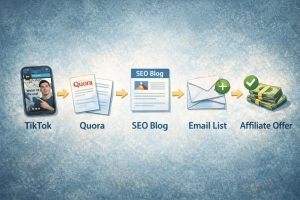
Pick one traffic channel, like TikTok, Quora, or SEO, and build a system around it.
Here’s how this works:
Case Study: TikTok for Traffic
Instead of random clips, structure content into repeatable formats:
Mini tutorials, short, clear how‑tos'
Lesson clips, what worked or didn’t
Before/after examples, showing transformation
For example:
Video Idea: “Quick hook ideas for beginner affiliate marketers”
Hook: “Stop scrolling if you want views without choreographing dances!”
Teach: Explain a question hook, shock stat hook, promise hook
CTA: “Want my exact script? It’s in the link!”
This simple, predictable format helps:
1. get more profile views
2. drive people to your lead magnet or bio link
3. create consistent traffic without paid ads
And the more consistent you are, the more search engines and platform algorithms favour your content.
For a more complete roadmap to building organic visitors from scratch, check out the Free Traffic Action Plan that shows a step‑by‑step beginner strategy without paid ads.
Step 4, Build Trust First with Strategic Lead Magnets
Traffic is great, but if it doesn’t turn into something real (like subscribers), it’s just noise.
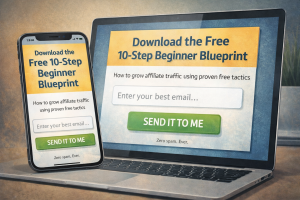
That’s where lead magnets come in. A lead magnet isn’t a one‑time giveaway, it’s the first step in a relationship.
What Makes a Good Lead Magnet?
A good lead magnet:
Solves a specific problem
Can be used immediately
Leads naturally into related content or offers
Designing lead magnets that truly convert is an art, and the post on Affiliate Marketing Freebies That Convert breaks down the exact tactics that work.
Examples that map perfectly to your strategy:
Traffic jumpstart checklist
Beginner content calendar template
3‑email welcome sequence
Simple SEO action plan
Each of these delivers value first, which builds trust and warms readers up to your future suggestions (including affiliate tools or programs).
Step 5, Turn Your Best Content Into Authority Hubs
Here’s the next evolution of your content strategy:
Instead of standalone blog posts, build resource hubs, centralized pages that guide readers through entire topic journeys.
Example: The “Affiliate Marketing for Beginners” Hub
Your hub might include:
Intro overview of affiliate marketing
Traffic strategy 101
Conversion checklist
Tools/resources page
Lead magnet call‑to‑action
This does two things:
Keeps people longer on your site, boosting engagement metrics
Creates deep internal linking, which is excellent for SEO
When someone lands on your hub, they should feel like they’ve found a complete path, not just a random article.
Step 6, Use Email Automation to Nurture, Not Nag
Far too many beginners treat email like a sales pipeline rather than a connection tool.
But here’s the reality:
People buy from you when they trust you, and trust comes from value.
That’s why your next step isn’t sending sales pitches. It’s building a nurture sequence that teaches, supports, and helps.
A Simple 4‑Email Sequence That Converts
Email 1, Welcome & Help
Thank them + deliver the lead magnet
Teach one quick tip they can implement today
Email 2, Share a Big Insight
Go deeper on a pain point
Example: “3 mistakes beginners make on TikTok traffic”
Email 3, Give a Tactical Example
Share a case or walkthrough
Example: “Here’s how I structured 5 Quora answers that brought subscribers”
Email 4, Soft Introduce Tools/Offers
Help readers solve further with a curated tool you personally recommend
If you need concrete tactics to grow your list fast, this guide on How to Get 100 Email Subscribers in One Week gives actionable steps to attract subscribers with simple content.”
Notice how there’s no hard sell in the first emails? That’s intentional. You win by building trust first, and showing value first.
Step 7, Optimize Your Platforms Like Mini Websites
Your blog isn’t the only place people discover you. Every platform you use, TikTok, Quora, Twitter, LinkedIn, can act as a mini‑website pointing back to your core content and lead magnets.
Here’s how to treat profiles like assets:
TikTok
Bio: “Helping beginners grow real traffic without ads”
Link: Lead magnet first (not affiliate offer)
Content: value first, then invite deeper learning
Quora
Bio that explains your expertise
Include your lead magnet in the bio or answer footer
Use topic tags that match your SEO target keywords
Pinterest or Twitter
Pin thread that links to your blog hub
Repost snippets of insights with CTA to your resource
This system turns every platform into a traffic source that feeds users back into your ecosystem.
Step 8, Measure What Moves the Needle
This is where strategy becomes science.
If you don’t track data, you’re guessing. And guessing slows progress.
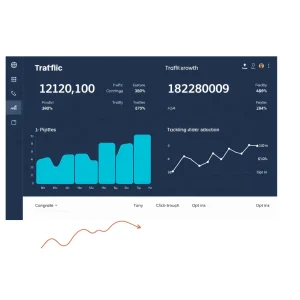
Here’s what to track (monthly):
Organic traffic trends (overall and by page)
Email list growth rates
Conversions (clicks → sign‑ups → actions)
Engagement metrics (time on page, scroll depth)
Top‑performing keywords
How to Use Data to Improve
If a blog post gets loads of traffic but zero sign‑ups.
→ Add a better lead magnet or CTA
If TikTok gets views but no profile visits.
→ Tweak your CTA and bio link wording
If Quora gets visitors but no conversions.
→ Shorten your answers and clarify the next step
Your goal is real signals, not vanity metrics.
Step 9, Turn Big Ideas Into Easy Weekly Wins
Big goals can feel overwhelming, but progress doesn’t come from giant leaps. It comes from consistent steps that add up.
Here’s how to structure your weeks:
Example Weekly Sprint
Monday: Write a new SEO blog post
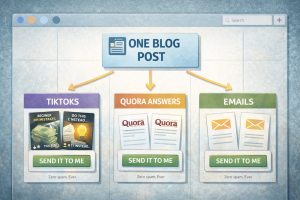
Tuesday: Repurpose into 2 TikToks
Wednesday: Write 3 Quora answers
Thursday: Publish social posts promoting blog + lead magnet
Friday: Review metrics + tweak
Small actions done consistently build real momentum.
When it’s time to introduce affiliate offers, picking products that convert is key, the 9 Affiliate Offers for Beginners That Actually Pay gives beginner‑friendly options with real earnings potential.
Step 10, Stay Consistent, Stay Curious, Stay in the Game
This last step is less tactical and more mindset, but it’s the thing that separates dabblers from actual progress builders.
Here’s what I learned:
Growth isn’t linear
Mindset matters too, applying lessons from Think & Grow Rich Marketing Principles helps you stay consistent and execute your strategy more confidently.
Not every week will feel exciting
Some months feel slow
But consistency compounds, just like money in the bank.
Every post, email, and answer adds up.
Your audience begins to recognize your voice, your value, and your authority, and that’s the foundation of Internet Profit Success.
Some beliefs hold beginners back, like myths about overnight success, and I busted common traps in 5 Online Business Myths Killing Your Momentum so you can focus on real progress.
Final Thought: Your Next Step Is the Most Important One
If last year was about figuring things out, this next year is about scaling what works.
This year, you won’t just post content.
You’ll build systems that:
1. attract the right people
2. convert them into subscribers
3. nurture them into action
4. guide them toward tools and solutions they need
And along the way, you’ll deepen your own expertise too.

So here’s your call to action, not a sales pitch, just a next step:
Choose one tactic from above and implement it this week.
Maybe it’s setting up your first nurture sequence.
You could build your first content cluster.
Maybe it’s committing to one traffic channel.
Whichever one you pick, do it consistently. That’s where real progress lives.
Let’s build it together.
Here’s to your best year yet, and real Internet Profit Success.
