

How to Repurpose Content for SEO
9 Game‑Changing Moves for Creators

Why Content Repurposing Matters, and Why You Should Care
So you’ve already got content you worked hard on, maybe a blog post, a podcast, or a video. But what if I told you that piece isn’t done, not by a long shot. Instead, think of it as the seed for dozens more. That’s what content repurposing is all about.
By repurposing content, you don’t just recycle, you amplify. You reach new audiences, improve SEO, build authority, and save yourself the headache of constantly starting from scratch. In short: it’s smarter, not harder.
Moreover, as more people shift across platforms (blog → social media → email → video → podcast…), repurposing helps you meet folks where they already are, rather than forcing them to catch up to you.
Oh, and a little secret I sprinkle into every project: treat content repurposing as part of your “Internet Profit Success” strategy. Every time you stretch one post into many formats, you boost your visibility, build trust, and open more doors.

What Is Content Repurposing (and What It Isn’t)
At its core, content repurposing means taking an existing piece of content, a blog, a video, a podcast, etc., and transforming it into a different format, or breaking it into smaller pieces, or updating it for fresh value.
This isn’t the same as lazy rewriting or “spinning” content (you know, the awkward robotic approach of just swapping words around). Real content repurposing adds value, fresh insights, new visuals, or alternate formats, and aims to connect with different audiences.
When done right, content repurposing does more than recycle. It extends the life of your ideas, helps you reach more people, and strengthens your position in your niche. This post already explains how SEO + evergreen content builds long‑term results.
Benefits of Content Repurposing
1. Saves Time and Energy
Creating new content from scratch takes time. By repurposing, you maximize ROI on existing content, less “blank page dread,” more “work smarter.”
2. Boosts Reach Across Platforms
Not everyone consumes content the same way. Some people love reading long blogs. Others prefer quick reels or infographics. Repurposing lets you deliver the same value in multiple formats, hitting more people and a good use as alternative to paid advertising.
3. Improves SEO & Authority Over Time
One long-form piece can turn into multiple pages, social posts, videos, each optimized for different but related keywords. The more quality content you have on a topic, the more you build topical authority.
4. Keeps Your Brand Message Consistent
Recycling the same core ideas across formats helps reinforce what you stand for. Whether someone sees your infographic, reads your blog, or listens to your podcast, you sound like “you.”
5. Turns Evergreen Content into Evergreen Value
Old posts don’t have to stay stale. With repurposing, you can dust them off, update them, and give them new life, keeping your content library alive and useful.
When to Repurpose, and How to Pick Content to Repurpose
Not all content is worth repurposing. The best candidates are:
Evergreen or timeless posts: Topics that stay relevant for months or years.
Posts with strong engagement: High page views, shares, comments, or time spent.
Content that underperformed but had potential: Maybe a long detailed post that few read; you can break it down into smaller, easier-to-digest formats.
Guides, lists, tutorials, or data-rich posts: These often translate well into infographics, cheat sheets, or videos.
Idea: Use analytics tools (or just eyeball your “popular vs boring” posts) to find where repurposing will give the biggest boost.
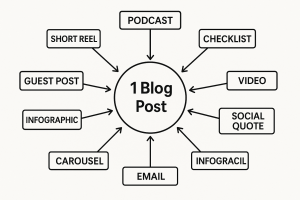
9 Content Repurposing Strategies You Can Use Right Now
Here’s a refined version of your nine tactics, plus some extra colour, examples, and tips.
1. Turn Blog Posts into Shareable Social Media Snippets
A single high-quality blog post can be a goldmine of micro-content. Pull out standout quotes, stats, or quick tips, each can become a social post. Create eye‑catching visuals (using a tool like Canva) with those snippets.
Action plan:
Revisit one of your best-performing blog posts.
Extract 5–10 strong sentences or ideas.
Design a social graphic for each (quote cards, stat cards, tip visuals).
Schedule them over several weeks on Instagram, LinkedIn, X (or wherever your audience hangs out).
Pro tip: Vary the hooks, some images for inspiration, others for curiosity or problem-solving. That keeps your feed fresh and clickable.
2. Repurpose Blog Posts into Email Newsletter Content
Email remains one of the most powerful channels. By turning a blog post into a shorter, punchy email, you keep your audience engaged and offer them value without overwhelming them.
Action plan:
Pick a blog post, ideally evergreen or high-performing.
Rewrite it as a 250–400 word email: condense key takeaways, keep tone personable, add a soft “go read more” nudge.
Bonus: break longer posts into a short email series, each email focusing on a different sub‑point.
Why it works: For many people, email feels more personal than social media; delivering value directly to inboxes helps you stay top‑of‑mind. //Repurposing content into different formats 24nov25
3. Convert Written Content into Short Video or Audio Clips
Video and audio attract a different crowd, those who prefer watching or listening over reading. Turning parts of your content into a video or podcast clip expands your reach and gives legacy content new life.
Action plan:
Use tools like Descript or Otter to transcribe or record yourself talking through a key section.
Create a 60–90 second clip (for Instagram Reels, YouTube Shorts, or TikTok).
Optionally, add captions or visuals so it works even without sound.
Bonus tip: Drop a “teaser clip” linking back to your full blog or full video, great for driving traffic back.
4. Make Pull-Quote Graphics or Carousel Posts
Long-form content sometimes overwhelms social audiences. Break it into a carousel or quote graphics, bite-sized, swipe‑friendly, and highly digestible.
Action plan:
Identify 5–7 powerful statements or insights.
Use a design tool to place each on its own slide or card.
Add a final slide with a call to action (e.g., “Read more on the blog”).
Why this works: Carousel posts get more engagement than long text posts, they invite swiping, offer quick consumption, and still deliver value. Reels are a good format to use.
5. Write a Guest Post or Syndicate Your Content
Sharing your content on other blogs or platforms, or rewriting a post for a new audience, can help you tap into fresh communities and build backlinks.
Action plan:
Pick a high-value post.
Rewrite the intro, maybe tweak voice or angle to suit the new platform.
Submit it to blogs, websites, or platforms like Medium or LinkedIn, where your ideal readers hang out.
Extra benefit: This builds authority and drives more traffic back to your site through internal linking or backlinks.
6. Record a Podcast Episode or Audio Summary
Some people absorb content best via listening, car rides, walks, multitasking. Converting a post into a podcast or audio recap meets them where they are.
Action plan:
Script a 5–10 minute version of your blog post, highlight the main points.
Record it (even on your phone works).
Publish on a podcast platform or share an audio clip on social media.
Bonus: Offer the audio alongside the blog as an alternate way to consume content.
7. Design a Worksheet, Template, or Checklist
For “how-to” content, nothing beats a practical, plug-and-play resource. A worksheet or checklist based on a guide can be extremely valuable to readers.
Action plan:
Extract steps, tips, or processes from your blog.
Build a one‑page worksheet, checklist, or template (use design tools or simple docs).
Make it downloadable, treat it as a “lead magnet” or bonus resource for your audience.
Why this works: People love tools that make their life easier. A checklist feels actionable, and it encourages engagement.
8. Create an Infographic
Visuals are powerful. Data, lists, and complex info can often be communicated more effectively through a graphic, easier to skim, more shareable, and often more memorable.
Action plan:
Choose content rich in data, steps, or lists.
Use a design tool to build a vertical infographic summarizing the key ideas.
Share on social media, embed in blog posts, or offer as standalone content.
Pro tip: Infographics often get shared more than text posts, they’re especially useful on visual‑heavy platforms (Pinterest, LinkedIn, Instagram).
9. Compile Multiple Posts into an eBook or Email Course
If you have several related posts, bundling them into a larger format, an ebook or a drip‑style email course, can add value and help you build a stronger connection with your audience. Newsletters can also draw a strong audience.
Action plan:
Identify 3–5 related blog posts (similar theme, audience, or topic depth).
Combine them into a single PDF “manual” or eBook, polish headers, add a flow, maybe throw in a bonus (worksheet, checklist, etc.).
Alternatively, convert them into a multi‑part email sequence.
Bonus: Use this as a freebie or “lead magnet” to attract new subscribers, a nice way to grow your list.
How Content Repurposing Helps SEO & Long-Term Growth
You might think of repurposing as “recycling,” but in terms of SEO and long-term strategy, it’s more like “amplifying and fortifying.”
For one thing, spreading the same core content across different formats and platforms improves how search engines (and people) see your brand’s expertise. Covering a topic from different angles, blog post, video, infographic, email, builds depth and authority.

Also, by targeting slightly different but related keywords in each format, you widen your visibility. For example: the original blog might focus on “content repurposing for SEO,” while a video could rank for “how to repurpose blog content,” and an infographic might snag attention for “content repurposing strategies.” Together, they build a keyword cluster around your niche.
Finally, by regularly updating and refreshing repurposed content, you keep your content library “alive.” That means evergreen posts stay relevant, traffic keeps flowing, and you don’t need to constantly scramble for new ideas.
Avoiding Repurposing Mistakes, What to Watch Out For
Don’t just copy/paste blindly: Turning a blog post into multiple formats doesn’t mean you can just duplicate content without change. If you do, you risk duplication issues (and worse, boring your audience). Instead, adapt, refresh, and reformat.
Don’t overstuff keywords: While it’s smart to use your main and related keywords, avoid cramming them unnaturally. That feels spammy to both readers and search engines.
Don’t ignore platform preferences: What works as a blog may flop as a video thumbnail, and vice versa. Always tailor format, tone, and structure to the platform.
Don’t forget your audience: If you repurpose content others have already seen, but don’t tailor it to their current needs, you might lose engagement. Make sure each version adds value or a fresh twist.
My Personal 5‑Step Repurposing Workflow (A Template You Can Steal)
b 1. Audit your content library: Look for evergreen or high‑potential posts.
b 2. Choose 1 piece to repurpose first: Pick something with strong value or good performance.
3. Pick 2–3 repurposing formats: Maybe a social media carousel, a short video, and an email snippet.
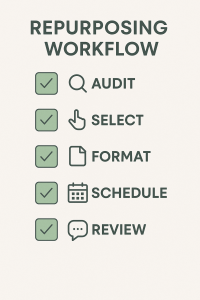
4. Create & schedule content: Batch graphics, record clips, write email, etc.
5. Track performance & iterate: Keep an eye on engagement, clicks, or results; refresh or reformat as needed.
Do this regularly, maybe repurpose one piece per month, and over time you’ll build content momentum without burning out.
Wrapping Things Up (But Not the Opportunity)
Content repurposing isn’t just a trick for lazy marketers. It’s a smart, strategic move, a way to squeeze the most value out of what you already created while reaching more people in all sorts of formats.
By using repurposing as part of your “Internet Profit Success” approach, you build momentum. Every blog becomes a social feed, an email, a video, a downloadable asset, maybe even a course. You stay visible, stay helpful, and stay consistent, without reinventing the wheel every week.
So don’t treat old content as expired. Treat it as a raw material. The more creatively you reuse it, the more your reach, and your results, multiply.
Go ahead: pick that one old blog post, dig in, and repurpose smarter.
Get a quick start by following the advice in these 5 FREE VIDEOS
