
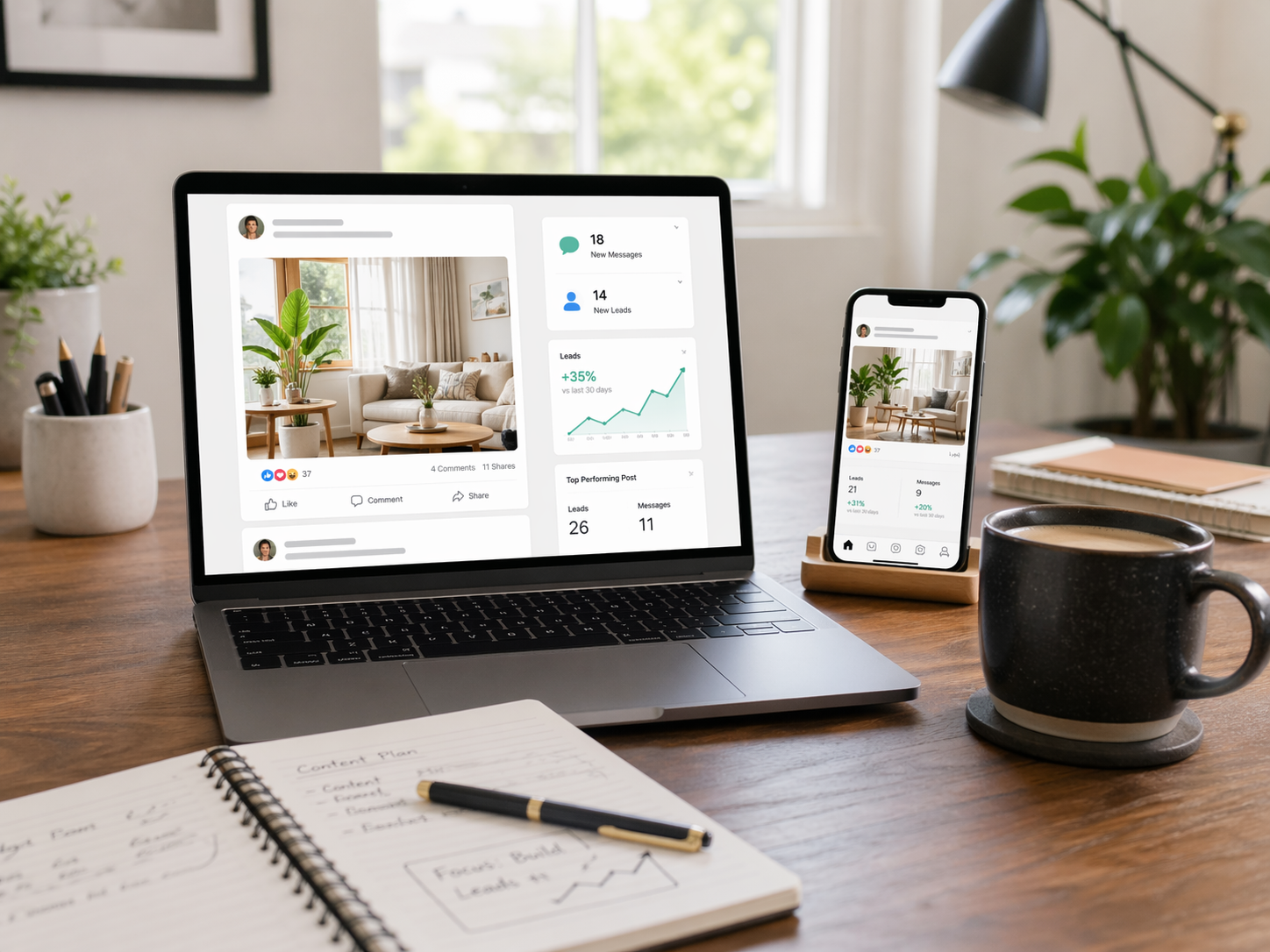
5 Facebook Posts That Convert Likes Into Customers
These Convert Without Chasing Likes

Why Facebook Posts That Convert Matter More Than Likes
A lot of beginners get excited when a post racks up likes, hearts, and the occasional “so true” from Uncle Bob. Fair enough. It feels good. However, vanity numbers can be sneaky little troublemakers. A busy post is not always a useful post.
That is exactly why Facebook posts that convert matter so much. They do more than collect applause. Instead, they move people from “huh, interesting” to “tell me more.” In other words, they help turn followers into customers instead of turning your page into a digital high-five machine.
Meanwhile, the best-performing social content is often useful, educational, and tied to a clear goal rather than random noise. That lines up nicely with Meta’s own guidance to post when followers are online, keep frequency sensible, and focus on content that drives engagement with purpose.
So, if your current plan is “post stuff and hope for magic,” no judgment. We have all been there. Still, hope is not a strategy, and lucky guesses do not build steady results. Facebook content that converts needs a bit more thought, a bit more structure, and a lot more usefulness.
The Big Difference Between Attention and Action
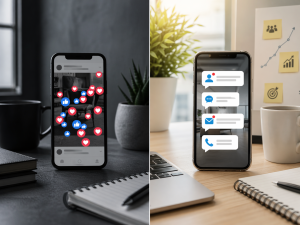
Attention is nice. Action pays the rent. That is why tracking social media metrics that matter more than likes gives you a much better read on whether your content is driving real action or just collecting vanity engagement.
That is the easiest way to understand why some posts flop while others quietly bring in leads, conversations, and buyers. One post may get a pile of reactions because it is funny, dramatic, or weird. Another might get fewer reactions, yet spark direct messages, clicks, sign-ups, and real interest. Guess which one wins?
To be clear, engagement is not bad. In fact, it can be helpful. It shows that people noticed you. On the other hand, attention alone is like having a packed shop where nobody opens their wallet. Busy, yes. Profitable, not so much.
Facebook posts that convert have a job to do. Usually, that job is one of four things. They solve a problem, build trust, prove something works, or guide people toward a next step. Sometimes they do all four at once, which is lovely and slightly unfair to mediocre posts everywhere.
As a result, your content should not ask, “Will this get likes?” first. It should ask, “Will this help the right person take one more step?” That simple shift changes everything. Suddenly, your content becomes less about performing and more about helping.
Facebook Posts That Convert Start With Real Problems
Whenever a post speaks directly to a real frustration, people lean in fast. That is because problems create relevance. Relevance creates attention. Then, if you handle it well, attention turns into trust.
For example, imagine your audience is full of beginner affiliate marketers. A vague post saying “Keep going, success is near” might get a few claps and fist-bump emojis. Nice. Still, a post saying “Why beginners get traffic but no clicks and how to fix it” will usually stop the right people much faster.
That is the secret sauce behind Facebook posts that convert. They do not begin with your product. Instead, they begin with your reader’s headache. The headache is the hook. Before you publish, a quick content clarity checklist can help you make sure the problem, the promise, and the next step are all crystal clear. The solution is the bridge. Your recommendation is the natural next step.
In addition, problem-focused posts make you sound useful instead of noisy. Nobody wakes up hoping to see another puffed-up motivational slogan from a stranger online. People want help. They want clarity. They want relief. They want someone to say, “Yep, this is the issue, and here is how to make it less annoying.”
That is why educational content remains such a strong performer across social channels. Useful beats fluffy most days of the week.
Educational Facebook Posts That Convert
Build Instant Credibility
Educational posts are not fancy, but wow, do they pull their weight.
Once you teach someone something practical, even if it is small, you stop being just another random account floating around in the feed. That is also one of the fastest ways to build trust with your audience, even if you are still fairly new and do not have a huge following yet. Instead, you become the person who helped them figure something out. That shift is huge.
Facebook posts that convert often teach one small lesson at a time. Not ten. Not fifty. Just one. Think tiny wins. Maybe you explain how to write a better hook. Maybe you show three mistakes beginners make with audience targeting. Perhaps you break down how to choose a simple call to action that does not sound like a robot in a bad suit.
Short, useful teaching works because it lowers resistance. Readers do not feel trapped in a lecture. They feel helped. Moreover, they begin to assume you know your stuff, which makes future recommendations feel more trustworthy.
HubSpot and other current social marketing guides continue to highlight educational content, videos, and practical post ideas as strong ways to drive engagement and build interest. In the same spirit, Facebook content that converts usually gives value before it asks for anything.
So, if you are not sure what to post, teach something small. Tiny lessons often create big trust.
An Example of an Educational Post That Actually Works
Let us make this real.
Say your audience struggles with getting people to respond to their posts. Instead of posting, “Consistency is key,” try something like this.
Most people do not get replies because their post ends with a dead stop. They share a thought, then wander off like a sitcom dad into the hedge. A stronger post ends with an easy next step. Ask for an opinion. Ask which tip felt most useful. Ask what they are stuck on right now. Keep it simple.
See what happened there? The post teaches one thing, solves one tiny problem, and gives one action the reader can use immediately. That is how Facebook posts that convert earn attention without yelling.
You can also make these educational posts more effective by using quick examples. Readers love examples because examples do the heavy lifting. They take fuzzy ideas and turn them into something people can picture. Better still, examples make beginners feel like the topic is doable instead of intimidating.
Meanwhile, practical teaching positions you as a guide, not just a promoter. That matters because turn followers into customers is not really a trick. It is a trust process. Helpful people get remembered. Loud people get muted, at least in people’s brains if not officially.
Facebook Posts That Convert
Use Stories People Actually Remember
Facts are useful. Stories are sticky.
That is why personal story posts can work so well when you want Facebook posts that convert. A story creates motion. There is a before, a mess, a lesson, and an after. People follow that shape almost automatically because it feels human.
For instance, you might share a time when you posted constantly but got nothing except a few pity likes from friends and a bot selling sunglasses. Then you explain what changed. Maybe you started writing posts around specific problems. Maybe you focused on one audience. Maybe you stopped trying to sound impressive and finally sounded clear.
Now the story does two jobs at once. First, it creates connection. Second, it delivers a lesson without sounding preachy. That is a beautiful combo.
On the other hand, a story without a lesson is just online diary soup. The lesson is what turns a nice anecdote into Facebook content that converts. Without it, readers may enjoy the tale but never connect it to their own situation.
Emotional writing and storytelling remain common best-practice themes in Facebook copy advice because they help content reflect audience needs and motivate response.
So yes, tell stories. Just make sure they lead somewhere useful.
A Story Formula You Can Borrow Without Feeling Weird
If storytelling sounds intimidating, relax. You do not need to be a novelist in a turtleneck staring dramatically out a rainy window. If you ever feel stuck for story ideas, learning how to create content from your daily life makes this style of post far easier to write on a regular basis.
A simple story post can follow this pattern. To make that first line hit harder, these social media hook templates that stop the scroll can help you open with more punch and less guesswork. Start with a strong hook. Then describe the struggle. Next, reveal the mistake or discovery. Finally, explain the lesson and what to do next.
Here is a quick example in plain English.
I spent weeks posting on Facebook and thought I was doing great because people kept liking my stuff. Then I checked what mattered. No messages. No real questions. No interest. Just noise. Eventually, I realized my posts were all cute and no substance. Once I began teaching one simple thing per post, people started asking for help and wanting more details.
That is a story with a point. Better yet, it naturally supports the goal to turn followers into customers because it shows a reader what changed and why it mattered.
In addition, stories help beginners feel less alone. That matters more than people think. Many readers are quietly frustrated, and a relatable story makes them feel understood. Once someone feels understood, they are much more open to guidance. That is not manipulation. It is just human nature doing its thing.

Facebook Posts That Convert
Lean on Proof, Not Hype
Hype is loud. Proof is believable.
Whenever people are unsure, they look for signs that something worked for somebody else. That is why results posts, case studies, progress updates, and testimonials can be so effective. They reduce doubt. They make the outcome feel real instead of imaginary.
Now, this does not mean you need to wave giant screenshots around like a game show host. In fact, sometimes a simple post works better. You can share a small win, explain what caused it, and point out the lesson. That approach feels grounded, which is refreshing in a world where everybody online claims they “crushed it” before breakfast.
Facebook posts that convert often include proof in a calm, useful way. For example, you might say that after switching from generic motivational posts to problem-solving Facebook lead generation posts, you started getting more direct questions from the right people. Then explain what you changed. That turns proof into teaching, which is far more valuable than chest-thumping.
Likewise, testimonials work best when they highlight a specific result or experience. Vague praise is forgettable. Specific feedback sticks. If someone says, “I finally understood what kind of post to write,” that is far more convincing than “Amazing stuff!”
What Good Social Proof Looks Like in a Facebook Post
Let us say you want to share a small result. Great. Keep it simple.
You could write about how one step-by-step post brought fewer likes than your usual content, yet sparked three real conversations from people asking how to get started. That is a fantastic lesson because it teaches readers to value quality of response over raw engagement.
Another option is a mini testimonial. Maybe a beginner says your tips helped them stop overthinking and finally write content that got replies. Nice. That works because it gives readers a glimpse of transformation.
Still, the best proof posts do not stop at “look at this.” Instead, they say “here is why this worked.” That added explanation is what makes Facebook posts that convert much stronger than random brag posts. Readers learn something they can try for themselves.
Meanwhile, current marketing advice keeps circling back to the idea that social efforts should connect to business outcomes, not just surface-level numbers. Therefore, proof posts should focus on meaningful progress.
If a post brings better leads, better questions, or better conversations, that is proof worth sharing. For example, if your goal is to turn quiet interest into real conversations, this guide on how to get more DM replies without sounding salesy is a smart next read. Likes alone are just confetti. Pretty, yes. Nutritious, no.

Facebook Posts That Convert
Simplify the Next Step
Confused people do not click. They freeze.
That is why step-by-step mini-guide posts work so well. They reduce friction. They turn a cloudy subject into a simple path. Readers stop feeling lost and start feeling capable, which is a very handy emotion when you want action.
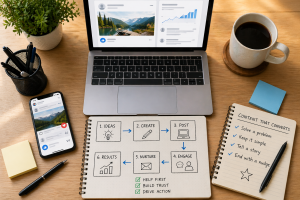
For example, instead of saying “build a content strategy,” you can write a post called “3 simple Facebook lead generation posts to try this week.” Then walk them through it. On Monday, teach one tip. On Wednesday, share one story. On Friday, post one result or lesson. Done. No smoke. No mystery. No dramatic violin music.
Facebook posts that convert often break a task into three to five easy moves. That sweet spot feels manageable. More than that, and beginners may panic. Less than that, and the advice can feel too vague.
Besides, mini-guides are highly saveable. People love saving practical posts for later, especially when they are busy, overwhelmed, or trying to learn something new without setting their brain on fire.
Sprout Social’s current Facebook strategy guidance also emphasizes planning content and using a healthy balance of educational versus promotional posts. That fits perfectly with helpful guide-style content.
A Mini Guide Example for Beginner Marketers
Here is the kind of mini guide that works beautifully.
Title: 3 Facebook posts to try when nobody is responding
First, write an educational post that fixes one tiny problem. Next, post a short personal story about a mistake you made and what you learned. After that, share one result, insight, or piece of feedback that proves your advice is working.
That is it. It is clear, easy, and not overwhelming. And if you want more ready-to-use prompts in the same style, these social media engagement post ideas that spark replies fit naturally right alongside this mini-guide approach. More importantly, it helps people act now instead of someday. Someday is a lovely word, but it ruins a lot of plans.
This is also where Facebook content that converts gains an edge over rambling content. It respects the reader’s limited attention. It says, “Here is what to do next,” without making them dig through twelve paragraphs of fluff to find the point.
In addition, simple mini-guides position you as practical and trustworthy. Nobody expects perfection. What people do appreciate is clarity. If your post makes the next move feel obvious, you are doing something right.
So, whenever you feel stuck, create a tiny roadmap. It is one of the easiest ways to turn followers into customers because people trust the guide who makes the road feel walkable.
Facebook Posts That Convert
Make Offers Feel Useful
Now let us talk about the touchy bit. Promotion.
Most people either avoid it completely or swing the other way and sound like a late-night infomercial trapped in a comment section. Neither approach is ideal. Instead, the best Facebook posts that convert make offers feel useful, timely, and connected to a real problem.
In other words, do not shout “buy this” out of nowhere like a raccoon stealing a sandwich. Set the stage first. In fact, you usually need to warm up your audience before you sell, otherwise even a good offer can land with a dull thud. Remind readers of the problem. Explain why it matters. Then introduce the tool, resource, or training as a logical next step.
That shift matters a lot. Readers are far more open to an offer when it feels like help instead of interruption. This is exactly why value-first social content remains such a strong strategy. Helpful content warms people up. Blind pitching cools them down.
At the same time, a good offer post stays simple. One problem. One solution. One next step. That is plenty. When people get too many details, they often wander off mentally and start thinking about snacks.
Meanwhile, Facebook marketing guides still recommend keeping promotional content in balance with value-based content. Too much pitching can wear people out fast.
How to Turn Followers Into Customers Without Sounding Pushy
Nobody wants to sound pushy. Thankfully, you do not have to.
To turn followers into customers, focus on guidance instead of pressure. Guidance sounds like, “If this is the problem you are dealing with, here is a simple place to start.” Pressure sounds like, “Act now before the moon explodes.” One of these builds trust. The other builds eye-rolls.
A soft-sell approach works especially well on Facebook because people are there to scroll, connect, and explore, not to be body-slammed by aggressive copy. So, keep your tone light. Keep your wording natural. Most importantly, make the reader feel smart, not cornered.
For example, after sharing a useful lesson, you can say something like this: If you want a simple way to put this into action, I found a beginner-friendly resource that helps make the whole thing less confusing. That feels conversational. It also flows naturally from the content.
This is where the phrase Internet Profit Success can fit in nicely too. You might mention that many beginners chase shiny tricks, yet real Internet Profit Success usually comes from simple, repeatable actions done consistently. That sounds grounded because it is.
Furthermore, subtle promotion tends to outperform awkward hype in the long run. Trust grows slowly, but once it is there, everything gets easier.
Common Mistakes
That Kill Facebook Content That Converts
Some posts fail because the idea is bad. Most fail because the execution is muddy.
One common mistake is being too vague. A lot of the habits behind weak posts are really just content creation mistakes that quietly kill trust, even when the original idea is actually pretty solid. If readers cannot tell what the post is about in the first line or two, they keep scrolling. Another issue is trying to sound clever instead of clear. Clever has its place. Clear pays better.
Then there is the classic mistake of writing for everybody. That never ends well. When a post tries to help everyone, it often helps nobody. Facebook posts that convert usually speak to one kind of person with one kind of problem. That sharp focus makes them feel personal.
Also, too much promotion will wear people out. If every post feels like a sales pitch in a cheap trench coat, readers stop paying attention. On the other hand, if you never mention a solution, your audience may love you and still never buy a thing. Balance matters.
Finally, do not make the next step hard. If your call to action is fuzzy, overly complicated, or buried under a wall of text, response drops.
Meanwhile, modern Facebook strategy advice consistently points back to moderation, planning, and relevance instead of posting randomly and hoping for a miracle.
Facebook Lead Generation Posts
Need a Clear Call to Action
A post can be helpful, relatable, and well written, yet still flop if the ending is weak.
That is why Facebook lead generation posts need a clear call to action. Readers should know exactly what to do next. Not maybe. Not sort of. Clearly.
This does not mean your call to action must sound dramatic. In fact, the best ones are often simple. Ask readers to reply if they want more detail. Invite them to message you if they are stuck. Tell them to check out the next step if they want help applying what you just explained.
Clarity wins here every time. A strong call to action is like handing someone a door handle instead of making them kick through a wall. If you want to tighten that final nudge, these call to action best practices will help you turn interest into movement much more smoothly., otherwise even a good offer can land with a dull thud. Much kinder. Less messy too.
At the same time, your call to action should match the post. If the post teaches one small tip, the next step can be a question or invitation to learn more. If the post shares proof, the next step might be to ask whether they want the method behind it.
The point is simple. Facebook posts that convert do not end with a shrug. They guide the reader into motion. That final nudge is often where the magic happens.
A Simple Weekly Plan for Facebook Posts That Convert
If you want consistency without feeling chained to your keyboard, a simple weekly rhythm helps a lot.
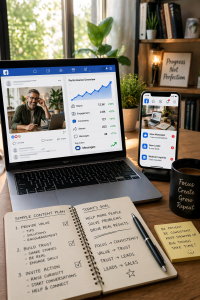
Start Monday with an educational post. Teach one useful lesson that solves one small problem. Then, on Wednesday, share a story post that shows a mistake, a discovery, or a turning point. After that, use Friday for proof. Share a result, a lesson from feedback, or a progress update. Finally, use the weekend for a softer offer or a conversation-starting post that invites people to take the next step.
That kind of rhythm works because it balances trust-building with conversion. It also keeps your content from feeling repetitive. Better still, it gives you a framework, which is a lifesaver on days when your brain feels like warm soup.
Sprout Social’s recent Facebook guidance recommends planning content in advance and leaning on an 80 percent educate, entertain, or inspire mix with about 20 percent promotional content. That balance fits beautifully with this kind of weekly structure.
Most importantly, a weekly plan helps you produce more Facebook content that converts because you stop guessing. Guessing is exhausting. Frameworks are friendlier.
How to Measure Whether Facebook Posts That Convert Are Working
Now for the part many people avoid because numbers feel scary. Do not worry. We are keeping this simple.
First, look beyond likes. Those are not useless, but they are not the full story. Instead, pay attention to saves, shares, direct messages, comments with real intent, profile visits, and conversations started. Those signals usually tell you much more about whether your post is moving people toward action.
Next, look at patterns. Are your educational posts getting better questions? Are your story posts bringing more replies? Are your proof posts leading to more interest in what you recommend? If yes, you are moving in the right direction.
Also, match your content to your goal. If the goal is to turn followers into customers, then measure things that suggest buyer intent, not just popularity. Current social strategy guidance keeps emphasizing that content performance should connect to actual business outcomes.
Meanwhile, do not panic over one quiet post. Not every post will soar. Some will sink like a brick in wet socks. That is normal. What matters is the trend over time, not one random Tuesday when the algorithm got moody.
Final Thoughts on Facebook Posts That Convert
At the end of the day, Facebook posts that convert are not about tricks. They are about usefulness, trust, and clear direction.
When your content teaches, connects, proves, and guides, people stop seeing you as background noise. They begin to notice you as someone who can help. That is the whole game. Not louder. Better. Not busier. More useful.
So, if you want stronger results, focus less on chasing empty engagement and more on creating posts with a purpose. Teach something small. Tell a story with a lesson. Share proof that matters. Offer the next step naturally. Then repeat that pattern until it becomes second nature.
Over time, that is how you build Facebook content that converts. That is how you create Facebook lead generation posts that feel human. That is how you turn followers into customers without sounding desperate or weird. And yes, that is how Internet Profit Success starts to look a lot less like a fantasy and a lot more like a system.
In short, likes are nice. Buyers are nicer. So, go write the kind of post that helps someone do something, not just nod politely and scroll away.
