

Unlock 9 Power Words for Conversions That Actually Get Clicks
Marketing Power Words to Skyrocket Conversions

If you’ve ever wondered why some headlines make you stop mid‑scroll and others make you yawn, you’re not alone. In fact, smart marketers have been using power words for conversions to trigger emotional responses that make people act, not just read. That’s because the words you choose can literally change the way readers think, feel, and click. And if your goal is Internet Profit Success, understanding these words is one of the easiest ways to give your content more persuasive punch.
In online marketing, a conversion can be almost anything, a click, a signup, a buy, or even a smile at your brilliantly crafted headline. But whatever you’re trying to get your readers to do, power words help by tapping into psychology, curiosity, urgency, trust, and desire. Marketers use them everywhere from headlines to call‑to‑action buttons because a clever word can spark a decision in an instant. This isn’t woo‑woo, industry pros swear by it, and the evidence is everywhere you look.
If you want to boost engagement and actually get results, you need more than good intentions, you need to understand what gets people to respond, starting with ChatGPT niche ideas that actually sell
What Are Power Words and Why They Work
Power words aren’t just “pretty sounding” language, they’re psychologically effective triggers that can elevate your writing from bland to magnetic. In blog posts, emails, ads, and landing pages, the right word can grab attention, stir emotion, and increase your chance of converting a reader into a doer.
Choosing the right words only matters if they’re targeted to the right audience, especially in the best affiliate marketing niches for 2025 where competition is fierce and attention spans are short.
A free download is often the first step in building trust and showing value. If you’re not sure what to create, check out these steps to create a lead magnet that converts, perfect even if you’re just getting started.
In essence, a power word for conversions is a word that:
sparks curiosity
triggers trust or urgency
appeals to emotion
makes a reader feel something before they think
prompts immediate action
That might sound like marketing magic, but there’s a solid reason these words work: emotional response drives behavior. Whether it’s curiosity, fear of missing out, exclusivity, or reassurance, strong words create a mini‑moment of connection between your message and the reader’s desires.
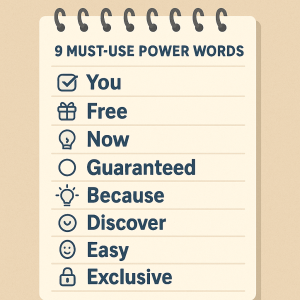
The 9 Power Words That Convert (and How to Use Them)
Below you’ll find nine words that marketers rely on to enhance engagement, improve click‑through rates, and support Internet Profit Success. I’ll explain why each word works, offer action steps you can implement today, and show real‑world examples that you can adapt to your own copywriting.
1. You
There’s a reason great copywriters recommend addressing the reader directly. The word you feels personal. It cuts through generic language and gives your reader a sense that your message is about them. This creates an instant connection.
Action Step:
Look over your copy and ask: how many times am I talking vs how many times am I talking to you? Try flipping your perspective to make it more audience‑centric.
Example:
“I built this tool to help marketers…” becomes “You can use this tool to solve your conversion challenges.”
This subtle shift increases reader focus and makes the headline or CTA feel personally relevant.
2. Free
“Free” is simple but seriously powerful. When people see it, their brains perk up because it signals zero risk, at least cost‑wise, and invites exploration. Whether it’s a free guide, trial, checklist, or bonus resource, the word itself becomes an engagement magnet.
Action Step:
Brainstorm three genuinely valuable assets you could offer for free that naturally relate to your core message. It could be a PDF, mini‑course, template, cheat sheet, or a short video lesson.
Example:
Instead of “Download our ebook,” try “Grab your free conversion checklist now.”
3. Now
If you want readers to act right this second, you need urgency. That’s where now comes in. It’s a subtle nudge, but one that tells the brain this isn’t something to put off.
Action Step:
Insert now into your CTA or headline at least once, and test how it performs against wording without it.
Example:
“Start your journey today” becomes “Start your journey now, don’t wait.”
Even simple shifts like these make decision‑making feel more immediate.
4. Guaranteed
Trust is one of the hardest elements to build online. Human readers are skeptical, and they want assurance before they commit. That’s why guaranteed is such a valuable power word. It signals a risk‑free offer and helps people feel safe taking that next step.
Action Step:
Add a clear guarantee statement to your offer. If possible, make it specific: “30‑day satisfaction guaranteed” or “results guaranteed or your money back.”
Example:
“This course helps you improve conversions” becomes “We guarantee you’ll boost your conversion rates, or your money back.”
5. Because
Here’s where psychology sneaks in: humans naturally respond to reasons. Even simple explanations trigger compliance because our brains seek justification. That’s the power of because.
Action Step:
Whenever you ask readers to take action, follow up with because and a compelling reason.
Example:
“Join this training because it covers techniques you won’t find elsewhere.”
This simple shift satisfies logical and emotional parts of the brain at the same time.
6. Discover
Curiosity is one of the strongest emotional drivers. The word discover promises revelation, something new, unknown, or valuable that’s waiting just beyond the click. It’s incredibly useful in educational content, tutorials, and blog headlines because it hints at insider knowledge.
Action Step:
Sprinkle discover into your subheadings or CTAs to make readers feel like they’re unlocking a secret.
Example:
“Discover how to transform your landing pages with just a few tweaks.”
This formulation makes learning feel adventurous rather than boring.
7. Proven
People want assurance that something works before they invest their time or attention. That’s where proven becomes a conversion booster, it signals credibility.
Action Step:
Look through your testimonials, case studies, or data and explicitly highlight them as proven strategies when possible.
Example:
“Proven techniques for boosting email open rates by 30%.”
8. Easy
Some audiences fear complexity and get overwhelmed easily. The word easy promises simplicity. It says, “You can do this without stress.” That alone can be convincing.
Action Step:
Add easy before actions like “steps,” “framework,” “guide,” or “method.”
Example:
“Try this easy 3‑step framework to build your first funnel.”
9. Exclusive
Humans love to feel special. When something is exclusive, it’s limited and unique, that gives people FOMO (fear of missing out) and makes them want to be in the club.
Action Step:
Label a bonus or access as exclusive to certain audiences (early signups, loyal readers, etc.)
Example:
“Exclusive invite to our private feedback session for early registrants.”
How to Use Power Words for Conversions Throughout Your Content
Now that you understand each of the nine conversion power words, let’s talk about how to organically integrate them into your content without sounding spammy.
Headlines That Stop the Scroll
Headlines are your first impression, make them count. A headline with one or two power words can outperform a plain one because it resonates emotionally and promises value.
Examples:
“Discover 7 Easy Ways to Boost Your Email Opens”
“Exclusive Training You Can Join Now (Free Seats!)”
“Proven Conversion Power Words You Should Try Today”
Using words like discover, easy, exclusive, and proven in headlines increases click appeal.
Subheadings That Guide the Reader
Subheads break up text, help readers scan, and reinforce your main points. Sprinkle conversion power words into subheads to maintain energy and focus.
Examples:
“Why You Need to Focus on You in Every Headline”
“Make Your Offers Irresistible With Free Bonuses”
“Take Action Now With Simple Conversion Tricks”
By embedding power words into your structure, you keep reader interest high and guide them toward your key takeaways.
CTAs That Convert
Calls‑to‑action are where the magic happens. Your CTA is the moment of truth, and power words make it feel compelling rather than pushy.
When in doubt, a swipe file of effective headlines and CTAs can save you hours, here are 9 swipe file ideas that fuel content creation fast that you can copy and use right now.

Call to action buttons using power words for conversions like Free and Now.
Examples:
“Get Your Free Guide Now”
“Discover More Proven Tactics”
“Claim Your Exclusive Spot Today”
These CTAs integrate urgency (now), curiosity (discover), and value (free, proven) in a way that encourages action.
The same CTA with the right power word can work in a blog, an email, and a reel, especially when you use clever content repurposing strategies to stretch your efforts.
Common Mistakes to Avoid When Using Power Words
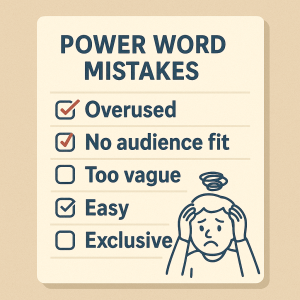
Even though power words are potent, overusing them or using them without strategy can dilute their effectiveness. Here are some pitfalls to watch for:
1. Overuse
More isn’t better. Use words where they feel natural and meaningful, not stuffed in just for SEO’s sake.
2. Lack of Clarity
Power words should enhance clarity, not bury it. If your sentence becomes confusing or vague, simplify it.
3. Repetition
Repeating the same power word over and over dilutes its impact, and that’s just one of many affiliate marketing mistakes beginners make you’ll want to avoid. Mix in synonyms or alternate phrases to keep language fresh.
4. No Audience Fit
Know your readers. A word that speaks to one audience might fall flat with another. Always tailor language to reader expectations and context.
Final Thought: Power Words Amplify Internet Profit Success
At the end of the day, words are one of your most flexible and effective tools in marketing. Whether you’re optimizing blog posts, crafting email campaigns, or building landing pages, the power words for conversions listed above can help you connect emotionally, spark urgency, build trust, and drive action, all while keeping your readers engaged and motivated.
Remember, conversion isn’t just about getting someone to act once, it’s about building a consistent pattern of communication that feels valuable, trustworthy, and relevant. When you use these words naturally and strategically, you’re not just persuading clicks, you’re building relationships that can fuel your Internet Profit Success for the long haul.
Want better conversions? Try tweaking your language before you tweak your design, and if that’s not enough, read this breakdown of why my offer isn’t converting and exactly what to fix.
Now go ahead and test these words. Rewrite your headlines, sharpen your CTAs, sprinkle these words into your content, and see the difference they make. Your audiences will notice, and your results just might surprise you.

Watch these 5FREE VIDEOS to gain a better insight.
