
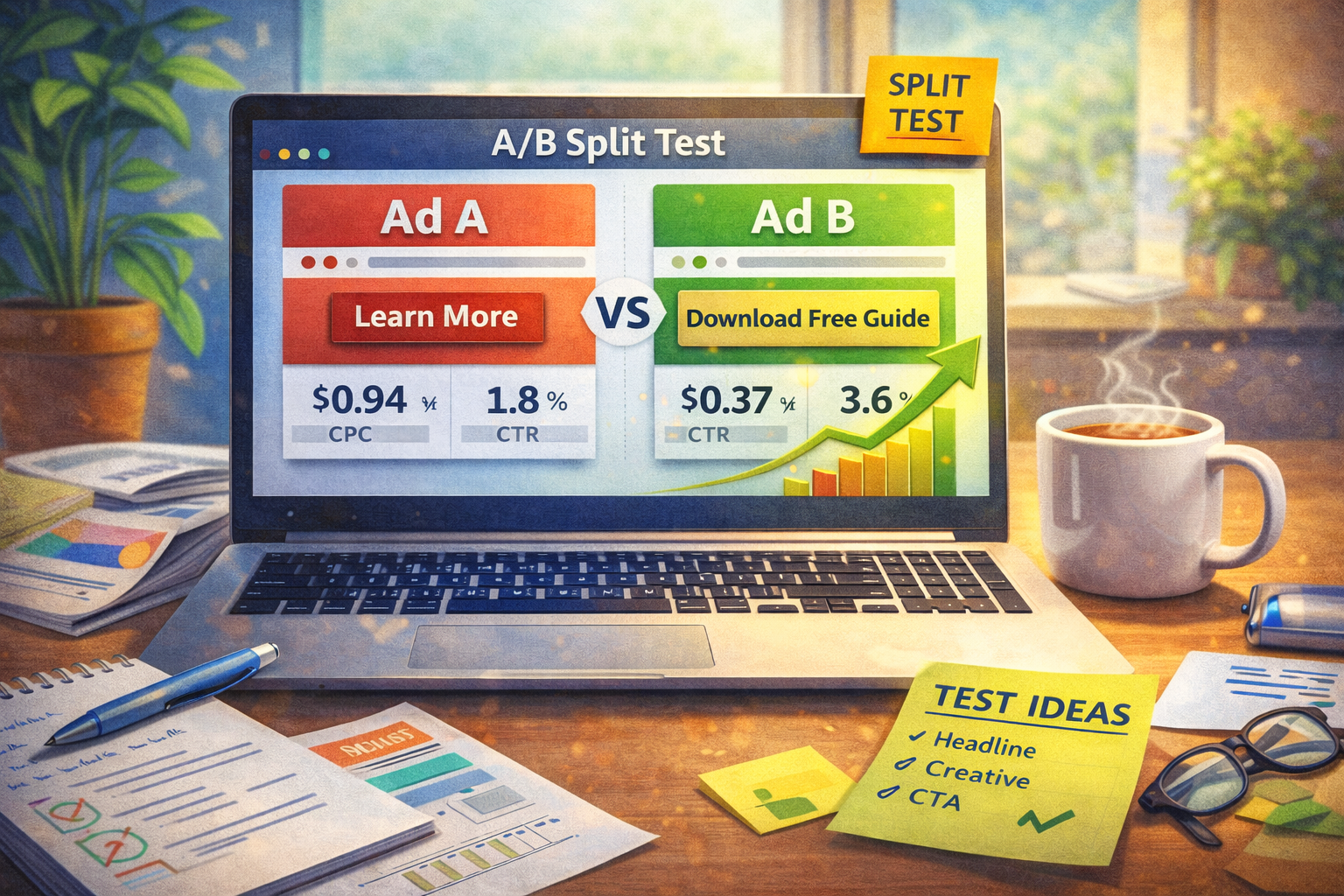
Split Testing Ads: 7 Smart Ways to Boost Ad Performance
Experiments That Drive Better Results
Split Testing Ads: The Ultimate Guide to Smarter, Faster Ad Wins
Split testing ads is like being a mad scientist inside the lab of your own marketing campaign, except, thankfully, you don’t need a lab coat or chaotic hair. Instead, you get data, insights, and the sweet satisfaction of seeing a winner emerge. In this guide we’ll dive into what split testing ads really means, how to do it with intention, and how to turn your ad performance from “meh” to “heck yes!” Whether you’re just getting started or you’ve been running campaigns for years, this long‑form playbook is designed to make your experiments clearer, faster, and more successful, especially if your goal is some good old‑fashioned Internet Profit Success.
At its heart, split testing ads is pretty simple: you take two (or more) versions of an ad, each with only one thing different, and you let the data tell you which one performs better. Sound easy? It is, but only if you structure your testing plan in a disciplined way. Otherwise you might just waste time, money, and dreams.
To make your optimization even more powerful, check out my blog post SEO checklist for structuring content that ranks and drives traffic while you test and refine your campaigns.
Below we’ll walk through everything from the basics to advanced ideas, complete with example test plans, pitfalls to avoid, and extra tips to keep your campaigns humming.
Why Split Testing Ads Matters (And Why You Should Care)
You might be thinking, “Do I really need to split test ads? Can’t I just make an ad and hope for the best?” The short answer is: you can, but that’s a great way to burn budget and end up with mediocre results.
However, when you use split testing ads strategically, you replace gut feelings with actual performance data. Instead of guessing which headline or image will work better, you know because you tested it. This flips your entire mindset from reactionary to proactive.
In addition, split testing ads helps you:
• Avoid wasting money on underperforming creatives
• Understand your audience preferences better
• Build confidence in campaign decisions
• Improve key metrics like click‑through rate, conversions, and cost per acquisition
Meanwhile, a disciplined split testing approach can dramatically shorten the path to Internet Profit Success, whether you’re selling products, building email lists, or driving signups.
The Split Testing Ads Mindset: Think Like a Scientist
Before we get into specific tests, it’s important to understand the “scientific” mindset behind split testing ads. This isn’t about flipping between two random ideas. Instead, each test should start with a hypothesis, a clear prediction about why you think one version will outperform the other.
To support your split testing setup, it helps to have the right resources and tech in place, this includes analytics and optimization tools. If you need ideas, here’s a post on discovering 14 free marketing tools every new marketer should be using today.
For example, you might hypothesize that:
“Using a video creative will increase engagement rates compared to a static image.”
Notice how this statement includes a prediction, a testable variable, and an expected outcome? That’s key.
Moreover, when you approach split testing ads with a hypothesis in mind, you learn even when a test loses. That’s because your data gives you insight into how your audience behaves, which in turn improves your next round of tests.
Of course, testing isn’t always perfect, and that’s okay. Sometimes you’ll see results that surprise you, but that’s where real learning (and Internet Profit Success) happens.
Headline and Hook Tests, The Gateway to Better Engagement
When it comes to split testing ads, your headline or hook is often the first thing people see. In fact, it’s the number one reason someone decides to stop scrolling and read your message.
Because of that, testing your headlines should be one of your first priorities.
The secret here is simple: you want headlines that capture attention, create curiosity, and compel people to click, without tricking them.
Here are a few headline styles you can test:
• Benefit‑focused: “Get Your First 100 Leads in 30 Days”
• Curiosity‑driven: “Why Your Ads Are Getting Clicks But No Conversions”
• Number‑driven: “3 Little Tweaks That Boost Your Ad Clicks”
• Pain point‑focused: “Stop Wasting Money on Ads That Don’t Work”
To conduct this split test, create three versions of your ad that are identical in every way except the headline or opening sentence. Then send equal traffic to each version and let the numbers speak.
Often, even small tweaks (like swapping a word or changing the tone) can lead to massive performance differences.

Test Idea 1: Creative Format, Image vs Video vs Carousel
Creative format is one of the most impactful variables in split testing ads. That’s because people process images, videos, and carousels very differently. And if you’re curious what kinds of creative formats and content types perform best right now, study the 7 best types of content that boost engagement.
For example, a still image might work great for simple visual products, but a short video could boost engagement by showing motion or demonstrating value. Meanwhile, a carousel lets you highlight multiple benefits or features in one placement.
To set up a creative format test:
• Create a simple 15‑second video that shows your product or outcome in action
• Design a static image that highlights the core benefit
• Build a carousel with three cards, each demonstrating a different advantage
Keep your ad copy and CTA identical across all versions so that the only difference is the creative format.
What you’ll likely notice is that some audiences prefer video content, while others engage more with images. And in many cases, carousels strike the perfect balance, especially when you’re telling a visual story.
Meanwhile, the data you gather here will inform future campaigns and give you a baseline for creative performance.

Test Idea 2: Primary Text Length and Style
Words matter, a lot, especially when you’re split testing ads.
Some audiences react well to short, punchy copy that gets straight to the point. Others prefer a slightly longer storytelling style that frames the offer and creates emotional context.
For example:
• Short copy (30–50 words): “Want more leads this week? Click here to get our quickest tips.”
• Long copy (80–150 words): “Imagine waking up with new leads in your inbox. Last month, our team helped Sarah double her signups by making three simple changes…”
In addition to length, tone matters too. Some audiences respond better to conversational language, while others prefer a formal or professional tone.
To test text length and style:
• Write a short, snappy version of your ad
• Write a longer, story‑led version with more context and emotional appeal
• Keep headline and creative the same
You’ll be surprised how much copy style impacts engagement, especially when coupled with different placements and audiences.
Test Idea 3: Call to Action Phrasing
Your call to action (CTA) is that final nudge that tells people what to do next. Small differences here can create big performance shifts.
Generic CTAs like “Learn More” work okay, but often more specific or benefit‑focused CTAs perform better because they set clear expectations.
For example:
• Learn More
• Get Your Free Checklist
• Watch a Short Demo
• Download the Quick Start Guide
To test CTA phrasing, set up two ads with identical copy and visuals, changing only the CTA.
You might find that a phrase emphasizing speed or simplicity resonates better with ready‑to‑act audiences. Conversely, a benefit‑driven CTA might win with those who need more clarity.
The key is to think about what outcome your audience wants and frame the CTA around that desired result.

Test Idea 4: Audience Segmentation
It’s easy to overlook audience targeting when you’re focused on creative and copy, but the truth is: who you show your ad to is just as crucial as what you show.
Different segments of your audience may respond very differently to the same creative. That’s where audience segmentation comes in. And once you’ve dialed in your audience, learn how to pull that traffic into a high‑performing funnel by reading how to build a profitable funnel.
You can test segments such as:
• Interest‑based audiences (e.g., people who like certain topics)
• Custom audiences (e.g., existing list subscribers)
• Lookalike audiences (people similar to your best customers)
• Demographic filters (age, gender, location, etc.)
To conduct this test:
• Keep your creative and copy constant
• Change only the target audience segment
• Use small budgets to gather early signals
This kind of split testing ads helps you determine which audience pools engage best and which cost less per conversion. Often times, a tightly defined niche audience outperforms a broad one, at least early in your testing calendar.
Over time, layering insights from audience tests with creative wins gives you a powerful roadmap to scale performance.
Test Idea 5: Landing Page or Offer Variants
Sometimes your ad gets clicks, but the landing page kills your conversion. This is especially common when you’re driving traffic to a page that doesn’t match expectations set in the ad.
That’s why one of the most overlooked split testing ads ideas is landing page optimization.
Think of it this way. If your ad is the invitation, then your landing page is the event. A mismatch between the two creates friction, confusion, and lost conversions.
For this test:
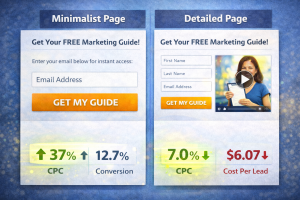
• Create two landing page variants, for example:
– Variant A: Short, simple headline with one‑field opt‑in
– Variant B: Longer benefits list plus video explanation
• Keep your ad creative consistent
• Track which landing page drives better conversion rates
You might find that a simpler form with fewer fields significantly outperforms a more complicated one. Or perhaps audiences respond better to a visual walkthrough before signing up.
Either way, you learn more about how your message resonates across the entire funnel, not just in the ad.
Test Idea 6: Placement, Schedule, and Budget Allocation
Where and when your ad shows up also impacts performance. This part of split testing ads is often overlooked, but it matters. If driving traffic is one of your biggest bottlenecks, this article on Increase website traffic fast gives practical strategies you can use alongside your testing flow.
Different placements, such as feed, stories, in‑stream video, and more, perform differently with various creatives and audiences.
For example:
• Some creatives crush in feed placements
• Others perform better in fast‑scroll environments like stories
• Time‑of‑day and day‑of‑week can also affect engagement
In addition, budget allocation strategies matter too. Do you split budget evenly across ads or concentrate on early winners?
To test this:
• Run identical ads in different placements
• Use time blocks to test weekdays vs weekends
• Compare even budget splits vs dynamic allocation
This information helps you optimize efficiency and make smarter decisions about where your money generates the most value.
Test Idea 7: Testing Process and Best Practices
By now you’ve seen a lot of potential split testing ads ideas. But to make the most of them, you need a solid testing framework.
Here are a few best practices:
• Test only one variable at a time (e.g., don’t change headline and CTA simultaneously)
• Run tests long enough to collect meaningful data
• Track key metrics like CTR, engagement, and conversion rates
• Document learnings so you can reference them later
When you follow a repeatable process and document results, your testing becomes compounding. That means you learn from each test, and your next ones get smarter.
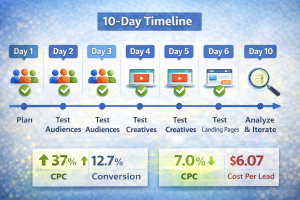
A Sample 10‑Day Split Testing Ads Plan
If you’re new or working with limited budget, we recommend a short, structured plan to gather clear signals fast.
Days 1–4: Audience Tests
• Run 2–3 audience segments at low budget
• Identify which group engages most
• Pause the weakest performers
Days 5–8: Creative and Headline Tests
• With best audience from Days 1–4, test creative formats and headline variants
• Keep messaging consistent
Days 9–10: Offer and Landing Page Tests
• Test landing page variants or CTA phrasing
• Finalize a combination that delivers best efficiency
This plan limits wasted spend while giving you insights that help you scale faster.
Tracking Metrics That Matter
When you’re split testing ads, data is your friend, but only if you track the right metrics.
Here’s what to watch:
• Click‑through rate (CTR), tells you how engaging your ad is
• Cost per click (CPC), how much you pay for interest
• Conversion rate, how many people complete desired action
• Cost per acquisition (CPA), how much you pay for a conversion
Also pay attention to patterns over time. For example, a creative might start slow but perform well later, especially if your audience needs repetition.
Common Pitfalls and How to Avoid Them
Even seasoned testers make mistakes. Here are a few pitfalls to watch for:
• Testing too many variables at once
• Stopping tests too early
• Ignoring placements or schedule differences
• Using insufficient data for decisions
To avoid these, always keep tests simple, run them long enough, and base decisions on actual performance data, not assumptions.
The Long‑Term Value of Split Testing Ads
Split testing ads isn’t just a one‑time trick, it’s a mindset. When you adopt a testing culture, every campaign becomes an opportunity to learn and improve.
Eventually you’ll build a library of winning creatives, audience insights, and performance benchmarks that serve as your roadmap to better results. And over time, that leads to more efficiency, more conversions, and, yes, more Internet Profit Success.
Final Thoughts
If you take anything away from this guide, let it be this: testing is non‑negotiable. Without split testing ads, you’re flying blind, and guessing is an expensive habit.
However, if you follow the steps above, stay disciplined, and keep learning, you’ll find that optimization becomes second nature. Not only will your campaign results improve, but you’ll also understand your audience, and your business, so much better.
Now it’s your turn: pick one test idea from this guide and run with it. Then measure, iterate, and scale what works. Before you start, don’t forget to follow helpful marketing basics, even simple tips can save you frustration and wasted spend. Here are 11 online marketing tips for beginners that can complement your split testing strategy.
Before long, your campaigns won’t just perform better, they’ll thrive.
These 5 FREE VIDEOS can help you
