
Ultimate Landing Page Optimization Guide
Better Results Without Fancy Design
Your landing page is more than just a URL — it’s the first handshake with a visitor and often the make‑or‑break moment for turning casual browsers into engaged leads. Get it right, and you unlock Internet Profit Success with consistent conversions; get it wrong, and every click becomes a missed opportunity.
Before visitors convert, they need a reason to stay, and smart traffic is just one part of that equation, as we explore in increase website traffic fast to actually get people onto your landing page.”
Thankfully, you don’t need a multi‑million dollar web team to make that happen. In this long‑form guide, we dive deep into landing page optimization, share landing page conversion optimization tactics you can implement today, and unpack high‑converting landing page tips backed by web research and real‑world examples.
What Is Landing Page Optimization?
At its core, landing page optimization means improving your page so that more of the right visitors take the action you want, sign up, download, purchase, or join your community. This isn’t just about pretty design. It’s about persuasive messaging, clarity, speed, and guiding the eye toward one purpose.
In fact, an optimized landing page does two things:
It aligns with what people are searching for (SEO helps here), and
It makes it extremely easy for visitors to convert once they arrive.
For example, search engines like Google reward landing pages that provide relevance and clarity around user intent, which makes well‑optimized pages more likely to show up in search results in the first place.
Why Landing Page Optimization Matters
Let’s paint a picture: you’ve spent time driving traffic, maybe via social media, ads, or SEO, to your landing page. But what if only a tiny percentage of people actually take the action you want? That’s where optimization steps in.
Here’s what happens when you focus on improving your landing page.
More conversions without more traffic: Optimizing the page itself means each visitor has a higher chance of converting.
Lower cost per acquisition: Whether you’re paying for ads or earning organic traffic, better conversion rates mean you spend less for each signup or sale.
Stronger audience trust & engagement: Clean pages, simple instructions, and clear value build confidence in your brand.
All of this feeds directly into Internet Profit Success, especially when your landing page becomes a reliable engine for growth.
The Psychology Behind Landing Page Conversion Optimization
Before we dive into specific tactics, it helps to understand the psychology at play. People don’t convert because they see a pretty button, they convert because:
They feel understood. (“This is exactly what I’m looking for.”)
They see clear value. (“I know why I should stay.”)
They encounter minimal friction. (“This is easy and quick.”)
They trust the source. (“Others have benefitted too.”)
That means your landing page should answer four fundamental questions in the visitor’s mind:
What’s in it for me?
Is this credible?
Is it easy to get?
Do I trust you?
Each fix we cover below is designed to meet one or more of those subconscious checks.
Fix 1: Clarify Your Headline With a Clear Value Promise (Use the Keyword Here)
The headline is the first piece of content your visitor sees, and it needs to clearly communicate who you help and how you help them. If your headline is vague, people bounce quickly, and you’ve just lost another chance for conversion.
Instead of:
“Welcome to my course”
Try:
“Get a 30‑Day Content Plan Even if You’re Starting from Scratch”
This kind of wording tells the visitor exactly what they get, who it’s for, and why they should stay. Don’t make people guess your value, landing page optimization starts with clarity.
Your headline also needs to incorporate your main keyword strategically but naturally.

Fix 2: Remove Distractions From the Page
Your landing page should have one job: guide the visitor toward the action you want. Every extra button, link, or image that doesn’t directly support that goal becomes a distraction.
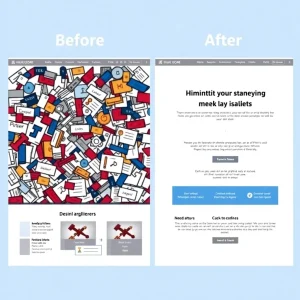
For example, if your goal is to collect emails, then remove:
Navigation menus
External links
Multiple CTAs
The cleaner your page, the more focused your visitor’s attention is on that one thing you want them to do. This is a common landing page conversion optimization best practice that simplifies the decision path.
Fix 3: Shorten Your Form Fields to Reduce Friction
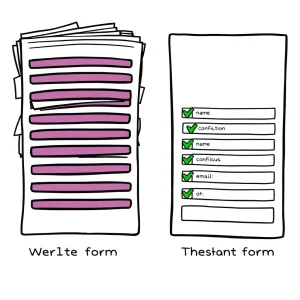
Long, complicated forms feel like commitment. When people see ten fields before they even know what they’re signing up for, they hesitate, and often leave.
Instead:
Ask only for essential info (often just Name & Email)
Use optional fields only if absolutely necessary
A shorter form feels quick and reduces psychological resistance, which is a simple yet powerful high‑converting landing page tip. One of the easiest ways to grow your audience, once your landing page is optimized, is knowing exactly how people sign up, like in how to get 100 email subscribers in one week, where a simple, no‑nonsense form strategy made a massive difference.
Fix 4: Add Social Proof or Micro‑Testimonials
People trust what other people have already tried and liked. That’s where social proof comes in, even if your page is new.
Micro‑testimonials could be:
Brief quotes from users
Screenshots of positive messages
Short results statements
For instance:
“This checklist helped me write my first reel, fast.”
This adds credibility and reassures visitors they’re making a smart choice, a staple tactic for boosting conversion. Social proof doesn’t have to be huge testimonials, and once you start seeing real results from tools or offers you believe in, you build credibility just like in how to choose affiliate products that sell, where real, actionable examples help others trust your content.
Fix 5: Use a Simple, Straightforward Call to Action
Your Call to Action (CTA) should be one of the easiest elements to understand. “Submit,” “Click Here,” or “Learn More” are too generic and don’t inspire action.
Instead, use:
“Get My Free Guide”
“Send Me the Checklist”
“Yes, I Want This Now”
When you’re crafting your call to action, remember these aren’t just buttons, they’re conversion catalysts, and if you want even more punch in your language, check out unlock 9 power words for conversions that actually get clicks for wording that gets results.
This kind of wording tells the visitor exactly what’s going to happen and ties directly into your value proposition, a strong landing page conversion optimization move.
Fix 6: Add a Brief Description or Sub‑Headline Below the Main Headline
Your headline grabs attention; your sub‑headline reinforces value. Think of it as your elevator pitch in one sentence.
For example:
“A simple content roadmap to help busy beginners post without stress.”
This reinforces clarity and aligns visitor expectation with what they get, further lowering bounce rates and boosting conversions.
Fix 7: Show What the Visitor Gets, Focus on Outcomes, Not Features
Visitors don’t wake up thinking, “I want features.” They think, “I want results.”
So instead of:
“Includes ten modules”
Use:
“You’ll walk away with a ready‑to‑use 30‑day plan”
That shift from features to outcomes, focusing on transformation, is a proven high‑converting landing page tip.
Fix 8: Ensure Your Page Loads Fast and Looks Good on Mobile
Fast loading times and mobile responsiveness aren’t optional anymore. Slow pages kill conversions and frustrate users, particularly on phones where attention spans are shorter.
Optimizing images, simplifying design, and testing your layout on multiple devices ensures a smooth experience. This improves usability and supports your broader landing page optimization strategy.
Testing and Iteration: Your Conversion Rate’s Best Friend
Even after you implement fixes, your job isn’t done. Testing, through A/B or split tests, helps you find the versions of headlines, CTAs, and layouts that work best with your audience.
You might find:
A different CTA color boosts clicks
A simpler form drives more signups
Or a new headline increases conversion overnight
Continual testing should be part of your long‑term landing page optimization mindset.
Common Mistakes That Kill Conversions (and How to Fix Them)
Before we wrap up, let’s cover some common landing page pitfalls:
Too Much Text
Visitors skim, they don’t read novels. Keep text concise and purposeful.
Unclear Headline
If a visitor can’t tell in 3 seconds what you’re offering, they leave.
Lack of Visual Hierarchy
Your design should guide the eye, big headline first, supporting benefits next, clear CTA at the end.
No Social Proof
Without proof, your offer feels untested and uncertain.
Avoid these and you’re already ahead of many pages online.
Summary: Your Path to Better Conversions
Just like you’d structure any valuable piece of content for search and clarity, think of the detail in blog post SEO checklist, your landing page copy also needs the same thoughtful optimization to rank and convert.”
There’s no magic formula, but there are principles that work again and again:
Clarify your message
Remove distractions
Reduce friction
Build trust
Focus on value and outcomes
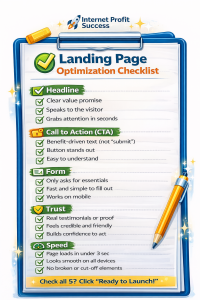
These landing page optimization strategies and high‑converting landing page tips don’t require complicated tech, huge budgets, or endless design changes. Done right, they can dramatically improve results fast, and set you up for consistent Internet Profit Success over time.
Take them one fix at a time, measure what works, and iterate. Your landing page can become one of your best online assets, not just a destination, but a conversion engine.
Once your landing page optimization starts converting consistently, you can turn those leads into income through topics like 9 affiliate offers for beginners that actually pay if affiliate marketing is part of your online strategy.
Get more help from these 5 FREE VIDEOS.
