
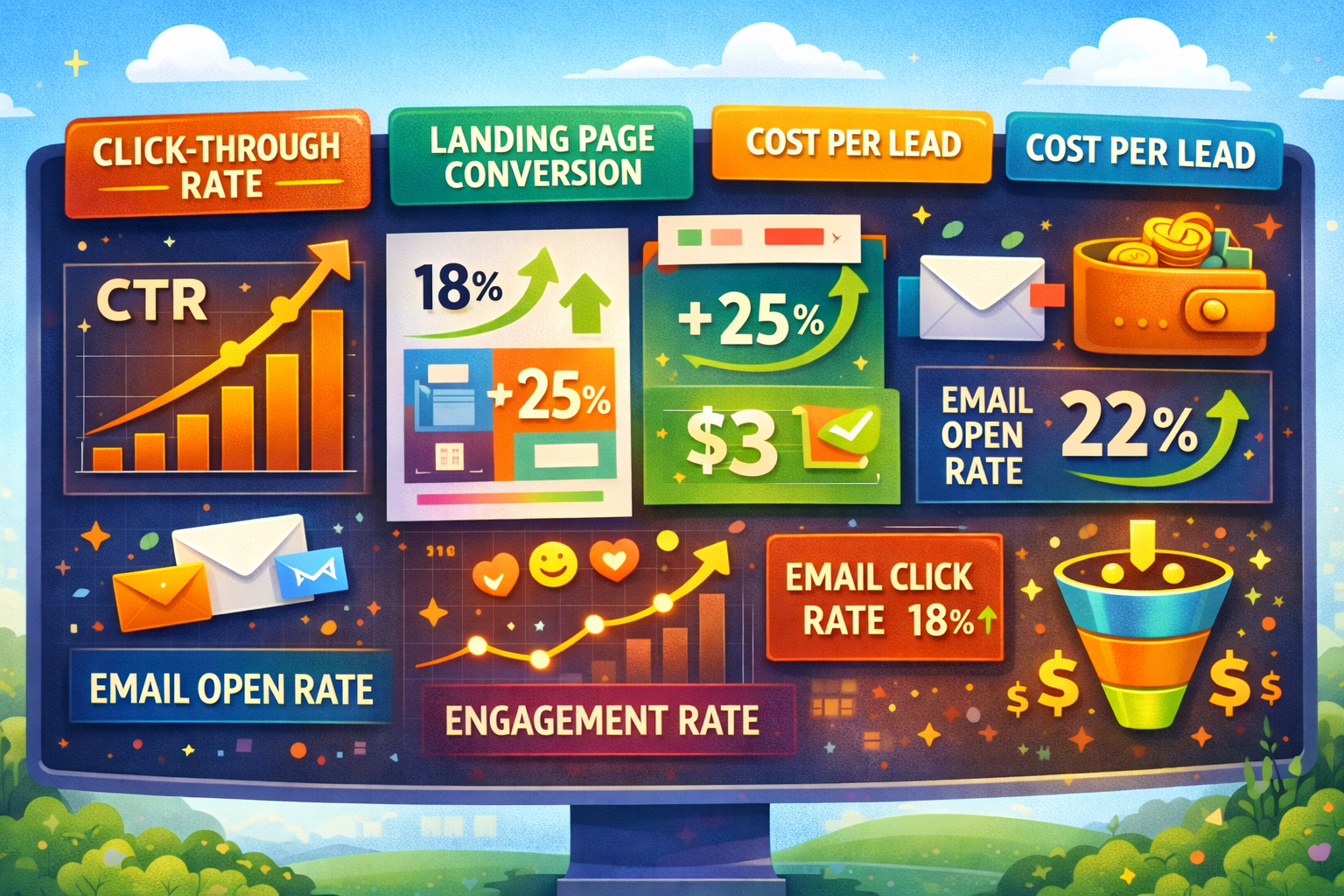
Marketing Metrics for Beginners: 7 You Must Track Today
7 Metrics New Marketers Must Measure
If you’re just getting started with online marketing, you’ve probably heard the phrase Internet Profit Success tossed around in the background like some magical unicorn. Meanwhile, you’re wondering which numbers actually tell you if your efforts are paying off. Luckily, this guide on marketing metrics for beginners will take you from confused to confident, one metric at a time.
No jargon. No complicated dashboards. Just practical insight and friendly encouragement.
Most new marketers are a bit like chefs who toss ingredients into a pot without ever tasting the soup. For example, they post on social media, run a couple of emails, maybe even throw a few dollars at ads. However, if they don’t track the right metrics, they can’t possibly know what’s working or, more importantly, what isn’t.
For example, if you struggle with engagement copy, check out Stop the Scroll Every Time With These Scroll Stopping Hooks to learn how tiny tweaks make a huge difference.
In addition, when you focus on key marketing metrics for beginners, you stop guessing and start making smart decisions for your business. Meanwhile, you build a system that supports Internet Profit Success in a way that you can scale and repeat.
This guide will break down seven core beginner marketing metrics explained in a way that’s easy to follow, even if you’ve never looked at a spreadsheet in your life.
Introduction to Marketing Metrics for Beginners
Let’s kick things off with a simple idea: numbers tell stories. For example, imagine you wrote an email and sent it out to 1,000 people. You’d probably want to know how many opened it, right? Better yet, you’d likely be curious if people clicked links or took action after reading.
That’s where marketing metrics for beginners come in. These are the key indicators that help you understand whether your marketing efforts are connecting with real people. Without tracking these metrics, you’re essentially flying blind.
Tracking the right metrics might seem intimidating at first. However, with a friendly mindset and a bit of curiosity, you’ll start spotting patterns and trends that make your decisions easier. In addition, when you use data smartly, you get closer to Internet Profit Success by learning what to fix and what to repeat.
In the sections that follow, we’ll cover each metric in depth, share real‑world examples, and point out easy action steps you can take immediately.
Metric 1: Click Through Rate, Your First Window Into Engagement
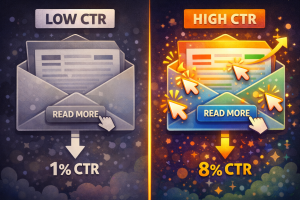
Click Through Rate, or CTR, is often the first metric new marketers encounter. Simply put, CTR shows how many people saw your content and then took action. For example, if 100 people saw your email or ad and 5 clicked, your CTR is 5 percent. Pairing a strong CTR with compelling offers, like those in How to Create Irresistible Offers That Convert, boosts results even more.”
Now, most seasoned marketers treat CTR like a compass. It helps show whether your headline or hook is interesting enough to get attention. However, if you’re new to this, that sentence might feel like marketing gibberish. So let’s put it in plain English. CTR tells you whether people are curious.
If your CTR is low, it doesn’t necessarily mean your content is bad. On the other hand, it does mean something needs to change, maybe your words need more punch, or perhaps your offer isn’t clear.
For example, if your average CTR on social posts is 1 percent, a small tweak to your call to action might bump it to 3 percent. That’s a huge gain, and it means more eyes on your valuable content.
Action steps to improve CTR:
• Test different hooks and headlines often.
• Keep your call to action clear and concise.
• Compare CTR across channels to see where people are most engaged.
In addition, document what works! If you see a pattern, say, questions in headlines tend to get higher CTR, then use that style more often. Over time, you’ll find your messaging gets sharper and more effective.
Metric 2: Landing Page Conversion Rate, Does Your Page Deliver?
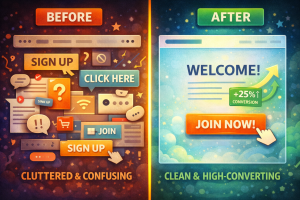
Once someone clicks through, the next big question is whether they take the action you want. That’s where the landing page conversion rate comes in. This metric measures how many people who land on your page actually complete your desired action, typically signing up, subscribing, or downloading a resource.
For even higher conversions, follow the tips in Master Landing Page Optimization, especially if you want more sign‑ups without redesigning your whole site.”
For example, if 200 people visit your landing page and 20 sign up, your conversion rate is 10 percent. That’s a solid number for beginners, but the goal is to improve over time.
Without tracking your landing page conversion rate, you might think people love your content, but in reality, they’re just bouncing away.
Now, it’s important to understand that small changes can have a huge impact. For instance, changing your headline from “Join My List” to something more specific like “Get Daily Tips for Marketing Growth” could increase conversions noticeably. Meanwhile, simplifying your opt‑in form by asking for only an email address instead of three fields can reduce friction.
Action steps to improve landing page conversion rate:
• Make your headline benefit‑focused.
• Test short vs longer page copy.
• Remove distractions (no extra links or confusing options).
Experiment with the layout and copy. A simple A/B test might reveal that users respond better to a testimonial near the top or a shorter opt‑in form.
Also, remember that this metric connects directly to Internet Profit Success. If your landing pages convert at a higher rate, you can grow your audience faster with the same amount of traffic.
Metric 3: Cost Per Lead, Your Budget’s Report Card
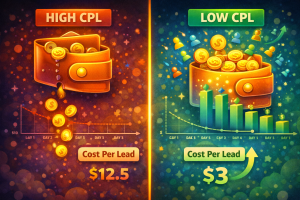
If you’re running paid ads, even just a few pounds, then cost per lead, or CPL, becomes one of your most important metrics as a beginner. This metric tells you how much money you spend on average to acquire one lead.
For example, if you spend £100 and get 10 leads, your CPL is £10. Simple, right?
However, the implications of this metric go deeper. If your cost per lead is too high, it might mean your offer isn’t compelling, your audience targeting is off, or the creative needs improvement. On the other hand, if your CPL is low, you can scale with confidence.
Many new marketers shy away from tracking cost per lead because it sounds complicated. However, it’s basically your budget telling you whether you’re spending wisely or flushing money down the drain.
For example, these tools, listed in Discover 14 Free Marketing Tools Every New Online Marketer Should Be Using Today, make data tracking and optimization much easier.
Action steps to manage cost per lead:
• Track CPL daily, not just weekly.
• Compare different ad creatives to see which brings cheaper leads.
• Adjust targeting and placement to reduce cost.
Meanwhile, when you nail this metric and lower your cost per lead, you’ll naturally support Internet Profit Success because more affordable leads mean more room to invest in growth.
Metric 4: Email Open Rate, Do People Even Open Your Emails?
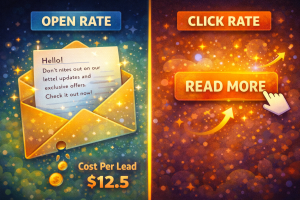
Your email list is like a garden, if no one shows up, nothing grows. That’s where the email open rate becomes crucial. This metric tells you how many people actually open your emails out of everyone who received them.
For example, if 500 people received your email and 100 opened it, your open rate is 20 percent. Depending on your niche, this might be average or a bit low, but the key is trends, not single numbers.
A low open rate often signals weak subject lines or a list that hasn’t been nurtured. On the other hand, a high open rate means your audience trusts you and is interested in what you share.
Action steps to improve open rate:
• Write curiosity‑driven subject lines.
• Keep your list healthy by occasionally cleaning out inactive subscribers.
• Test sending times, morning vs evening vs weekends.
Many beginners forget that email marketing is about relationships. For example, if your audience feels like they’re hearing from a friend rather than a robot, they’re far more likely to open your email.
In addition, using personalization, such as including first names, sometimes helps. However, relevance and curiosity in your subject line matter even more.
Metric 5: Email Click Rate, Are They Taking Action?
Once someone opens your email, the next question is: did they click anything inside? That’s the email click rate, and it’s where the rubber meets the road. Growing your list with ideas from Unlock 15 Lead Magnet Ideas That Convert Like Crazy gives you more opportunities to improve open and click rates.”
For example, if 100 people open your email and 20 clicks occur, your click rate is 20 percent. That’s good. However, if your open rate is high but your click rate is low, it means people aren’t finding a reason to engage with your content.
This metric helps you understand whether your email content and calls to action are compelling.
Action steps to improve email click rate:
• Include one clear and simple call to action.
• Use buttons instead of text links.
• Structure your email with a conversational tone.
Meanwhile, experimenting with storytelling can work wonders. For example, instead of saying “Check out my product,” you might tell a short story that leads naturally into the call to action.
When your email click rate improves, the downstream effects on conversions and sales for Internet Profit Success become more obvious.
Metric 6: Social Engagement Rate, People Responding Counts
Social media is fun, but if you’re not tracking engagement, it’s just noise. That’s where the social engagement rate comes in. This measures likes, comments, shares, and saves relative to your audience size.
Combining engagement with insights from Unlock Growth with Powerful Audience Research Tips// [22JAN] helps you create content people truly respond to.
For example, a post with 50 likes and 10 comments out of an audience of 1,000 has a higher engagement rate than a post with 100 likes but 5 comments.
Why does this matter? Engagement tells you how much your content resonates. For example, a post that sparks conversation or gets saved is doing something right.
Action steps to improve social engagement rate:
• Notice which posts spark comments and repeat the pattern.
• Use questions and prompts to invite conversation.
• Post consistently and pay attention to posting times.
Remember that engagement isn’t vanity. On the contrary, it’s insight. If your audience interacts enthusiastically with a certain topic, you know that content resonates.
When you pair engagement analysis with tactics from Write Social Media Posts That Get Clicks, your social strategy becomes a lot more effective.
Meanwhile, if many posts get little to no engagement, it’s time to test different formats, maybe short videos instead of photos, or concise tips instead of long monologues.

Metric 7: Sales Conversion Rate, Turning Interest Into Income
Ultimately, sales conversion rate might be the most important metric for beginners who aim for Internet Profit Success. This metric shows how many leads actually become customers.
For example, if 100 leads enter your funnel and 5 make a purchase, your sales conversion rate is 5 percent.
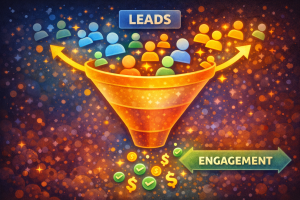
This metric ties everything together. For example, you might have a great open rate and a decent click rate, but if your sales conversion is weak, something in your offer or pitch might be misaligned.
Action steps to improve sales conversion rate:
• Track conversions at every step of your funnel.
• Identify where people drop off (for example, they click but don’t buy).
• Adjust messaging, pricing, or offer clarity to fix bottlenecks.
For example, if many people click to your sales page but few buy, you might need better testimonials, clearer pricing, or a simplified checkout process.
Meanwhile, if people buy when offered a live call but not through automated ads, that tells you something valuable about how your audience prefers to engage.
Extra Helpful Tips for Tracking Marketing Metrics for Beginners
Now that we’ve covered the seven key metrics, let’s explore additional tips that will help you make the most of your data.
First, don’t obsess over perfection. Metrics are tools, not judges. Meanwhile, tracking them gives you clarity not stress.
Second, set measurable goals. For example, instead of saying “I want more engagement,” say “I want a 10 percent engagement rate on my social posts within 30 days.” Goals help you focus.
Third, use simple tracking tools. You don’t need expensive dashboards. Often, platforms like your email provider or ad manager show the essential data you need.
Fourth, review your metrics weekly. Trends matter more than daily fluctuations. Meanwhile, trends help you spot success early and course‑correct fast.
Fifth, ask questions when you analyze data. For example:
• Why did this email get more clicks than that one?
• Was the messaging clearer?
• Did the audience already warm up to this topic?
Curiosity fuels improvement.
In addition, connect your metrics back to Internet Profit Success. Every number tells you something about people’s behavior, and that’s the real key to profitable outcomes.

Conclusion: You Can Do This
Tracking marketing metrics for beginners might feel like learning a new language. However, once you start paying attention to these seven core metrics, CTR, landing page conversions, cost per lead, email open rate, email click rate, engagement rate, and sales conversions, you’ll begin to see patterns that guide smarter decisions.
Remember that the goal isn’t perfection, but clarity. For example, if you discover that a simple subject line tweak improves open rates, that’s a win. Meanwhile, understanding where your audience drops off helps you focus your improvements effectively.
By monitoring these beginner marketing metrics explained and using them to refine your strategy, you’ll be on a solid path toward Internet Profit Success. Over time, your marketing becomes less guesswork and more predictable growth.
Go forth, track wisely, and let the data help you make better decisions.
Get more help with these 5FREE VIDEOS
