
How to Look More Professional Online in 6 Easy Fixes
No Designer Needed

Why How to Look More Professional Online Matters So Much
First impressions online happen absurdly fast. Before someone reads your caption, watches your video, or checks your offer, they are already deciding whether your brand feels organized, trustworthy, and worth paying attention to. That might sound a little dramatic, but honestly, it is how people work. We all judge first and investigate second.
The good news, however, is that learning how to look more professional online does not require a giant budget, a design degree, or a secret club password. Most of the time, the difference between a messy brand and a polished one comes down to small choices repeated consistently. In other words, simple habits beat fancy tools.
That is especially true for beginners, because the closer you get to what your audience wants from your content, the easier it is to make your brand feel useful and trustworthy. Many new creators and marketers assume they need premium everything before anyone will take them seriously. Meanwhile, a cleaner layout, clearer message, and stronger brand consistency can do more for brand credibility than another app subscription ever will.
So if your online presence feels a little scattered, do not panic. Your brand is not broken. It probably just needs a tune-up, not a total makeover. Think of this post as a practical cleanup session with better lighting, fewer random fonts, and much less chaos.
How to Look More Professional Online Without Becoming a Design Snob
Let us clear something up right away. Looking professional online does not mean looking stiff, boring, or painfully corporate. Nobody is asking you to turn your Instagram feed into a beige waiting room or write every caption like a legal document. Professional simply means clear, consistent, and easy to trust.
In fact, some of the strongest brands online feel friendly, relaxed, and human. Professional simply means clear, consistent, and easy to trust, which is also the foundation of learning how to build authority online without tech skills. The secret is not perfection. Rather, it is intentionality. When your visuals match, your message makes sense, and your tone feels steady, people relax. They know what you are about. That calm sense of clarity builds brand credibility faster than flashy tricks ever will.
For example, a creator with simple templates, readable posts, and a clear bio will often appear more established than someone using every effect available in a design app. More sparkle does not always equal more trust. Sometimes it just equals more confusion.
As you go through these six fixes, keep one thing in mind. You are not trying to impress everyone. Instead, you are trying to make it easy for the right people to understand you quickly. That is a much smarter goal and, thankfully, a much more achievable one too.
How to Look More Professional Online With Better Brand Consistency
If your brand uses one set of colors on Monday, a different font on Wednesday, and a completely random vibe by Friday, it will feel disjointed. Even when each post looks decent on its own, the overall impression can still feel messy. That is why brand consistency matters so much.
Start simple. Pick two or three colors and two fonts. That is it. You do not need twelve shades, four accent colors, and a font that looks like it was stolen from a medieval restaurant menu. A bold primary color, a neutral background tone, and one clean accent color will usually do the job.
The same goes for fonts. Choose one for headlines and one for body text. Then use them everywhere. Over time, repetition creates recognition, and recognition supports brand credibility.
Imagine someone landing on your page and seeing matching visuals across your posts, cover images, stories, and graphics. Instantly, your brand feels more stable. Meanwhile, if every post looks like it belongs to a different person, trust drops.
Consistency is not boring. On the contrary, it is what makes a brand memorable. People do not remember random. They remember patterns.

How to Look More Professional Online With a Simple Color System
Color has a sneaky amount of power. It affects mood, readability, and how polished your content feels before anyone reads a single word. Yet many beginners treat color like a buffet. They pick a little bit of everything and end up with a visual plate nobody asked for.
A better approach is to build a tiny color system. Choose one main brand color, one neutral color, and one supporting accent. For instance, navy can signal stability, white keeps things clean, and a warm coral can add energy. Suddenly, your content has direction.
That system also saves time. Instead of debating shades every time you create a post, you already know what fits. As a result, you move faster and maintain brand consistency without having to reinvent your style every week.
Just as importantly, color should support the message, not wrestle with it. If your text is hard to read because the background is too bright or the contrast is weak, professionalism disappears immediately. No one wants to squint through your wisdom.
So keep it simple, readable, and repeatable. A clean color system makes your brand feel calm, which is funny because it will also make you feel calmer while creating content.
How to Look More Professional Online With Clean, Simple Design
One of the fastest ways to improve your online presence is to remove things. Yes, remove them. Not every post needs arrows, shadows, stickers, five icons, and enough layers to make your design file emotionally exhausting. Cleaner design nearly always looks more professional.
When people first learn design tools, they often want to use every feature immediately. That makes sense. Buttons are tempting. Effects are shiny. However, the most effective content usually gives the eye room to breathe. White space, balanced spacing, and a clear focal point create confidence.
Think about a simple graphic with one headline, one image, and one accent color. It feels deliberate. Now compare that to a crowded layout with tiny text, multiple boxes, and decorative chaos. One feels trustworthy. The other feels like it drank three energy drinks and made poor choices.
Professional branding tips often sound more complicated than they are. In reality, a strong design question is simply this: what can I remove without losing the message? When you start designing that way, your content becomes easier to scan and much easier to trust.
Cleaner does not mean bland. It means the important part gets to be important.
How to Look More Professional Online by Fixing Alignment
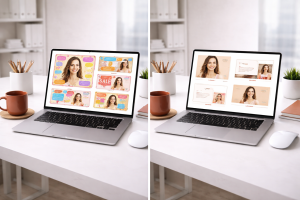
Alignment sounds tiny, but it has a surprisingly huge effect on how polished your brand feels. Crooked text, uneven spacing, and randomly placed graphics create visual tension. People may not say, “Ah yes, the alignment is off.” Still, they will feel that something looks a bit sloppy.
Fortunately, this is one of the easiest fixes on the list. Most design platforms include guides, grids, and snap tools that help you line things up quickly. Use them. Let the software do some of the heavy lifting while you enjoy looking suspiciously competent.
For example, if your headline is left aligned, keep the rest of the text left aligned too. If your image has a margin on one side, match it on the other. When spacing stays consistent, the whole piece feels calmer and more intentional.
The same principle applies to pages, not just graphics. Your website sections, buttons, profile highlights, and email headers should all follow a visual rhythm. That rhythm supports brand consistency and lifts brand credibility because people can sense order, even when they cannot explain it.
Tiny design details often create big trust signals. Alignment is one of those details. It is not glamorous, but neither is flossing, and both make a noticeable difference.
How to Look More Professional Online With a Bio That Makes Sense
Your bio is one of the most important pieces of tiny real estate on the internet. Yet many people waste it with vague phrases that sound nice but say almost nothing. If your wording still feels fuzzy, fixing your clear marketing message first will make the rest of your bio much easier to write. If someone lands on your profile and cannot tell what you do, who you help, or why it matters, you are creating friction right away.
A strong bio is clear before it is clever. You can still have personality, of course. In fact, personality helps. Still, clarity must come first. A person should understand your role in a few seconds without solving a riddle.
Try a structure like this: who you help, what you help them do, and what kind of content or result they can expect. That framework works because it is straightforward. It tells visitors where they are and why they should care.
For example, instead of writing something vague like “dreaming big and building online,” you could say, “Helping beginners create simple content and build a clear online brand.” That feels grounded and useful.
If your business is part of your Internet Profit Success journey, this matters even more. People are cautious online, and understandably so. A bio that sounds human, specific, and benefit driven strengthens brand credibility before you ever send a message or share a post.
How to Look More Professional Online by Sounding Like the Same Person
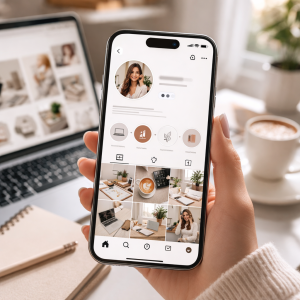
Visuals matter, but your voice matters too. If one post sounds warm and conversational while the next sounds robotic and formal, your audience gets mixed signals. Over time, that inconsistency weakens trust because people do not know what version of you they are getting.
That does not mean every post needs to sound identical. You are not a customer service bot trapped in a content calendar. However, your overall tone should feel familiar. Whether you choose friendly, direct, educational, witty, or calm, stick close to that lane.
A good test is to read your content out loud. Does it sound like something you would actually say? If not, adjust it. People connect with voices that feel natural. Forced language tends to create distance, even if the grammar is technically perfect.
This is one of those professional branding tips that gets overlooked because it seems less tangible than color palettes and design. Even so, consistent language is a major part of brand consistency. It helps people recognize your personality across captions, emails, stories, videos, and profile text.
When your visuals and voice match, your brand feels whole. That kind of harmony quietly boosts brand credibility and makes you much easier to remember.
How to Look More Professional Online With Content People Can Actually Read
Readability is one of the simplest ways to look more professional online, and yet it gets ignored all the time. Those same readability fixes also make it much easier to improve your content without rewriting everything from scratch. Giant text walls, unclear transitions, and overloaded paragraphs make content feel harder than it needs to be. When reading feels like work, people leave.
That is why structure matters. Short paragraphs, clear subheadings, natural transitions, and direct sentences make your content easier to skim. Ironically, that makes people more likely to stay and read the whole thing. Most of us want simple, even when we pretend we enjoy complexity.
For example, compare a cramped caption with no spacing to one broken into short sections with a clear flow. The second version feels cleaner right away. Better readability creates a more professional impression before the reader even judges the quality of the ideas.
It also helps your message land. If your audience can quickly find the point, they are more likely to remember it and act on it. That is good communication, plain and simple.
So yes, writing style affects design more than many people realize. Readable content supports brand consistency because it creates a familiar experience. It also improves brand credibility because clear communication signals competence. Not flashy competence. Just the useful kind.
Professional Branding Tips That Add Extra Polish
Once the big six fixes are in place, a few extra details can push your brand from decent to polished. These are not dramatic changes. Instead, they are the finishing touches that make your overall presence feel more complete. You can also strengthen brand credibility by using a few types of social proof, even if you are still new and do not have a mountain of testimonials yet.
First, use consistent profile images across platforms whenever possible. If your photo is cartoonish on one site, ultra formal on another, and missing entirely somewhere else, your identity feels fragmented. A steady visual presence helps people recognize you faster.
Next, create a few repeatable templates. You do not need fifty. Three to five core templates for quotes, tips, carousel-style posts, or announcements can go a long way. Repetition saves time and strengthens brand consistency at the same time.
Another helpful move is to standardize your calls to action. You can vary the wording, of course, but the overall tone should feel familiar. That way your audience learns what to expect from you.
Finally, audit your little details. Check capitalization, punctuation, spacing, thumbnail style, and image quality. None of those things seem huge alone. Together, however, they influence brand credibility in a major way.
Professional brands usually win through accumulation, not magic. Lots of small smart choices add up until people start thinking, “This person seems legit.”
Brand Consistency in Photos, Templates, and Tiny Details
Brand consistency is not only about fonts and colors. It also shows up in your photography style, graphic treatment, editing choices, and even the way you crop images. If your website or landing page is part of your brand, these same rules also overlap with basic website optimization tips for beginners. If every visual element follows a different logic, your brand starts to feel accidental.
For instance, some people use bright, airy photos on one post, dark moody edits on the next, and blurry screenshots after that. Each asset may be fine individually, but together they tell a messy story. A more professional brand chooses a visual lane and stays fairly close to it.
That does not mean everything must look perfectly identical. Variety is healthy. Still, there should be a shared feel. Maybe your photos are always clean and bright. Maybe your graphics always use rounded corners and soft neutrals. Maybe your videos always begin with a text hook and a calm background. Those repeated choices create familiarity.
Tiny details matter too. Are your thumbnails consistent? Do your quote graphics use the same spacing? Are your highlight covers part of the same visual family? If the answer is yes, your brand will feel more composed.
Consistency may not feel exciting in the moment. Later, though, it becomes one of the biggest reasons people trust what you create.
Brand Credibility Killers That Make Good Brands Look Sketchy
Sometimes the fastest way to improve your brand is to stop doing the things that quietly damage it. Plenty of good businesses look less trustworthy than they really are because of a few avoidable mistakes.
One major issue is poor image quality. Blurry graphics, pixelated logos, and stretched photos instantly lower the perceived value of your brand. Another common problem is overpromising language. If every headline sounds wildly exaggerated, people start raising an eyebrow. Then they raise the other eyebrow too.
Inconsistent posting style can hurt as well. You do not need to post constantly, but your content should still feel connected when it appears. Otherwise, the brand looks random instead of intentional.
Typos and broken formatting can also chip away at trust. Nobody expects perfect grammar at all times, yet repeated sloppiness makes your business look rushed. Similarly, bios full of buzzwords but lacking clarity can feel suspicious instead of impressive.
Brand credibility is fragile because people make quick judgments. The upside, however, is that most trust killers are easy to fix once you notice them. Clear language, better images, stronger structure, and calmer visuals can instantly change how your brand is perceived.
How to Look More Professional Online Even When You Are Busy
Let us be honest. Not everyone has hours to polish a brand every week. Some people are building content during lunch breaks, late evenings, or in the weird pocket of time between chores and complete exhaustion. The good news is that professionalism does not have to be time intensive. Small defaults work even better when they turn into daily habits to grow your online presence instead of random bursts of effort.
Start by choosing defaults. Decide on your colors, fonts, tone, templates, and content structure once, then keep reusing them. Defaults reduce decision fatigue, which means you spend less time wondering what to do and more time actually doing it.
Next, batch small tasks. Update your templates in one sitting. Review your bio once a month. Organize your image folders by brand style. Those tiny systems save energy later.
Also, focus on the high impact areas first. Your bio, profile image, templates, readability, and design simplicity will do more for your appearance than obsessing over tiny decorative extras. In other words, polish the parts people notice most.
Learning how to look more professional online is often less about adding more work and more about reducing mess. Cleaner systems create better output. That is good branding and, frankly, good survival.
A 15 Minute Weekly Routine to Look More Professional Online
If you want a simple maintenance system, set aside fifteen minutes each week for a quick brand check. It does not need to be dramatic. You are not hosting a board meeting. You are just making sure your online presence still looks like it belongs to the same person. If your recent posts look polished but still feel quiet, review how to increase social media engagement// [12MAR] so the stronger presentation also gets stronger interaction.
Spend the first few minutes scanning your recent posts. Do the visuals match your current style? Does the tone sound consistent? Is the layout still readable? Small drifts happen easily, especially when you create content quickly.
Then review your profile basics. Check your bio, profile image, pinned content, and highlights or featured sections. If anything feels outdated or unclear, adjust it. These are often the first things new visitors see, so they deserve attention.
Use the final few minutes to prep for the coming week. Choose your templates, confirm your color palette, and note any content ideas that support your brand consistency. That way, your next posts start from a clear place instead of a chaotic one.
This mini routine will not turn your brand into a masterpiece overnight. Nevertheless, it will help you look more professional online steadily, which is usually far more effective than occasional giant cleanups fueled by caffeine and regret.

How to Look More Professional Online on a Beginner Budget
A lot of beginners assume professionalism is expensive. It can be, sure, but it absolutely does not have to be. In many cases, the most effective improvements cost little or nothing because they are based on clarity, not complexity.
You do not need a custom photoshoot to appear trustworthy. A well lit headshot with a clean background can work beautifully. Likewise, you do not need custom fonts from a boutique design studio. Readable, widely available fonts often perform better anyway.
Free or low cost tools can also go a long way when used thoughtfully. What matters more is how consistently you use them. A simple template used well beats an overdesigned premium layout used badly every single time.
Moreover, writing stronger copy costs nothing except attention. A clearer bio, more readable captions, and a steadier tone can dramatically improve brand credibility without touching your wallet.
So if you are just getting started, do not wait for perfect tools. Build with what you have, then make it cleaner, clearer, and more consistent over time. That is how many polished brands begin. Not with unlimited resources, but with good judgment and fewer unnecessary flourishes.
How to Look More Professional Online as Your Brand Evolves
Your brand will grow, and that is a good thing. What feels right today may need adjusting six months from now. Maybe your message becomes clearer. Maybe your audience shifts. Maybe your design matures and stops looking like it got dressed in the dark. Progress is normal.
Still, evolution should feel intentional rather than random. If you suddenly change your colors, tone, bio, and visual style all at once without any reason, your audience may feel disoriented. Instead, refine gradually. Keep the strongest elements and improve what no longer fits.
This is where regular review helps. Every so often, ask yourself whether your current brand still reflects your goals. Does your content support the audience you want? Does your visual identity still match your message? Are you strengthening brand consistency or drifting away from it?
The goal is not to stay frozen. Rather, it is to grow without losing recognition. That balance is what helps a brand feel both fresh and dependable.
Professional branding tips are most useful when they support real growth. A polished online presence should not trap you. It should give your ideas a stronger, clearer home as they expand.
Final Thoughts on How to Look More Professional Online
At the end of the day, learning how to look more professional online is not about pretending to be bigger, fancier, or more important than you are. It is about making your brand easier to trust. That trust comes from clarity, consistency, and a smoother experience for the people who find you.
The six core fixes are simple for a reason. Consistent colors and fonts, cleaner design, better alignment, a clearer bio, a steady tone, and more readable content can change how your entire brand is perceived. Add in a few extra polish points, and suddenly your online presence feels much more established.
Most importantly, you do not need to fix everything in one day. Improve one area at a time. Tighten your visuals this week. Rewrite your bio next week. Clean up your content structure after that. Small improvements, repeated consistently, are what create real brand consistency and stronger brand credibility.
So no, your brand does not need to be perfect. It just needs to stop looking confused. Once that happens, people can focus on what you are actually saying, which is the whole point. And honestly, that is a much nicer use of everyone’s time.
