
How to Build a Profitable Funnel and Boost Your Sales
The Beginner’s Roadmap and Step‑by‑Step Guide
How to Build a Profitable Funnel: A Complete Beginner’s Guide
Launching your very first marketing funnel can feel like trying to read a foreign map without a compass. Everywhere you turn there are fancy diagrams, confusing acronyms, and advice that feels like it was written by someone playing 3D chess. But here’s the real truth: how to build a profitable funnel isn’t rocket science, and you don’t need a six‑figure budget or a tech degree to make it work.
Instead, you need a clear plan, a solid offer, and a few pieces of the puzzle put together in the right order. With the right roadmap, it becomes completely reasonable to launch a funnel in days instead of months, and start seeing results that move the needle toward Internet Profit Success.
Below, we’ll walk through nine practical steps to profitable funnel success, break down exactly what to do at each stage, and give you real examples so you can follow along smoothly.
If you want real examples of these principles in action and not just theory, read how I built real Internet Profit Success over 12 months with wins, fails, and growth lessons.
Ready? Let’s dive in.
Step 1: Define Your Offer, The Heart of Profit (Includes the Main Keyword)

When you’re learning how to build a profitable funnel, everything starts with your offer. No offer = no funnel momentum. Seriously.
A big mistake many beginners make is building pages before they even know what they’re selling. That’s like baking a cake without knowing the recipe, you might end up with something edible, or you might end up with flour on the ceiling.
To avoid that confusion:
Action Steps:
• Write down what your offer actually is, who it’s for, the specific problem it solves, and the transformation it delivers.
• List the top three benefits in simple language your audience uses.
If you can’t describe your offer in one sentence that makes someone say “yeah, I want that,” you’re not ready to build a funnel yet.
Example:
Instead of a generic “digital course on Instagram growth,” go for something specific like:
“A 7‑day plan to get your first 500 followers with step‑by‑step templates.”
That’s clear, concrete, and far more compelling.
Step 2: Identify Your Audience and Their Pain Points, Know Who You’re Talking To
A funnel only works when it speaks directly to one group of people. Trying to make everyone your audience is like throwing confetti and hoping one piece hits the jackpot.
If you want serious results, pick one specific audience type and get to know their struggles, desires, and language.
Action Steps:
• List the top problems your audience faces.
• Read comments, reviews, and forum posts where your ideal customers hang out.
• Write down the exact phrases they use to describe their struggles.
Example:
If your audience is freelancers, they might talk about inconsistent income, difficulty closing clients, or confusion about pricing. Use that exact language in your funnel pages and emails.
Step 3: Create a Simple Lead Magnet, Your Funnel’s Magnet for Attention
A lead magnet is the first value you give someone in exchange for their email. Think of it like a friendly handshake that says, “Hey, we’re here to help.”
A strong one solves a small, meaningful problem quickly.
Action Steps:
• Pick a format (checklist, short training, template pack, swipe file).
• Keep it easy to use, people should get value within minutes.
Example:
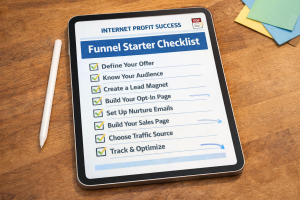
If you’re teaching funnel basics, your lead magnet could be a one‑page Funnel Starter Checklist, a simple rundown of the tools and steps to begin building.
Step 4: Build a High‑Quality Opt‑In Page, The Doorway to Your Funnel
Your opt‑in page is where visitors decide whether your lead magnet is worth their email address. Less is more here. Simple pages often convert better than flashy ones because they remove distractions. If your opt‑in page and lead magnet are strong, you can get 100 email subscribers in one week, even with minimal traffic and no tech headaches.
Here’s what works:
Action Steps:
• Include a strong headline and three to five bullet benefits.
• Add a mockup or simple visual of your lead magnet.
• One clear call to action, no multi‑button chaos.
Example Headline:
“The Funnel Starter Checklist That Helps Beginners Build Their First Funnel in Days.”
Pro tip: Tools like Systeme, ConvertKit, MailerLite, or Leadpages are beginner‑friendly ways to create opt‑in pages without sweating over code.
Step 5: Write a Relevant Thank You / Confirmation Page, Don’t Lose Their Attention Now
Most beginners skip this or write a boring “Thanks!”, a missed chance to reinforce your value and guide the next step.
Your thank you page should do three things:
Remind them to check their email.
Preview what comes next.
Lightly introduce your main offer or next step.
You can even add a short welcome video, playfully casual, but with purpose.
Example:
After someone gets your Funnel Starter Checklist, your thank you page could say:
“Check your inbox! Meanwhile, here’s how this checklist fits into the bigger picture of your first profitable funnel.”
Step 6: Set Up a Nurture Sequence, Build Trust Before You Pitch
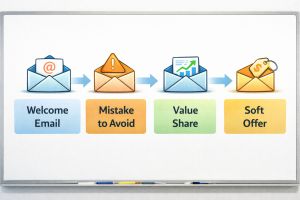
A nurture sequence is an email series that helps new subscribers feel like they know you, before you ask them to buy.
Beginners often send one or two emails, but a thoughtful 3–5 email series can significantly improve conversions. A good nurture sequence supports your funnel by teaching new subscribers how to build an email list for beginners, so they stay engaged rather than ghost you after day one.
Action Steps:
• Email 1: Deliver the lead magnet and set expectations.
• Email 2: Share a common mistake your audience makes.
• Email 3: Introduce your method.
• Email 4: Soft pitch your offer with a helpful example.
Use transitional phrases and personal touches to make emails feel like a conversation, not a sales pitch.
Step 7: Build a Simple Sales Page, Guide Them from Problem to Solution
The sales page is where you explain why your paid offer exists and how it solves the problem you’ve been talking about.
Structure is key:
Action Steps:
• Problem → desired outcome → solution
• Benefits with specific outcomes
• Social proof or testimonials
• FAQ section addressing common doubts
• Clear call to action
Keep it readable, short paragraphs, clear headings, and concrete examples beat verbose pages every time.
Step 8: Choose a Traffic Source, Get Eyes on Your Funnel
You might have the world’s best funnel, but if no one sees it, nothing happens. Organic search can eventually become your highest‑quality traffic source; it starts with a solid blog post SEO checklist to drive visitors who are already looking for answers.

Action Steps:
• Pick one traffic source to start (Instagram Reels, YouTube, blog posts, paid ads).
• Create a simple weekly schedule that drives people to your opt‑in page.
Consistency beats chaos here. Track what works, double down, and ditch what doesn’t.
Step 9: Track, Test, and Optimize, Funnels Get Better with Tweaks
Here’s the truth: your first version won’t be perfect, and that’s OK.
Data is your friend. Track things like opt‑in rates, email open rates, and conversions. Then test one variable at a time:
• Headlines
• Calls to action
• Email subject lines
• Traffic sources
A small improvement in each area often leads to big gains overall.

Wrap‑Up: Your Roadmap to Internet Profit Success
By breaking down how to build a profitable funnel into these nine steps, you take something that once felt overwhelming and turn it into clear, manageable actions. From defining your offer all the way through traffic and optimization, each piece plays a role in turning strangers into loyal customers.
Once your funnel is converting, pairing it with affiliate offers for beginners that actually pay is a smart way to monetize traffic more quickly.
Remember: funnels aren’t magic, but they are systematic. With consistency and a willingness to learn from real data, you can build funnels that not only generate leads but actually grow your business and support real Internet Profit Success.
And honestly? Once you’ve walked through this first funnel, you’ll have the framework to build many more, each one better than the last.
