

ChatGPT Niche Ideas That Actually Sell
From Zero to Internet Profit Success

Have you ever wondered how some people seem to magically land affiliate niches that deliver over and over, while others spin wheels and get nothing but crickets? Well, here’s a little secret: it’s not magic. It’s method. And with smart ChatGPT niche research, you can pull back the curtain and treat niche-hunting like a data-driven treasure hunt.
In this post, I’m walking you through seven secret steps to use ChatGPT for discovering niches with serious potential. These steps aren’t just theory. They can help you land affiliate-ready “hidden gem” niches, giving you a real shot at Internet Profit Success, even if you’re brand new.
I’m also sprinkling in bonus tips, examples, mindset hacks, and actionable checklists to help you roll out a niche quickly, confidently, and with less guesswork.
So grab your coffee (or tea), settle in, and let’s dig into ChatGPT niche research, the smart way.
Why ChatGPT Niche Research is a Game-Changer
Before we dive deep into the steps, it’s worth pausing for a moment. Because using ChatGPT to find niches isn’t just “shiny new toy” syndrome. It’s actually a powerful way to cut through overwhelm.
First off, instead of randomly guessing niches, you get a structured system: prompt, analyze, validate, choose. That brings clarity.
Next, the power of ChatGPT means you can generate ideas faster than you could manually, but with a thoughtful, research-friendly twist.
On top of that, combining ChatGPT with free tools (like search volume checks, trend trackers, keyword tools) helps you balance intuition with data.
In short, ChatGPT niche research makes niche-hunting feel less like a roll of the dice and more like a repeatable process.
Step 1: Prompt for Niche Brainstorming
Why it’s important
If you start with a blank page, it’s too easy to get stuck. You might recycle tired ideas, chase overly saturated markets, or pick niches nobody cares about. Instead, by prompting ChatGPT as a “market research expert,” you unlock a broader, smarter list of possibilities, with built-in filters like audience size, competition saturation, and revenue potential.
What the prompt can look like
Try something like this:
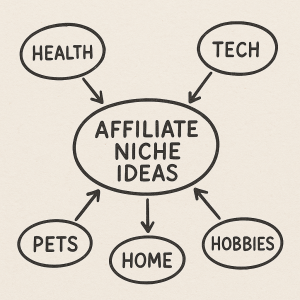
“Act as a market research expert. List 10 niche ideas in [main category], each with an estimated audience size, competitor saturation, and revenue opportunity. Explain why each niche stands out for affiliate success.”
If you’re unsure about your main category, pick something broad you have interest in, for example: “home & garden,” “health & wellness,” “pets,” “outdoor gear,” or “tech gadgets.”
What you get out of it
A list of 8–12 niche ideas you likely never thought of
A rough gauge on demand, competition, and payout potential
An initial “gut check” of which niches feel promising
How to evaluate the results
Once ChatGPT spits out your list, don’t just pick the first niche that sounds good. Instead:
Run each niche through a quick check: use a free search volume tool, glance at trending graphs, or peek at social media interest.
Consider whether you personally care about or at least understand the niche. Passion helps, but even interest or curiosity helps.
Think about the “angle”: could you approach the niche with a unique voice, a fresh lens, or a helpful twist that stands out?
For example, instead of “smart plant care kits,” maybe you spot “smart plant care kits for small apartments”, a more specific angle that could cut competition and attract a focused audience.
By the end of Step 1, you should have 3–5 niche ideas that meet basic demand + interest criteria.
Step 2: Validate Demand & Trend
Why this step can’t be skipped
Because crazes come and go. If you pick a niche that’s peaking just because of a fad, you might find traffic, but it could disappear fast. On the other hand, a niche with stable or growing demand has long-term legs.
How to check demand
Ask ChatGPT (or manually check) for a “5‑year interest trend” and a rough monthly search volume estimate. For instance:
“For niche ‘smart plant care kits,’ check interest trends over the past 5 years. Explain if demand is stable, growing, or fading. Estimate monthly search volume and note any seasonal fluctuations.”
Then, trust but verify. Open a free tool (like Google Trends or a free keyword tool) to cross-check the trend. This double-check helps avoid blind spots.

What to look out for
Steady interest over time, often a sign of evergreen demand.
Growth over the last 12–24 months, could hint at rising interest or emerging trends.
Any big spikes followed by steep drops, could be fad-driven, risky for long term.
Search volume: enough to attract traffic, but not so high that competition becomes horrendous.
Example
Let’s say “smart plant care kits” show moderate but steady growth for 3 years, especially as more folks live in apartments and want houseplants. Meanwhile, interest spikes in spring but dips in winter. That suggests a seasonal element (plan ahead for fall/winter content), but still enough baseline demand to build evergreen content.
If demand looks good, congrats. That niche moves to the shortlist.
Step 3: Identify Affiliate Programs
Why this matters
A great niche on paper isn’t useful if you can’t monetize it. You want affiliate programs that are legit, with decent commissions, and, ideally, good cookie durations.
How to approach it
Prompt ChatGPT something like:
“Act as an affiliate program researcher. For niche ‘smart plant care kits,’ list 5 affiliate programs including estimated commission rates, cookie durations, and typical payout amounts.”
From there, take the list and check which programs are open to new affiliates and have reviews indicating reliable payouts. Sign up for those that match your criteria.
What to prioritize
Commission rate isn’t everything, cookie length and average payout matter too.
Niches with recurring potential (subscription boxes, gardening supplies, smart-device replacements) can offer long-term value.
Try to pick 2–3 “primary” programs per niche, so you aren’t dependent on a single source.
Realistic expectation
Gadgets or gear often pay better than info-only products. For example, a smart plant care app might offer 10–15% commission, whereas a physical kit could pay 20–40% (or be eligible for high-ticket payouts). That adds up nicely if someone buys multiple items or upgrades.
Step 4: Create Buyer Persona
Why getting inside people’s heads helps
If you don’t know who you’re writing for, you’ll write generic stuff, and that rarely converts. Crafting a buyer persona gives you clarity. You’ll understand what makes them tick, what they fear, what they desire, and what might push them to click “buy.”
What to ask in your persona prompt
For example:
“Create a buyer persona for someone interested in smart plant care kits. Include demographic info, typical frustrations, desire triggers, and emotional motivations for purchasing.”
That might yield something like:
Age: 25–40, urban apartment dweller
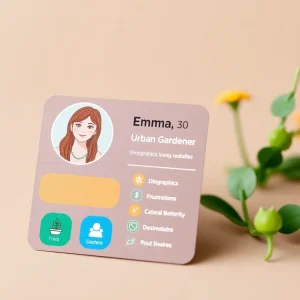
Problems: Busy schedule, keeps killing plants, wants low‑effort greenery
Desires: Greener home, stress relief, minimal plant maintenance
Purchase triggers: Simple user-friendly tech, good value for money, credible reviews
Armed with that persona, your content becomes much sharper, you write like you’re talking to a friend who really cares about saving their plants (and sanity).
Step 5: Generate Keyword & Content Ideas
Why this step can make or break your success
Without good keywords, even great content can sink. With the right keywords, especially long-tail, buyer-intent ones, you increase your chances of ranking and converting.
How to prompt ChatGPT
Something like:
“Provide 15 long-tail, buyer-intent keywords for smart plant care kit reviews or tutorials.”
You’ll likely get a mix such as: “best smart plant care kit for apartments,” “smart plant care kit review 2025,” “how to set up a smart plant watering system,” and so forth.
What to do next
Group keywords into “content buckets”, e.g. review posts, how-to tutorials, comparative guides, problem-solution posts, seasonal content, etc.
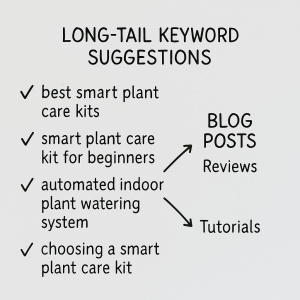
Choose a handful of high-potential buckets, maybe 5–10 to start, and plan content accordingly.
Align your content strategy with your buyer persona. That way, the topics you create speak directly to their needs.
Step 6: Outline Evergreen Content
Why evergreen matters
Evergreen content, posts that stay relevant over months or years, is the backbone of sustainable traffic and a real foundation for long-term income.
How to generate a strong outline
Ask ChatGPT (or draft yourself) for something like:
“Create a detailed blog post outline on how smart plant care kits save beginner gardeners time. Include intro, benefits, feature comparison, user tips, and call-to-action (CTA) sections.”
You want an outline that covers:
Intro: Hook + what problem this post solves
Benefits: What the kits solve (time-saver, convenience, plant health, aesthetic appeal)
Comparison: Feature-by-feature vs. manual care or traditional kits
Tips: How to choose, how to set up, maintenance best practices, common mistakes
CTA: Encourage reader to check out the affiliate link for the recommended kits (without pushing too hard)
Why detailed outlines are a time-saver
Once you have a solid outline, writing becomes easier and faster. You stay focused. You’re less likely to waffle. And you avoid paragraphs that go off track.
If you want your niche to pay off long-term, lean hard on evergreen content, as demonstrated in our post about SEO‑Driven Evergreen Content for Affiliate Marketing with AI.
Step 7: Build Launch Assets
What “launch assets” means here
These are your supporting tools, things you build once but use again and again. Lead magnets, email sequences, content upgrades, checklists. They help warm up visitors, build trust, and move folks closer to buying.
Example assets
Lead magnet: “5 Must-Have Tools Every Smart Gardener Needs”, helpful checklist people can download (for free) in exchange for their email.
Email sequence (5‑part): e.g.
Welcome + problem breakdown (why many struggle with plant care)
Education + case for smart plant care kits
Review + testimonial highlight (real or imagined, use responsibly)
FAQ + overcoming objections (cost, complexity, maintenance)
Soft pitch + reminder + bonus tip or extra value
Why this matters for conversions
Most people don’t buy on first contact. By creating a nurturing sequence and offering value first, you build trust, which leads to conversions over time. That gives you a much stronger shot at sustainable affiliate earnings than one-off posts.

Example Walk‑through, From Blank Page to Live Niche Site
To make this real, let’s walk through how you might go from zero to launching a niche site around smart plant care kits for apartments using ChatGPT niche research.
1. Brainstorm idea
Prompt ChatGPT for niches in “home & garden.” It returns 10 ideas, including “smart plant care kits,” “compact indoor hydroponics for apartments,” “pet-safe indoor garden kits,” and a few others. You feel drawn to smart plant care kits because you love plants but always kill them.
2. Validate demand
You check, interest in plant tech and indoor gardening has risen steadily over the past few years (especially as more people live in smaller city apartments). Search volume is moderate but with upward trend. Good.
3. Affiliate programs
ChatGPT suggests 5 programs: Two general e-commerce affiliates, one plant‑gear specialist affiliate, one smart‑home gadget affiliate, and one subscription‑box affiliate offering indoor garden supplies. You sign up with at least two.
4. Buyer persona
You create a persona: Emma, 30, lives in London, works long hours, loves greenery but hates killing plants, loves convenience. She wants low‑effort solutions that make her flat feel cozy.
5. Keywords & content bucket
You generate keywords such as: “best smart plant care kit for apartments 2025,” “indoor plant watering system review,” “how to automate indoor plants,” “smart plant care kit setup guide,” and more. You group them into buckets like:
Kit reviews & comparisons
Setup tutorials / how-to posts
Tips for care, troubleshooting, maintenance
Decor + lifestyle angle posts (“how smart plant kits spruce up your city flat”)
Seasonal / gift-guide posts (“gift smart plant kits for city gardeners”)
6. Outline evergreen content
You draft an outline (via ChatGPT or manual). Your first post is: “How Smart Plant Care Kits Save Busy Apartment Dwellers Time & Stress.” It includes intro, benefit sections, kit comparisons, setup guide, care tips, and CTA to check recommended kit.
7. Build launch assets
You create a simple checklist “5 Must‑Have Tools for Apartment Plant Lovers” (smart pot, moisture sensor, LED grow lamp, etc.). Then you draft 5 emails to send to new subscribers: first is about common plant-care pitfalls, second about automation convenience, third a review of top kits, fourth about real-life results / before & after, and fifth a gentle pitch with a bundle incentive (e.g. small discount or bonus tip sheet).
Within a week, you’ve got a minimalist blog up, a lead magnet ready, and your first piece of content published.
Beyond the 7 Steps: Extra Tips & Pro Moves
Once you’ve got the basics down, you can up your game with a few extra strategies.
1. Lean into sub‑niches
Instead of just “smart plant care kits,” go narrower:
Smart kits for small apartments
Also smart kits for pet‑safe plants
Smart kits for people who travel often
Smart kits for low-light environments
This helps you target smaller, more dedicated audiences, and sometimes face less competitor saturation.
2. Blend content formats
Don’t just publish blog posts. Throw in quick social media snippets, short “how‑to” videos (even phone-shot, no fancy editing), or simple before/after photo reels. This pulls in a wider audience and helps with SEO/social reach.
3. Track performance & pivot fast
Keep an eye on analytics, which posts get clicks, which ones convert, which ones get ignored. If a topic underperforms, tweak the angle, change keywords, or swap to a different sub‑niche. The beauty of ChatGPT niche research is you can iterate fast.
4. Build trust over hype
When you recommend a product, be honest. Mention pros and cons. Include realistic tips and disclaimers. People appreciate authenticity, that builds trust, which builds long-term passive income (not just quick bucks).
5. Offer real value first
Lead magnets and email sequences should genuinely help people. If your free content stands above “thin affiliate pitch,” your brand perception improves, and that means more lasting success.
6. Keep Your Computer Up to Date.
Because, let’s face it: websites and businesses don’t run themselves. For instance, if your computer dies at the worst time, check out our guide Home from Holiday To Computer Breakdown Recovery Horror, it’s surprisingly relevant even in a niche‑research-based setup
Common Mistakes to Avoid
You know, when you rush, get excited, and then hit a wall.
Picking a niche solely because it seems “hot”, without checking demand, avoid rookie errors like those laid out in The Fatal Mistakes New Internet Marketers Make, where many aspiring marketers self‑sabotage before even publishing their first post."
Overly broad niches that are saturated (e.g. “weight loss,” “health supplements”), unless you have a super-tight angle or unique voice.
Ignoring affiliate program quality: shoddy payouts or unreliable tracking can kill your momentum.
Skipping buyer persona work and writing drab, generic content nobody connects with.
Creating content without a real plan for distribution, follow-up, or nurturing, and expecting instant traffic or sales.
Avoiding these helps keep you from wasting time, energy, or hope.
Why This Method Is Especially Great for Newbies
If you’re brand new to affiliate marketing, or if you’re juggling stuff like a day job, family, or full-time school, ChatGPT niche research gives you structure and speed. You don’t need fancy tools or thousands of pounds to start. Actually, you barely need time.
In addition, because the method emphasizes narrow, specific niches, you often face less competition, which means less pressure, less cost, and potentially faster wins. That can build momentum.
Meanwhile, using buyer personas and carefully planned content helps you connect with real people, not just chase traffic. That makes your journey more sustainable, fulfilling, and (dare I say) fun.

Final Thoughts, From Idea to Internet Profit Success
If there’s one thing I want you to walk away remembering, it’s this: finding profitable niches doesn’t have to be messy, confusing, or based on guesswork. With a structured approach, like the seven-step sequence above, and with the help of ChatGPT, you can treat niche-hunting like a legitimate, repeatable process.
Over time, with consistency, a bit of creativity, and honest effort, you can build a small portfolio of niche sites or content hubs. Some may flourish quickly, others slowly. But each one gives you more experience, more data, and (if you do it right) a path toward real affiliate income.
So yes, go ahead and fire up ChatGPT. Start brainstorming. Validate ideas. Build buyer personas. Draft content. Launch. Rinse. Repeat.
And maybe, just maybe, this little method will be your ticket to what I call Internet Profit Success.
Here’s to your niche-hunting adventure. Let’s go get it.
Get extra help by watching these 5FREE VIDEOS
