

5 Digital Products to Sell With
a Small Audience
Start Selling These Now

5 Digital Products to Sell With a Small Audience
One of the biggest myths in online business is that you need a giant audience before you can create anything worth selling.
That sounds logical at first, right?
After all, more followers should mean more buyers, more traffic, and more chances for someone to say, “Yes please, take my card details.”
However, that is not always how it works.
In reality, many beginners can start with a small audience and still create helpful digital products to sell. The trick is not trying to impress everyone on the internet. Instead, the goal is to help a specific person solve a specific problem.
Think of it like making pizza.
You do not need to feed the whole city. You just need a few hungry people who want exactly what you are serving.
Digital products work beautifully for this because they are simple to create, easy to deliver, and do not require inventory, shipping, packaging, or a garage full of boxes your family keeps tripping over.
In this post, we will look at five simple digital products to sell, even if your audience is small, your list is tiny, and your confidence is still wearing floaties in the shallow end.
Why Digital Products to Sell
Work for Beginners
Digital products are beginner friendly because they remove many of the headaches that come with physical products.
For example, you do not need to order stock, pack items, deal with shipping delays, or chase delivery trucks like you are in an action movie.
Instead, you create something once and deliver it online.
That could be an ebook, a checklist, a template, a mini course, a workshop, or a coaching package.
In addition, digital products can be updated, improved, bundled, and repurposed over time.
If you want the next step after choosing your idea, this guide on how to launch a digital product walks through the beginner-friendly process without making your brain feel like scrambled eggs.
This makes them a smart choice for beginners who want to start simple.
Another reason digital products to sell work well is that they can solve small but annoying problems.
A person may not be ready for a huge program, but they may happily grab a simple guide that helps them take one clear step forward.
Small products feel less risky to the buyer.
Meanwhile, they give you valuable practice creating, explaining, and promoting your ideas.
That is a pretty sweet combo.
Digital Products to Sell With a Small Audience
The Big Myth
A large audience is nice, but it is not required.
Sure, having thousands of followers can help. However, a smaller audience can still work if the people are interested, engaged, and looking for help.
A small audience of 100 people who trust you is often better than 10,000 random followers who barely remember why they followed you in the first place.
In addition, these email list building strategies can help you turn casual readers into people who actually want to hear from you again.
For example, imagine you help beginner internet marketers get their first simple online offer set up.
If 50 people in your audience care deeply about that problem, you do not need to shout at the whole planet.
You only need to create something useful for those 50 people.
On the other hand, if your audience is huge but unfocused, your message can get lost.
That is why clarity beats size.
Before you worry about audience growth, ask yourself this question: “What specific problem can I help my people solve?”
Once you answer that, you are much closer to creating digital products to sell with confidence.
What Makes Digital Products to Sell
So Beginner Friendly?
Beginner friendly digital products usually have three things in common.
First, they solve one clear problem.
Second, they are easy to understand.
Third, they help the buyer get a quick result.
That is it.
No fireworks. No complicated tech maze. No 97-module monster course that takes six months to build and three years to finish watching.
A simple digital product might help someone write their first email, plan a week of content, create a basic landing page outline, or understand the first steps of affiliate marketing.
The best part is that you do not have to be the world’s top expert.
You only need to be a few steps ahead of the person you are helping.
For example, if you recently learned how to create a simple content calendar, you could turn that process into a template or guide.
Meanwhile, someone who feels completely stuck would see that as valuable.
When you focus on practical results, digital products become much easier to create.
How to Choose Digital Product Ideas for Beginners
Choosing digital product ideas for beginners starts with listening.
Pay attention to what your audience asks about, complains about, avoids, or overcomplicates.
People often reveal product ideas without realizing it.
For example, someone might say, “I never know what to post,” or “I get confused trying to write emails,” or “I have no idea how to make my first offer.”
Each of those frustrations could become a simple digital product.
In addition, you can look at your own past struggles.
What confused you six months ago?
Which task felt scary before you learned how to do it?
What simple shortcut do you now use that would help someone else?
Those answers can point you toward strong digital product ideas for beginners.
However, avoid trying to solve a giant problem all at once.
Instead of “How to build an entire online business,” try “How to create your first lead magnet idea in 30 minutes.”
Smaller promises are easier to deliver.
Even better, they are easier for buyers to believe.
Digital Products to Sell #1
A Short Guide or Ebook
A short guide or ebook is one of the easiest digital products to sell, especially for beginners.
This type of product works because it teaches one clear topic in a simple, organized way.
For example, you could create a guide called “How to Get Your First Affiliate Marketing Sale” or “The Beginner’s Guide to Creating a Simple Online Offer.”
The key is to avoid stuffing the guide with everything you know.
Nobody wants to download a 300-page brain dump that feels like homework with a cover image.
Instead, focus on one problem and walk the reader through the solution step by step.

A good beginner guide might be 20 to 50 pages, depending on the topic.
However, length matters less than usefulness.
A 15-page guide that helps someone take action is better than a 100-page guide that sends them into a snack break spiral.
To make it stronger, include examples, prompts, checklists, and simple action steps.
That way, the reader is not just learning. They are doing.
How to Make Your Ebook Feel More Valuable
A short ebook can feel valuable when it is specific, practical, and easy to use.
Start with a clear outcome.
For example, instead of calling your guide “Affiliate Marketing Basics,” you could call it “Set Up Your First Affiliate Promotion Plan in One Afternoon.”
That feels more useful because it promises a result.
Next, break the content into simple sections.
Each section should teach one idea, give an example, and explain what the reader should do next.
In addition, add helpful extras.
You could include a planning worksheet, a swipe file, a short glossary, or a “mistakes to avoid” section.
These small additions make the guide feel more complete without making it complicated.
Another smart move is to use plain language.
Your buyer should not need a dictionary, three coffees, and emotional support to understand the content.
Keep it casual and clear.
Ultimately, your ebook should feel like a helpful friend saying, “Here, let me show you the next step.”
Digital Products to Sell #2
Templates and Checklists
Templates and checklists are some of the best digital products to sell with a small audience.
Why?
Because they save time.
People love shortcuts when those shortcuts help them get something done faster.
A template gives someone a starting point.
Meanwhile, a checklist helps them avoid missing important steps.
For example, a beginner internet marketer might need a weekly content calendar, an email planning template, a product idea worksheet, or a launch checklist.
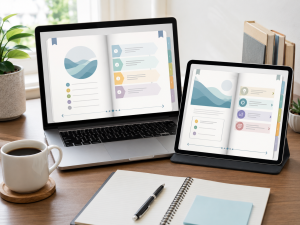
Each one solves a real problem.
Even better, templates do not have to be fancy.
You can create them in a document, spreadsheet, slide deck, or simple design tool.
The value is not in how shiny they look.
Instead, the value is in how useful they are.
For example, a “7-Day Social Post Planner for Beginners” could help someone stop staring at a blank screen every morning.
That alone is worth something, because blank screens are basically tiny rectangles of judgment.
Examples of Templates Beginners Can Create
There are many simple template ideas that work well for beginners.
For example, you could create a content calendar template that helps people plan posts for the week.
In addition, you might create an email subject line worksheet, a lead magnet planner, a product idea tracker, or a simple offer outline.
Another useful option is a checklist bundle.
For instance, you could package together a “Before You Post” checklist, a “Before You Send an Email” checklist, and a “Before You Launch” checklist.
This kind of bundle feels practical because it helps people avoid mistakes.
On the other hand, do not create random templates just because they sound cool.
Each template should help your audience complete a task they already care about.
A good test is simple: can the buyer use it within 10 minutes?
If yes, you may have a strong product.
People are busy.
Therefore, the faster your template helps them take action, the more useful it feels.
Digital Products to Sell #3
A Mini Course
A mini course is another excellent option when looking for digital products to sell.
Unlike a full course, a mini course focuses on one small outcome.
That makes it easier to create and easier for your audience to finish.

For example, instead of building a giant course on all of internet marketing, you could create a mini course called “Create Your First Simple Lead Magnet” or “Write Your First 5 Follow-Up Emails.”
A mini course might include three to five lessons.
Each lesson can be short.
In fact, short is usually better.
Nobody wakes up excited to watch a 47-minute video called “Module 1: Introduction to the Introduction.”
Keep things tight and helpful.
In addition, you can deliver a mini course through videos, written lessons, slides, audio, or a mix of formats.
The format matters less than the result.
If your course helps someone complete a specific task, you are on the right track.
How to Build a Mini Course Without Overthinking It
Building a mini course becomes much easier when you start with the finish line.
Ask yourself, “What should the student be able to do by the end?”
Once you know the outcome, work backward.
For example, if the outcome is “build a basic email list plan,” your lessons might cover choosing an audience, creating a lead magnet idea, writing a signup page outline, and planning follow-up emails.
That is enough.
You do not need to include every advanced strategy under the sun.
Actually, adding too much can make the course worse.
Beginners need clarity, not a fire hose.
Next, create a simple outline.
Each lesson should teach one step and end with one action.
In addition, include examples so the student can see how the idea works in real life.
A worksheet can also help.
By keeping the course short and focused, you make it more likely that people will complete it, enjoy it, and trust you for the next thing.
Digital Products to Sell #4
A Live Workshop
A live workshop is one of the most powerful digital products to sell with a small audience because it gives people direct access to you.
That personal interaction can make the offer feel more valuable.
For example, you could run a one-hour workshop on “How to Create Your First Simple Online Offer” or “How to Plan 30 Days of Beginner Content.”
During the session, you teach the process, show examples, and answer questions.
This works well because beginners often need more than information.

They need reassurance.
They want someone to say, “Yes, you are doing this right,” or “No, do not make that part so complicated.”
A workshop can be recorded too.
Afterward, you can sell the replay as a digital product or include it in a bundle.
In addition, live workshops help you learn what your audience really struggles with.
Their questions can become future ebooks, templates, mini courses, and coaching topics.
That is what we call a nice little content snowball.
How to Plan a Workshop People Actually Want
A good workshop starts with a clear promise.
Do not say, “Join my workshop about online business.”
That is too vague.
Instead, say something like, “Create your first simple digital product idea in 60 minutes.”
That sounds specific and useful.
Next, keep the structure simple.
Start by explaining the problem, then teach the steps, then show an example, and finally give people time to apply what they learned.
In addition, include a short worksheet.
This helps participants follow along instead of just nodding while secretly checking snacks in the kitchen.
A strong workshop should feel active.
People should leave with something started, drafted, planned, or completed.
Meanwhile, you should avoid cramming in too much content.
A workshop is not a full course wearing a tiny hat.
It is a focused training session.
When people get a clear result, they are more likely to feel happy, trust you, and come back for more help.
Digital Products to Sell #5
Coaching or Consulting
Coaching or consulting can be one of the easiest online offers for beginners, especially if you have a skill that helps people solve a pressing problem.
Unlike ebooks or templates, coaching gives personal guidance.
Because of that, it can often be priced higher.
For example, a beginner marketer might offer a simple coaching package that helps someone create their first content plan, set up their first promotion strategy, or clarify their first digital product idea.
The package does not need to be complicated.
You might offer one session, three sessions, or a 30-day support package.
However, the outcome should be clear.
People do not just want “coaching.”
They want help getting from Point A to Point B.
In addition, coaching is a great way to learn your audience’s language.
You will hear their fears, questions, and roadblocks directly.
Later, those insights can help you create better digital products to sell at scale.
How to Package Coaching Without Sounding Fancy
A coaching package should be simple enough that a beginner instantly understands it.
For example, “One 60-minute session to map out your first digital product idea” is clear.
On the other hand, “Strategic transformation accelerator intensive” sounds like something invented during a corporate retreat with too many muffins.
Keep it human.
Start by naming the problem you solve.
Then explain what happens during the session.
After that, describe what the person walks away with.
For instance, they might leave with a product idea, a content plan, a simple offer outline, or a next-step checklist.
In addition, set boundaries.
Make it clear how long the session lasts, what is included, and what is not included.
This protects your time and keeps expectations realistic.
As you gain experience, you can turn common coaching questions into templates, guides, and mini courses.
That means coaching can become the research lab for your future digital products.
How to Sell Digital Products With a Small Audience
To sell digital products with a small audience, you need trust more than hype.
That is why learning how to build trust with your audience matters so much before you ask anyone to take the next step.
Start by sharing helpful content before you promote anything.
Before you start posting about your product, it also helps to learn how content hooks can make people stop scrolling long enough to actually read your message.
For example, teach small tips, answer common questions, share mistakes you made, and show simple examples.
If you are not sure what to post first, these social media content ideas for beginners can help you stay visible without sounding like a human billboard.
This warms people up.
In addition, talk about the problem your product solves before you mention the product itself.
If you are selling a content calendar template, discuss the frustration of not knowing what to post.
If your product is a mini course about building an email list, explain why beginners often get stuck before creating their first lead magnet.
That way, your audience feels understood.
Next, invite people to take the next step.
You do not need to scream like a late-night infomercial host selling miracle kitchen scissors.
A simple, clear invitation works better.
Meanwhile, keep showing up.
Small audiences respond to consistency.
When people see you helping regularly, they begin to trust that your paid product may help too.
Digital Products to Sell Need One Clear Promise
Every strong digital product needs one clear promise.
This promise tells people what they will get, learn, create, or solve.
For example, “Plan your first week of social content” is clear.
Likewise, “Create your first beginner-friendly ebook outline” is easy to understand.
However, “Master online business success” is too broad.
It sounds nice, but it does not tell the buyer what will actually happen.
Clear beats clever almost every time.
In addition, your promise should be believable.
A beginner may doubt a product that claims to change their whole life overnight.
On the other hand, they may believe a product that helps them write five emails, choose a niche, or build a simple checklist.
That smaller promise can still be powerful.
Remember, people buy progress.
They want to feel less stuck than they felt yesterday.
When your offer gives them a clear next step, your digital products to sell become much more attractive.
Digital Products to Sell
Should Solve Painful Little Problems
Small problems can create big frustration.
For example, not knowing what to write in an email can ruin someone’s whole afternoon.
Trying to design a lead magnet from scratch can feel like wrestling an octopus in a cupboard.
Because of this, simple digital products can feel very valuable when they remove friction.
A checklist that helps someone avoid mistakes may be small, but it can save time and stress.
Similarly, a template that gives someone a starting point can help them move faster.
In addition, painful little problems are easier to explain in your content.
You can say, “Tired of staring at a blank screen?” or “Not sure what to include in your first guide?”
Those messages are specific.
Meanwhile, broad messages often get ignored.
If you want better product ideas, look for the moments where beginners sigh, freeze, or say, “I have no clue what I’m doing.”
That is where helpful offers are hiding.
Simple Pricing Tips for Digital Products to Sell
Pricing can feel awkward at first.
Nobody wants to charge too much, too little, or accidentally create a product that feels like it belongs in the bargain bin next to novelty socks.
A simple approach is to match the price to the result.
Smaller products like checklists, templates, and short guides can often sit at a lower price point.
Meanwhile, workshops, mini courses, and coaching can usually be priced higher because they offer more support, depth, or interaction.
However, do not choose a price based only on length.
A short checklist that saves someone hours may be more valuable than a long ebook full of fluff.
In addition, consider your audience.
Beginners often like lower-risk first purchases.
That means a simple starter product can be a smart way to build trust.
Later, you can offer deeper help through workshops, coaching, or more complete training.
Pricing gets easier with practice.
Start simple, test, learn, and adjust.
Once your first product is live, these marketing metrics for beginners can help you spot what is working instead of guessing like a raccoon with a calculator.
How to Use ChatGPT for Digital Products to Sell
ChatGPT can be a useful helper when creating digital products to sell, especially during the planning stage.
For example, you can ask it to brainstorm ebook outlines, checklist items, lesson ideas, workshop titles, or template sections.
After that, these content repurposing strategies can help you turn one product idea into posts, emails, short videos, and other useful little content snacks.
That can save you from staring at your screen like it owes you an apology.
However, do not just copy and paste everything without thinking.
Your experience, examples, and personality are what make the product feel real.
Use AI as a drafting partner, not a replacement for your brain.
For example, you might ask ChatGPT to create a five-lesson mini course outline about starting an online business.
Then you can improve the outline by adding your own stories, tips, and examples.
In addition, you can use it to simplify complex ideas.
That is helpful when your audience is made up of beginners.
Clear language sells better than fancy jargon.
Nobody wants to feel like they need a business degree to understand a checklist.
Digital Product Ideas for Beginners
Using What You Already Know
Many digital product ideas for beginners are already sitting inside your own experience.
For example, think about something you recently figured out.
Maybe you learned how to plan content, write better headlines, create a simple lead magnet, or explain an affiliate offer more clearly.
That experience can become a product.
In addition, your mistakes can be valuable.
A “mistakes to avoid” guide can help someone skip the potholes you stepped in.
People love shortcuts, especially when those shortcuts prevent embarrassment, wasted time, or tech-related grumbling.
Another idea is to document your process.
If you follow the same steps each week to plan posts, turn that into a template.
If you use a simple checklist before publishing content, package it.
Meanwhile, do not worry if your idea feels basic.
Basic is often exactly what beginners need.
Advanced strategies may sound impressive, but simple steps are usually easier to buy, use, and recommend.
Online Offers for Beginners Should Stay Simple
Online offers for beginners work best when they are easy to understand.
A confused buyer usually does not buy.
That is also why avoiding common landing page mistakes is so important when you want your simple product to feel clear, useful, and easy to understand.
Instead, they squint, scroll away, and go make toast.
So keep your offer simple.
Explain who it is for, what problem it solves, what is included, and what result the buyer can expect.
For example, “A 10-page checklist that helps beginner marketers plan their first week of content” is clear.
People know what they are getting.
They also know whether it is right for them.
In addition, avoid stacking too many bonuses or features into a small offer.
That can make the product feel messy.
More is not always better.
Sometimes more just feels like someone dumped a junk drawer onto the kitchen table.
Focus on the core result.
After that, add only what helps the buyer get that result faster or easier.
Simple offers are easier to promote and easier to improve over time.
Digital Products to Sell
Can Become a Simple Product Ladder
One product can lead naturally to another.
This is called a product ladder, but do not let the term make it sound scarier than it is.
It simply means offering different levels of help.
For example, your first product might be a low-cost checklist.
After that, you could offer a short guide.
Next, you might create a mini course.
Later, you could run a workshop or offer coaching.
Each step gives more support.
In addition, each product can serve people at a different stage.
Some buyers only need a quick template.
Others want detailed training.
A few may want personal help.
This approach is useful because you do not have to create everything at once.
Start with one simple product.
Then listen to buyer questions and create the next helpful step.
To get more people seeing those helpful next steps, these free traffic sources for affiliate marketing can give beginners a simple way to start building attention without diving straight into paid ads.
Over time, your small product can grow into a full collection of digital products to sell.
That is much better than trying to build an empire before breakfast.
How Internet Profit Success Fits Into This Strategy
The phrase Internet Profit Success fits naturally with this strategy because real online progress usually comes from simple actions repeated consistently.
Big dreams are fine.
However, daily execution is what moves things forward.
Creating digital products to sell is not about becoming famous overnight.
Instead, it is about finding a clear problem, creating a helpful solution, and sharing it with people who need it.
For beginners, that is a much calmer path.
You do not need to chase every trend, join every platform, or build a complicated system with seventeen moving parts.
Start with one audience.
Choose one problem.
Create one useful product.
Then improve from there.
In addition, digital products give you assets you can keep using.
A good guide, template, or course can be promoted again and again.
Meanwhile, your skills improve every time you create.
That is where the real confidence comes from.

Action Plan for Digital Products to Sell This Week
Start by choosing one audience and one problem.
For example, you might help beginner internet marketers plan their first week of content.
Next, choose the simplest product format.
A checklist or template is usually faster than a full course.
After that, outline the steps your buyer needs to follow.
Keep the process short and practical.
In addition, create a simple title that promises a clear outcome.
Once the product is drafted, test it yourself.
Would a beginner understand what to do?
Could they use it without asking ten extra questions?
If not, simplify it.
Then share helpful content related to the problem for several days.
Talk about the struggle, give tips, and explain common mistakes.
Finally, invite your audience to check out the product.
Before you publish anything, run through this product launch checklist so you do not forget the simple stuff that quietly makes or breaks an offer.
Keep the message friendly and clear.
You are not begging.
You are offering help.
That mindset makes the whole process feel much less weird.
Common Mistakes With Digital Products to Sell
One common mistake is making the product too broad.
For example, “How to Succeed Online” is not specific enough.
A better idea would be “How to Create Your First Simple Digital Guide.”
Another mistake is overbuilding.
Beginners often think their first product has to be huge.
However, a simple product that gets finished is better than a massive product that stays trapped in draft mode forever.
In addition, some people skip audience research.
They create what they want to make instead of what their audience actually needs.
That can lead to crickets, and not the cute summer evening kind.
Another issue is weak positioning.
If people do not understand the result, they will not see the value.
So make your promise clear.
Finally, avoid quitting too soon.
Your first product may not be perfect.
That is normal.
Launch, learn, improve, and keep going.

Final Thoughts on
Digital Products to Sell With a Small Audience
You do not need thousands of followers to start creating digital products to sell.
A small audience can be enough when your offer solves a real problem in a simple way.
Short guides, templates, mini courses, live workshops, and coaching packages are all strong options for beginners.
Each one can help your audience move forward without overwhelming them.
In addition, these products help you build confidence.
You learn what people need, how they describe their problems, and which solutions they value most.
Over time, that knowledge becomes incredibly useful.
So do not wait until your audience is huge.
Start where you are.
Choose one clear problem.
Create one simple solution.
Share helpful content around it.
Then invite people to take the next step.
That is how small audiences become real opportunities.
And honestly, that is a lot better than waiting around for a giant following to magically appear like a business fairy with Wi-Fi.
