

9 Content Hooks That Stop the Scroll Fast
Turn Scrollers Into Readers

Why Content Hooks Matter More Than Ever
Attention online is a bit like a toddler holding a juice box near a white carpet.
It can disappear fast, and once it is gone, good luck getting it back.
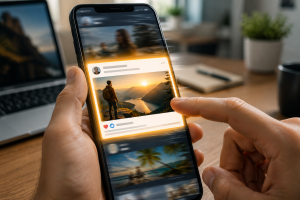
Every day, people scroll through social media feeds, emails, blog posts, videos, and ads at lightning speed.
Most of the time, they are not carefully reading everything.
They are skimming, judging, and deciding in seconds whether something is worth their time.
That is where content hooks come in.
Content hooks are the opening lines, ideas, or angles that make people pause.
They give your audience a reason to stop scrolling and think, “Hang on, I want to know more.”
For beginner marketers, this skill is huge.
You can have a helpful post, a great tip, or a powerful lesson, but if the opening is weak, most people will never see the good stuff.
It is like baking the world’s best pizza and hiding it in the garage.
What Are Content Hooks?
Content hooks are the first part of your content that grabs attention.
They can be a sentence, a question, a bold statement, a quick story, a surprising fact, or even a warning.
Their job is simple.
They make the reader curious enough to continue.
For example, a weak opening might say, “Here are some marketing tips.”
That is clear, but it is about as exciting as watching beige paint dry.
A stronger hook might say, “Most beginners lose attention before their second sentence, and they have no idea why.”
That version creates curiosity.
It hints at a problem.
It makes the reader wonder if they are making the same mistake.
Good content hooks do not need to be fancy.
In fact, the best ones are usually simple.
They speak directly to what your audience wants, fears, feels, or needs.

The Big Mistake Beginners Make With Content Hooks
Many beginners treat the opening line like a polite handshake.
They start with something safe, slow, and forgettable.
For example, they might say, “Today I want to talk about content creation.”
There is nothing technically wrong with that sentence.
However, online content is not a quiet classroom where everyone has to listen.
It is more like a noisy coffee shop during lunch hour.
If you want attention, you need to earn it quickly.
Another common mistake is trying to explain everything too soon.
If this sounds familiar, this guide on content creation mistakes will help you spot the little issues that make good posts easier to ignore.
When you give away the entire point in the first sentence, there is no reason for someone to keep reading.
A strong hook gives just enough information to create interest, but not so much that the reader feels finished before they begin.
That little bit of mystery is powerful.
Content Hooks and the First Three Seconds
Most people decide very quickly whether your content is worth their time.
That is why learning how to get people to read your posts is such a smart next step before worrying about anything fancy.
This is especially true on platforms like Facebook, Instagram, TikTok, YouTube, LinkedIn, and even blog search results.
Your headline, first sentence, or opening idea often decides whether your content gets attention or gets ignored.
That might sound harsh, but it is actually good news.
Why?
Because improving your content hooks can improve the performance of everything else you create.
A better opening line can help more people read your post.
A stronger headline can improve your blog clicks.
A more interesting video intro can keep viewers watching longer.
Meanwhile, better email subject lines can help more people open your messages.
So yes, content hooks are small.
However, they carry a lot of weight.
Think of them like the front door to your content.
If the door looks interesting, people are more likely to walk in.
Content Hook #1
The Curiosity Gap Hook
The curiosity gap hook works by giving people part of the story, but not the whole answer.
It creates a gap between what the reader knows and what they want to know.
Since our brains enjoy closure, people naturally want to fill that gap.
For example, you could say, “I changed one sentence in my post, and suddenly more people started paying attention.”
That hook makes the reader wonder what the sentence was.
It also suggests there is a simple lesson coming.
Curiosity gap hooks work especially well because they feel like a little puzzle.
The reader does not feel forced.
Instead, they feel pulled forward.
However, there is one tiny catch.
You must actually deliver the answer later.
If your hook creates curiosity but your content never satisfies it, readers will feel tricked.
Nobody likes clickbait.
It is the online version of opening a cookie tin and finding sewing supplies.

How to Use This Content Hook
Start by thinking about the result, lesson, or discovery inside your content.
Then, instead of revealing it immediately, hint at it.
For example, instead of saying, “Use better headlines to get more engagement,” you might say, “One tiny headline mistake can make people ignore your best post.”
That creates tension.
It also gives the reader a reason to continue.
You can use this content hook in many ways.
Try phrases like “I finally figured out why,” “Nobody told me this before,” “This one change made a difference,” or “Most beginners miss this simple detail.”
In addition, keep your curiosity gap focused.
Do not make it too vague.
A hook like “You will never believe this” is usually too empty.
A better version is, “You will never believe which part of your post people judge first.”
Specific curiosity is stronger than random mystery.
For even more plug-and-play examples, these social media hook templates can help you write stronger openings without staring at the screen like it owes you rent.
Content Hook #2
The Question Hook
Question hooks work because they pull the reader into the content right away.
When someone sees a question that relates to their life, they automatically start answering it in their head.
That little mental response is exactly what you want.
For example, “Why do your posts get views but no real response?” is stronger than “Here are some engagement tips.”
The question speaks to a real frustration.
It also makes the reader think, “Yes, actually, why does that happen?”
Question hooks are great for beginner audiences because they feel natural and conversational.
They do not sound like a lecture.
Instead, they sound like someone is opening a useful discussion.
Better still, question hooks can be used almost anywhere.
They work in blog intros, social media hooks, email subject lines, video openings, and even webinar titles.
How to Make Question Content Hooks Stronger
A good question hook should be simple, specific, and connected to a real problem.
Avoid questions that are too broad.
For example, “Do you want success?” is not very strong.
Most people will say yes, but it does not create much curiosity.
A better question would be, “Why do some beginner marketers get attention faster than others?”
That question is more specific.
It speaks to a real desire.
It also promises an answer worth reading.
Another helpful tip is to use questions that make the reader feel understood.
For example, “Are you posting every day but still hearing crickets?” feels relatable.
It paints a clear picture, and honestly, those crickets are rude.
In addition, avoid asking questions that can be answered with a quick no.
If the reader says no and moves on, the hook has failed.
Aim for questions that spark thought, not questions that shut the door.
Content Hook #3
The Contrarian Hook
A contrarian hook challenges something people already believe.
This type of hook works because it interrupts the reader’s normal thinking.
When someone sees an idea that goes against common advice, they naturally pause to inspect it.
For example, “You do not need thousands of followers to get results online” is a strong contrarian hook.
Many beginners believe they need a massive audience before anything good can happen.
So when your hook challenges that belief, it creates curiosity.
However, contrarian hooks should not be used just to sound edgy.
The goal is not to start a digital food fight.
The goal is to offer a fresh, useful perspective.
For example, you might challenge ideas like “post more often,” “copy what everyone else is doing,” or “you need to be everywhere at once.”
Then, you explain why there is a better way.
Content Hook #4
The Mistake Hook
Mistake hooks are powerful because nobody wants to feel like they are messing things up.
This is especially true for beginners.
When people are learning something new, they are often worried about doing it wrong.
A hook that points out a common mistake gets attention because it feels useful and urgent.
For example, “Most beginners ruin their posts with this one opening line mistake” is likely to make people stop.
The reader instantly wonders, “Am I doing that?”
Mistake hooks work well for educational posts, tutorials, videos, and list-style blog articles.
They also pair nicely with content hooks about improvement, growth, and better results.
However, keep the tone helpful rather than harsh.
You do not want people to feel attacked.
Instead, frame the mistake as something common and fixable.
A good mistake hook says, “Hey, this might be holding you back, but you can fix it.”
Content Hook #5
The Story Hook
Story hooks are some of the most natural content hooks because humans are wired for stories.
Long before we had social media, blogs, and tiny keyboards that make everyone typo like a raccoon, people learned through stories.
Stories create emotion.
They make information easier to remember.
They also help your content feel more human.
For example, “Three months ago, I nearly gave up after my first campaign completely flopped” is a strong story hook.
It starts in the middle of a real moment.
There is tension.
There is emotion.
Most importantly, there is a reason to keep reading.
Story hooks do not have to be dramatic.
A simple everyday moment can work beautifully.
For example, a failed post, an awkward lesson, a surprising discovery, or a small personal win can become a great opening.
Why Story Content Hooks Feel So Natural
A story hook works because it does not feel like a pitch.
Instead, it feels like someone sharing an experience.
This makes the reader lower their guard.
For example, you could open with, “I used to stare at my blank screen like it owed me money.”
That line is funny, relatable, and honest.
It also leads naturally into a lesson about writing better hooks.
In addition, stories help people see themselves in your content.
A beginner who is struggling with content creation may connect more with a personal story than a dry list of instructions.
Meanwhile, the lesson at the end of the story gives the content purpose.
The story pulls people in, and the lesson gives them value.
That is the sweet spot.
Entertainment plus usefulness.
Kind of like a pizza that also gives life advice.
Content Hook #6
The How To Hook
The how to hook is simple, clear, and practical.
People search online because they want solutions.
They want to learn how to do something, fix something, improve something, or finally stop feeling stuck.
That is why “how to” content hooks continue to work so well.
For example, “How to write content hooks that make people stop scrolling” is direct and useful.
There is no mystery about the benefit.
The reader knows exactly what they will learn.
This type of hook is especially strong for blog posts because it matches search intent.
People often type “how to” phrases into search engines when they need help.
As a result, how to headlines can be great for SEO.
However, make the result specific.
“How to get better at content” is okay, but “How to write stronger opening lines for social media posts” is much clearer.
Content Hook #7
The Shocking Fact Hook
A shocking fact hook uses a surprising statistic, fact, or observation to grab attention.
This works because unexpected information makes people pause.
When something challenges what they assumed, they want to understand it.
For example, “Most people decide whether to keep reading your post before they reach the third sentence” is a strong opening idea.
It makes the reader aware of how quickly attention is lost.
Shocking fact hooks are useful in blog posts, videos, emails, and social media content.
They give your content a sense of importance right away.
However, the fact needs to connect to your audience.
A random statistic may sound interesting, but if it does not help the reader understand the topic, it will feel disconnected.
For beginner marketers, use facts that relate to attention, engagement, online habits, content creation, audience growth, or trust.
Content Hook #8
The Warning Hook
Warning hooks create urgency.
They suggest that the reader might be making a costly mistake, missing something important, or walking into a problem without realizing it.
For example, “Warning: Your first sentence may be making people skip your posts” is a strong hook.
It is direct, but it is not over the top. It points to a problem and hints at a solution.
Warning hooks work because people naturally pay attention to possible risk.
If someone thinks they might be doing something wrong, they want to know how to avoid it.
However, do not make every post sound like a five-alarm fire.
If you constantly use panic-based hooks, people may start tuning you out.
Instead, use warning hooks when there is a real mistake, risk, or important lesson to share.
Keep it useful, not dramatic for drama’s sake.
Content Hook #9
The Relatable Struggle Hook
Relatable struggle hooks connect with what your audience is already feeling.
They work because people want to feel understood.
When your content describes their frustration clearly, they are more likely to trust you.
For example, “If you keep posting but feel like nobody is paying attention, you are not alone” is a strong relatable struggle hook.
It speaks directly to a common beginner problem.
It also offers comfort and curiosity at the same time.
This type of hook is especially good for beginner marketers because many of them feel stuck, confused, or invisible at first.
Rather than making them feel silly, a relatable struggle hook says, “Yep, I get it. Let’s fix it.”
In addition, these hooks can lead naturally into helpful advice.
Once the reader feels understood, they are more open to learning the next step.
How to Choose the Right Content Hooks
Not every hook fits every piece of content.
For example, a warning hook may work well for a post about common mistakes, but it may feel too intense for a light tutorial.
On the other hand, a story hook might be perfect when you want to build connection before teaching a lesson.
Start by asking yourself what emotion you want to create.
Before choosing the hook, it also helps to run your idea through a simple content clarity checklist so the rest of the post actually delivers on the promise.
Do you want curiosity?
Use a curiosity gap hook.
Do you want reflection?
Use a question hook.
Need to challenge a belief?
Try a contrarian hook.
Want to teach quickly?
A how to hook may be best.
Also, consider your audience’s awareness level.
Beginners usually respond well to simple, direct hooks because they are still learning the basics.
Advanced readers may enjoy more specific, unusual, or contrarian angles.
The best content hooks match the reader, the platform, and the purpose of the post.
Content Hooks for Social Media Posts
Social media hooks need to work fast.
Feeds move quickly, and your post is competing with cat videos, dinner photos, hot takes, vacation selfies, and that one person from high school who posts motivational quotes over sunsets.
If you want more examples for busy feeds, this guide to social media hooks gives you extra angles you can adapt fast.
So, your opening line needs to earn attention immediately.
Good social media hooks often speak to a clear pain point, promise a useful tip, or create curiosity.
For example, “Your post is not boring.
Your opening line is.”
That hook is short, bold, and useful. It makes the reader want the fix.
Another good example is, “I stopped trying to sound clever, and my posts got better.”
This one feels personal and slightly surprising.
It also suggests a lesson.
When writing social media hooks, avoid long warm-ups.
Once the hook is working, these social media engagement post ideas can help you turn attention into replies, reactions, and useful conversations.
Start close to the action.
Make the first sentence punchy.
Then use the next few lines to build interest.

Content Hooks for Emails and Blog Posts
Email and blog content hooks work a little differently from social media hooks.
Once you have a strong hook, these content repurposing strategies can help you turn one idea into posts, emails, videos, and other useful assets.
With email, your subject line is often the first hook.
After that, your opening sentence needs to keep the reader moving.
For example, a subject line might say, “This tiny mistake killed my post.”
Then the email could begin, “I thought my content was the problem, but it turned out my first sentence was doing all the damage.”
That creates a smooth path from curiosity to explanation.
For blog posts, your headline is the main hook.
Your introduction then needs to confirm that the reader is in the right place.
A strong blog intro should quickly explain the problem, promise value, and make the topic feel worth reading.
For example, this article uses content hooks as the main keyword because the entire post teaches readers how to use them in practical ways.
Simple Hook Formulas You Can Swipe
Hook formulas are useful because they give you a starting point.
They are not meant to turn your writing into a robot wearing a name tag.
Instead, they help you stop staring at a blank screen like it personally offended you.
Here are some simple hook formulas you can adapt.
“The biggest mistake beginners make with blank is blank.”
“I tried blank, and here is what happened.”
“Most people think blank, but the truth is blank.”
“If you are struggling with blank, start here.”
“Here is how to blank without blank.”
“Warning - blank could be costing you blank.”
“Nobody tells beginners this about blank.”
Each formula can become many different content hooks.
For example, “Nobody tells beginners this about content hooks” could lead into a post about why the first sentence matters so much.
How to Test Your Content Hooks
The fastest way to improve your content hooks is to test them.
Instead of guessing which opening line is best, write several versions before you publish.
A few simple content planning tools can also help you track which hooks work best across your posts.
Then choose the one that feels clearest, most interesting, and most connected to your audience’s problem.
For example, if your topic is writing better posts, you might test these three hooks.
“Want better engagement?
Start with a better opening line.”
“Your post may not be the problem.
Your hook might be.”
“Most beginners lose readers before they make their main point.”
Each version has a different feel.
The first is direct.
The second creates curiosity.
aND the third feels educational.
Over time, watch which hooks get more reactions, replies, shares, clicks, or reading time.
Patterns will appear.
Once you spot what works, you can create more of it.
Extra Tips for Better Content Hooks
Strong content hooks usually have one clear job.
They do not try to explain everything, impress everyone, and win a trophy all in one sentence.
Instead, they focus on getting the reader to take the next tiny step.
One helpful tip is to remove unnecessary words.
Shorter hooks often hit harder.
For example, “Here is a very important mistake that many beginner marketers often make when they are creating content online” is too heavy.
A cleaner version is, “Most beginners make this content mistake without realizing it.”
Much better.
In addition, use everyday language.
Readers should not need a dictionary and a strong cup of coffee to understand your opening line.
Finally, make sure your content delivers on the hook.
A great opening gets attention, but helpful content earns trust.
That is where long-term growth happens, especially for beginners building something like Internet Profit Success.
Content Hooks and SEO
Content hooks also matter for SEO because they help people choose your result and stay on your page.
Your title is often the first hook people see in search results.
If the title is dull, fewer people may click.
However, if it is clear, useful, and curiosity-driven, it has a better chance of attracting attention.
For example, “9 Content Hooks That Stop the Scroll Fast” is stronger than “Content Hook Information.”
You can also pair strong hooks with evergreen content ideas so your posts keep helping people long after publish day.
The first title promises a clear benefit.
The second sounds like a dusty folder in an office cabinet.
In addition, your introduction should quickly show readers that the article matches what they searched for.
When people find what they expected, they are more likely to keep reading.
Using related terms like scroll-stopping hooks, social media hooks, and hook formulas also helps your content feel complete and relevant.

Content Hooks for Beginner Marketers
Beginner marketers should keep their content hooks simple.
There is no need to sound like a big-brand agency with a boardroom full of people saying things like “synergy” and “circle back.”
Instead, focus on your audience’s real problems.
They want to know how to get attention, how to build trust, how to create content faster, and how to stop feeling invisible online.
For more starting points, these social media content ideas for beginners give you practical topics where your new hooks can actually be used.
That means your hooks should speak to those issues directly.
For example, “If your posts feel invisible, your opening line may be the reason” is clear and useful.
Another example is, “You do not need to be a perfect writer to create posts people read.”
Both hooks feel encouraging.
They also lead naturally into helpful advice.
The goal is not to sound clever.
The goal is to make the reader feel seen.
Content Hooks That Build Trust
Some hooks grab attention but damage trust.
These are usually overhyped, exaggerated, or misleading.
For example, “This one sentence will change your life forever” might get attention, but it also sounds like it belongs on a late-night infomercial next to a miracle mop.
Trust-building content hooks are different.
A strong hook should lead into advice that helps, so learning how to create valuable content is the perfect follow-up skill.
They create curiosity while staying believable.
For example, “This simple opening line can make your post easier to read” feels realistic.
It does not promise magic. It promises improvement.
That matters because online audiences are smarter than ever.
They have seen big claims before.
They can smell hype from three websites away.
So, make your hooks exciting, but keep them honest.
Promise value, then deliver it clearly.
Content Hooks You Should Avoid
Some content hooks look tempting, but they can hurt your content.
Avoid hooks that are too vague.
For example, “This is wild” does not tell the reader enough.
Also, avoid hooks that are too negative.
A little urgency can help, but constant doom and gloom gets tiring.
Another weak type is the overused hook.
Lines like “You will not believe what happened next” can still work in some cases, but many readers have seen them too often.
In addition, stay away from hooks that do not match the content.
If your hook promises a shortcut, the content should not turn into a general pep talk.
Readers want the thing they came for.
Give it to them without making them wander through a maze first.
Good content hooks create interest and respect the reader’s time.
How to Write Content Hooks Faster
Writing content hooks gets easier when you stop trying to make the first version perfect.
Start messy.
Write five to ten rough hooks for the same topic.
If you want to build that skill faster, these copywriting exercises for beginners are great for practicing hooks, headlines, and clearer sentences.
Some will be boring.
Some will be awkward.
One might sound like it was written by a sleepy toaster.
That is fine.
The point is to get options on the page.
After that, choose the strongest idea and clean it up.
For example, you might start with, “People do not read posts if the beginning is not good.”
That is true, but plain.
A stronger version could be, “Your first sentence decides whether the rest of your post gets read.”
Now it has more punch.
In addition, keep a hook bank.
Whenever you see a strong opening line, save the structure.
Do not copy the exact wording, but learn from the pattern.
Content Hooks Summary
Content hooks are one of the most important parts of online content.
They help your posts, emails, videos, and blog articles get noticed in a busy digital world.
Without a strong hook, even your best ideas can get ignored.
The good news is that you do not need to be a genius writer to create scroll-stopping hooks.
You just need to understand what makes people pause.
Curiosity gap hooks make readers want the missing answer.
Question hooks get people thinking.
Contrarian hooks challenge common beliefs.
Mistake hooks help readers avoid problems.
Story hooks create connection.
How to hooks promise practical value.
Shocking fact hooks surprise people.
Warning hooks create urgency.
Relatable struggle hooks make people feel understood.
Together, these content hooks give you a flexible toolbox for creating better content.
Use them often, test different versions, and pay attention to what your audience responds to most.

Final Thoughts on Content Hooks
The first few words of your content matter more than most beginners realize.
They decide whether someone keeps reading or scrolls away to watch a dog wearing sunglasses.
And honestly, that dog is tough competition.
However, when you learn how to write better content hooks, you give your ideas a stronger chance to be seen.
Start small.
Pick one hook style from this article and use it in your next post.
Then try another one tomorrow.
Over time, you will build the habit of opening your content with more clarity, curiosity, and confidence.
Better hooks lead to better attention.
Better attention gives your message more room to work.
And when your message finally gets read, that is when your content can actually do its job.
