

14 High‑Impact CTA Templates Every Marketer Can Use
Call to Action Templates That Actually Get Clicks

If you’ve ever wondered what separates content that languishes in the depths of the analytics abyss from content that drives action, the answer is often simpler than you think. CTA templates, or, more specifically, how you write and use your calls to action.
A call to action might seem like a tiny cog in your marketing machine, but in reality, it’s the ignition switch that gets your audience moving from “Hmm…maybe” to “Alright, let’s do this!”
Without a strong call to action template guiding your reader, you’re essentially waving at someone from across the room and hoping they’ll find their way over. In contrast, a smart CTA tells your audience exactly what to do next, and why doing it benefits them.
This blog post goes deep on all things CTA, with 14 practical CTA templates, detailed examples, fresh ideas for various platforms, and bonus strategies to help you increase engagement and conversion, whether you’re running a blog, email sequence, landing page, or social media post.
Along the way, we’ll integrate wise SEO touches so your content ranks well and drives clicks, aligning with your journey toward Internet Profit Success.
What Are CTA Templates, And Why They Matter
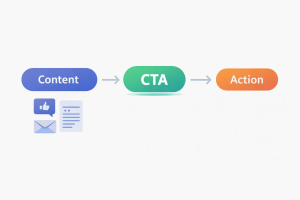
Before we kick into specific CTA templates, let’s get clear on what a call to action is, in the most human, no‑jargon way possible.
Put simply, a call to action is a prompt that tells your audience what to do next. It could be a button that says “Download Now,” a text link that says “Watch This Next,” or even a phrase embedded in a video that says “Tap to Get It.” Good calls to action are:
Clear: They leave no ambiguity about the next step, because people’s attention is precious.
Action‑Oriented: They start with strong verbs that propel readers forward.
Value‑Driven: They make the action feel like a reward rather than a chore.
In practice, well‑crafted CTA templates help you scale this clarity and intention across multiple pieces of content. They serve as starting points that you can tweak for voice, audience, and offer, without reinventing the wheel every single time.
When you build your marketing foundation with solid CTA templates and CTA examples for marketers, you set yourself up to convert curious readers into engaged followers, subscribers, or customers. That’s part of what Internet Profit Success feels like, transforming interest into action with confidence.
As you explore how CTA templates guide readers to action, it’s also worth reviewing tools that can help you build and test those CTAs, like the free marketing tools I recommend in Discover 14 Free Marketing Tools Every Online Marketer Should Be Using Today.
How CTAs Work in Different Contexts
Calls to action aren’t one‑size‑fits‑all. Depending on where a user encounters your content, whether it’s on Instagram, in an email, or on a website, the style, tone, and placement of your CTA template can vary dramatically. Understanding how your audience behaves in different contexts improves your CTA performance, that’s one of the key takeaways in 11 Online Marketing Tips for Beginners That Saved Me Weeks of Frustration.
For example, on a landing page, you might rely on a button with a short phrase like “Start Here.” On the other hand, in an email newsletter, you might use a sentence like “Click here to get your free starter guide.” Not all content is created equal, pairing the right CTA with the right format matters. The 7 Best Types of Content That Boost Engagement in 2026 gives you ideas for formats that pair beautifully with high‑performing CTAs.”
In fact, research and best practices in conversion copywriting encourage clarity and action verbs for CTAs over vague phrases or passive text. Short, simple phrases like “Get Started” or “Learn How” often outperform longer, meandering lines because they reduce friction and tell users exactly what to expect next. (This aligns with best practices from general CTA writing frameworks that show effective CTAs often use direct language and strong commands.)
The key takeaway? Your CTA templates should be flexible enough to fit multiple formats, but always decisive enough to remove hesitation.
The Anatomy of a Great CTA
Before we dive into the 14 templates themselves, let’s break down what makes them work. A truly clickable CTA, whether it’s a button, a link, or a text prompt, typically includes a few core elements:
An Action Verb: Tell your audience what to do. Think verbs like download, start, try, explore, watch, and get.
A Clear Outcome or Benefit: Your audience should immediately understand what they’ll get by clicking.
A Sense of Relevance: The CTA should tie into what your reader is already thinking or trying to achieve.
Simplicity: The fewer cognitive hurdles someone faces, the more likely they are to act.
These elements form the backbone of all the CTA templates we’ll share below. In addition, we’ll sprinkle in a few extra tips so you understand when and why each template works best.
CTA Template 1: Direct Action + Benefit
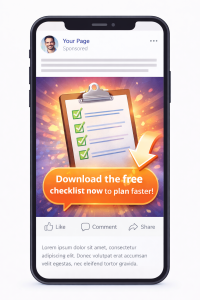
This is one of the simplest but strongest CTA templates out there because it links the next step directly with an immediate payoff.
Example: Download the checklist to plan your content in 10 minutes.
Why it Works:
People respond to clarity and benefit. When your CTA spells out both the action and the reward for taking it, you reduce friction and make the choice easier.
Tips for Variations:
Swap in different benefits based on audience needs.
Tailor the phrasing to your platform, “Tap to…” for mobile, “Click to…” for desktop content.
CTA Template 2: Do This If You Want That
This call to action qualifies your audience and makes the relevance obvious.
Example: Click here if you want your first 100 followers without posting daily.
Why it Works:
It’s conditional, the CTA mirrors the reader’s desire. When you phrase your CTA like this, you immediately signal that only the right audience should act, which builds trust and alignment.
When to Use It:
Great in emails where you segment readers by interest, or in social posts aimed at specific outcome seekers.
CTA Template 3: Get the Next Step
Sometimes your audience already wants to move forward, they just need a gentle nudge.
Example: Ready for step two? Download the starter kit here.
Why it Works:
This CTA positions the next step as a natural continuation of something your audience already cares about. It’s supportive and flows with the user’s intent.
Pro Tip: Use this after you’ve delivered value, like after a free guide, tutorial, or video.
CTA Template 4: Claim Your Free Resource
Who doesn’t like the word free? Used carefully, this CTA boosts perceived value.
Example: Claim your free headline swipe file here.
Why it Works:
The word free combined with specificity increases clicks because users instantly know what they’ll get.
Beware:
Overusing free across every CTA can dilute its impact. Use this template when the offer genuinely delivers value and feels substantial.
CTA Template 5: Start Here
This one is especially powerful for beginners or confused readers.
Example: Not sure where to begin? Start here.
Why it Works:
You remove overwhelm and present the next step as inviting rather than demanding.
Best For:
Onboarding sequences, beginning of courses, or top‑of‑funnel content. When you place call to action templates inside a funnel, they don’t just guide clicks, they move users toward conversion. If you’re new to funnels, see How to Build a Profitable Funnel: A Complete Beginner’s Guide to Turning Traffic Into Sales for step‑by‑step guidance on structuring these elements
CTA Template 6: See How It Works
Perfect for when you want your audience to peek under the hood of something exciting.
Example: See how it works in this 2‑minute video.
Why it Works:
It appeals to curiosity, a proven psychological driver, and sets an expectation of time commitment upfront, which reduces hesitation.
Tip:
Always tell your audience how long something will take, especially with videos or tutorials.
CTA Template 7: Try This First
This is your trust builder CTA.
Example: Try this first: download the 5‑step checklist.
Why it Works:
When you offer a low‑risk starter action, people are more likely to take it. That initial engagement often leads to deeper involvement down the line.
Use Case:
Perfect for listing clients, product demos, or quick wins.
CTA Template 8: Tap or Click to Get It
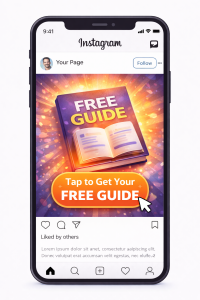
Mobile audiences think in verbs like tap and swipe, so speak their language.
Example: Tap to get the full template.
Why it Works:
Micro‑behavior language matches the context of action, especially on Instagram, TikTok, or mobile‑first content.
Hint:
Short, clear CTAs like this often outperform longer phrases on mobile screens.
CTA Template 9: Comment Keyword for Access
Out of all the CTA examples for marketers, this one is uniquely interactive.
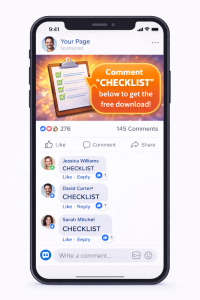
Example: Comment checklist and I will send it to you.
Why it Works:
It boosts engagement and collects leads. When people type a keyword in a comment, you get an interaction and a potential lead in one move.
Bonus:
In social feeds, this kind of CTA can improve reach due to algorithmic engagement signals.
CTA Template 10: Save This for Later
Here’s one tailored for content that’s meant to be useful and revisited.
Example: Save this for later so you can apply these steps when you build your funnel.
Why it Works:
Asking users to save posts (especially lists or guides) aligns with platform behavior and increases organic visibility.
Use Case:
Educational threads, list posts, and how‑to content.
CTA Template 11: Message Me for Details
This CTA sparks conversation, not just clicks.
Example: Message me the word START and I’ll send next steps.
Why it Works:
It personalizes the interaction and opens the door for deeper engagement, a key step toward building trust and eventually conversions.
Tips:
Specify a keyword to make it easy for users to respond.
CTA Template 12: Join the Challenge
Challenges are energetic, memorable, and action‑oriented.
Example: Join the 3‑day content sprint.
Why it Works:
Challenges create urgency and community momentum — two powerful psychological motivators.
Best For:
Growth campaigns, email sequences, and programs.
CTA Template 13: Watch This Next
Time spent with your content translates directly into higher familiarity and trust.
Example: Watch this next to learn the full system.
Why it Works:
You’re guiding the user deeper into your ecosystem, making future conversions more likely.
Pro Tip:
Use this in YouTube descriptions, blogs with embedded videos, or playlists.
CTA Template 14: Let Me Show You How
When your audience needs direction, being the guide is powerful.
Example: Let me show you how to build your first funnel.
Why it Works:
It positions you as a helpful authority, someone who’s with the reader on their journey.
Best For:
Tutorials, workshops, or higher‑touch offers.
Extra Tips to Boost Your CTA Performance
Beyond individual CTA templates, there are some evergreen strategies that marketers swear by because they genuinely move the needle.
Use Strong Action Verbs
Words like get, start, try, claim, and join are not just filler — they tell your audience exactly what action they’re taking. This aligns with the basic principle that CTAs should have clarity and direction.
Match the CTA to User Intent
Consider where your audience is in the buyer or engagement journey. Someone at the top of the funnel may respond well to Start Here or See How It Works, while someone closer to conversion might need a more direct prompt like Claim Your Free Resource.
Create Urgency or Value
Words like now or today can spark action by signaling scarcity or immediacy. At the same time, linking the CTA directly to a benefit, like get your checklist now, increases perceived value. Another huge pitfall is rushing your CTA without clarity, something covered in Stop Sabotaging Your Growth: Common Mistakes New Internet Marketers Make. Avoiding these missteps keeps your CTAs crisp and clickable.”
Test and Repeat
Even well‑crafted CTAs should be tested. Small tweaks, changing one word, switching a verb, or altering a button color, can significantly affect clickthroughs. Seeing what resonates with your audience provides real data that informs future decisions.
Place CTAs Thoughtfully
Put your CTA where users expect it, but also where it serves the user’s journey. For example, a CTA after a compelling paragraph makes more sense than one dropped randomly in the middle of a thought.
Tailor CTAs to the Platform
Different channels have different behaviors. Mobile users tap, desktop users click, and social audiences might comment or save. Language matters, consider the user action you’re optimizing for.

Bringing It All Together for Internet Profit Success
If you consistently use CTA templates that are clear, compelling, and tailored to user context, you not only improve engagement but also cultivate a predictable path toward conversions, Internet Profit Success. Whether you’re looking to grow your email list, increase content interactions, or drive sales, the right call to action can transform passive viewers into active participants.
Here’s the real magic: great CTAs feel like no brainers to your audience. They don’t guess what comes next, they want to do the next step. That’s when your content starts working for you instead of just sitting there quietly hoping someone notices.
All 14 of the templates above are more than lines of copy, they’re frameworks you can adapt again and again. With practice, you’ll start recognizing exactly which CTA template fits a given situation, whether it’s a blog post, newsletter, social post, or landing page.
Strong CTA templates don’t just increase clicks, when paired with traffic strategies, they amplify results. For ways to bring more eyes to your calls to action, check out Increase Website Traffic Fast: 7 Traffic Secrets That Actually Work (Deploy Today).
